


 English
 Français
 Español
 Deutsch

Home · News · Industry News · Prototype Mold vs Production Mold for Automotive Parts: Cost, Lead Time, When to Use
Industry News
Prototype Mold vs Production Mold for Automotive Parts: Cost, Lead Time, When to Use
2026-10-14Table of Contents
- 1 What Is a Prototype Mold?
- 2 What Is a Production Mold?
- 3 Prototype Mold vs Production Mold: Side-by-Side Comparison
- 4 Tool Material and Process Differences
- 5 Cost, Lead Time and Volume Reality
- 6 How to Decide: Prototype Mold or Production Mold?
- 7 Common Mistakes That Raise Program Cost
- 8 Working with a Mold Maker on Both Tooling Paths
- 9 Frequently Asked Questions
A Tier 1 interior parts program was 16 weeks from start of production when the customer revised the airbag deployment cover geometry. The hardened production tool could not absorb the change without a four-month rework, so engineering ordered an aluminum prototype mold, cut in three weeks, and ran 2,000 validation samples while the corrected steel tool was built. That sequence worked because the team knew exactly what a prototype mold can prove - and what it cannot. This guide compares prototype molds and production molds for automotive plastic parts across tool material, cost, lead time, dimensional control, surface finish, and program risk, then closes with a decision path and FAQ.
What Is a Prototype Mold?
A prototype mold, also called soft tooling or bridge tooling, is a low-cost injection mold built to produce a limited number of plastic parts for design validation, fit-and-function testing, and pre-production builds.
Automotive prototype molds are usually cut from aluminum 7075-T6 or, less often, P20 pre-hardened steel, with a single or double cavity, straight-drilled cooling lines, and simplified gating. Their job is to generate parts for validation, not to optimize cycle time. For interior parts such as airbag covers, center stack carriers, and cup holder assemblies, a prototype mold typically delivers 500 to 5,000 shots before wear or dimensional drift forces a repair.
Prototype parts are used in crash-sled airbag deployment tests, packaging checks, ergonomic studies, and early customer samples. The passenger airbag PAB deployment cover injection mold is a classic case: deployment forces and hinge behavior must be validated months before the steel tool is ready.
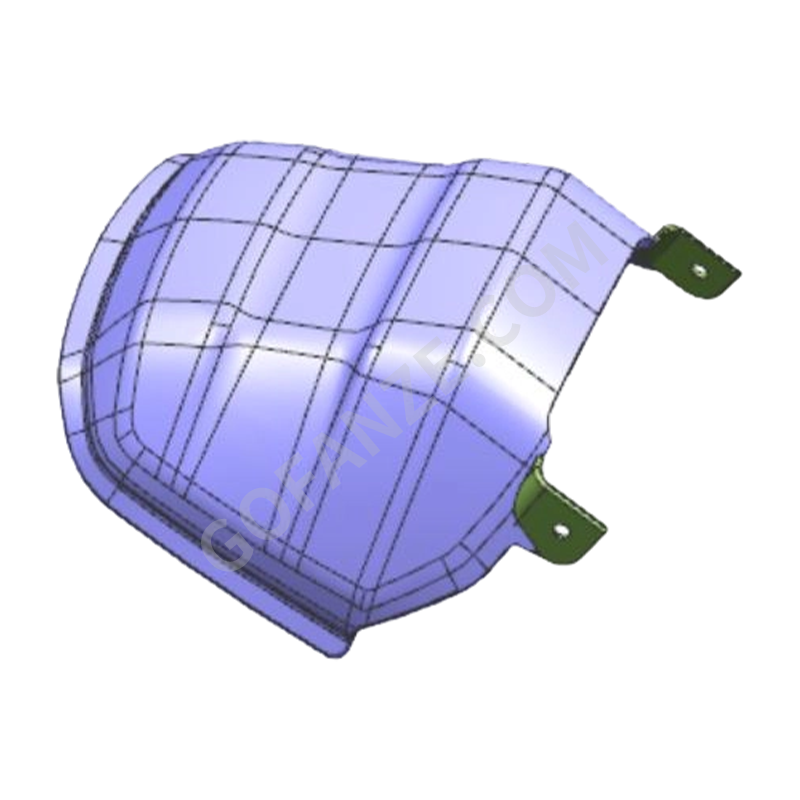
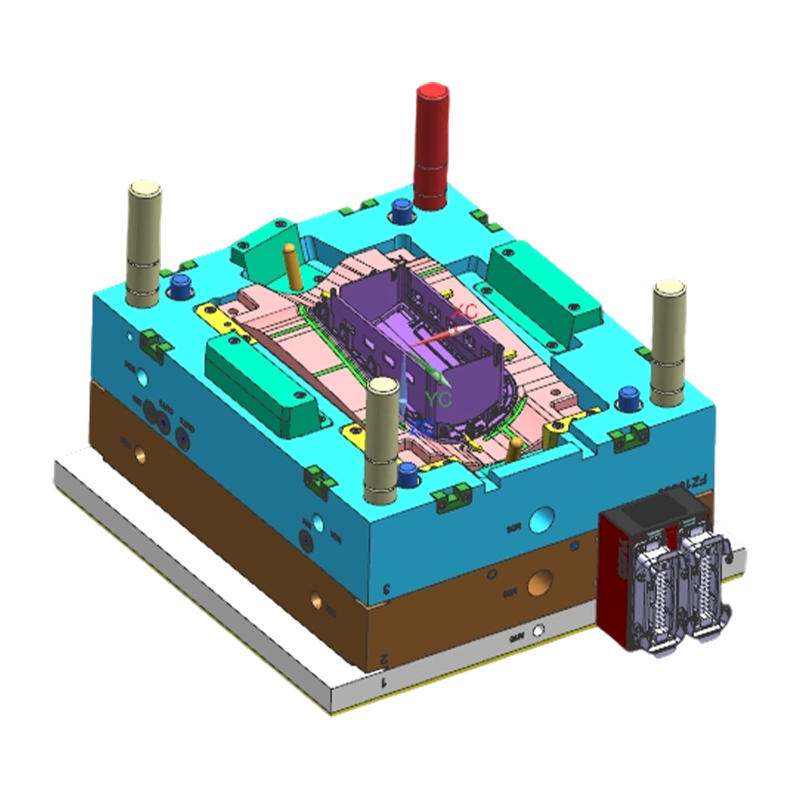 Wholesale Passenger Airbag (PAB) Deployment Cover injection mold Suppliers, CompFanze T&M (Jiashan) Co., Ltd. Is China Wholesale Passenger Airbag (PAB) Deployment Cover injection mold Suppliers, Company, Exporter, Thi...View Product →
What Is a Production Mold?
A production mold, or hard tooling, is a hardened steel injection mold engineered for sustained high-volume automotive production under IATF 16949 process control.
Production molds for automotive interior plastic parts are machined from H13, S136, or 2316 tool steel, hardened to 46 to 52 HRC, then fitted with hot runner systems, conformal cooling, and precisely polished or etched cavities. A well-maintained production mold runs 300,000 to over 1,000,000 shots while holding +/-0.02 to 0.05 mm in critical dimensions.
Two requirements force hard tooling into every serial program. First, customer quality rules under IATF 16949 and PPAP demand that PPAP parts come from the production tool and the production process. Second, many automotive resins are abrasive: PA66+GF30 in wire harness connectors and gear shift brackets erases an aluminum cavity in a few thousand shots. Production molds add TiN or chrome plating on high-wear zones to reach the million-cycle range.
The cost structure differs in kind as well as in degree: $50,000 to $500,000 for the tool, 12 to 30 weeks of build, and a maintenance plan that tracks every shot. The trade pays off in per-part cost, cycle time, and dimensional stability across years of production.
Prototype Mold vs Production Mold: Side-by-Side Comparison
Prototype molds and production molds differ in tool material, cost, lead time, lifespan, tolerance, surface finish, cooling design, resin window, and program volume - nine factors that decide the purchase.
| Tool material | Aluminum 7075-T6, P20 pre-hardened steel | H13, S136, 2316 tool steel, 46 to 52 HRC |
| Mold cost | $8,000 to $30,000 | $50,000 to $500,000 |
| Build lead time | 2 to 6 weeks | 12 to 30 weeks |
| Lifespan | 500 to 5,000 shots | 300,000 to 1,000,000+ shots |
| Dimensional tolerance | +/-0.1 mm | +/-0.02 to 0.05 mm |
| Surface finish | SPI B-2 to A-3, small areas | SPI A-1, polish and texture etching |
| Cooling design | Straight drilled, limited | Conformal cooling, thermally regulated |
| Resin window | Low to mid temperature, non-abrasive | Full range including PA66+GF30, PEEK |
| Typical program volume | 1 to 5,000 parts | 50,000+ parts |
Values are typical industry ranges, not guarantees; a large Class-A instrument panel tool can exceed these figures substantially.
Tool Material and Process Differences
The tool material decides everything downstream: how fast the mold runs, how tightly it holds dimensions, and how long it survives the polymer.
Thermal behavior and cycle time
Aluminum conducts heat roughly 3 to 4 times faster than tool steel, so a prototype mold reaches molding temperature quickly. But aluminum is soft, about 150 BHN versus 46 to 52 HRC for hardened steel, and deflects under high clamp tonnage or injection pressure. A production mold with conformal cooling keeps cavity surface temperature uniform through 100,000+ cycles, which is the real source of repeatable dimensions.
Abrasive polymers and wear
Glass-filled resins such as PA66+GF30 and PBT+GF30 are standard in automotive wire harness connectors, gear brackets, and mounting supports. Shop floor data shows aluminum cavities losing edge definition after 3,000 to 5,000 shots with these materials. Hardened steel with TiN or chrome plating is the only reliable answer for multi-year programs.
Surface finish and appearance
Class-A interior surfaces such as center console trim panel injection molds require mirror polishing and texture etching that only hardened steel can hold across hundreds of thousands of cycles. Prototype aluminum can reach SPI B-2 or A-3 on small areas, but appearance sign-off should come from the production tool. The full selection logic is covered in our guide to automotive interior injection mold design principles and material selection.
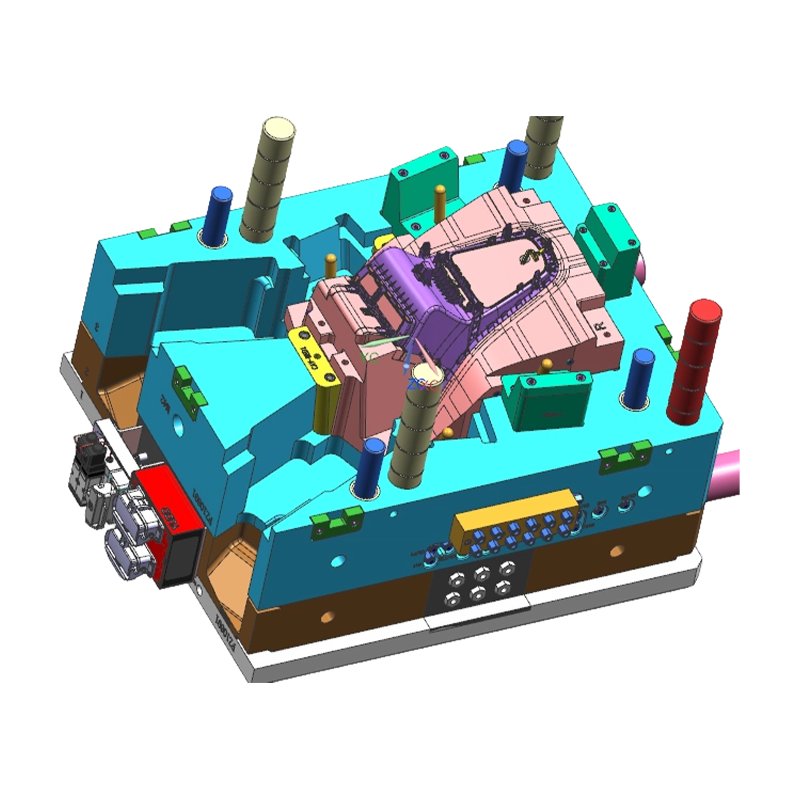 Wholesale Center Console Trim Panels Injection Mold Suppliers, Company, ExporterFanze T&M (Jiashan) Co., Ltd. Is China Wholesale Center Console Trim Panels Injection Mold Suppliers, Company, Exporter, The automotive c...View Product →
Cost, Lead Time and Volume Reality
Prototype molds run at 10 to 20 percent of production mold cost and reach first samples in 2 to 6 weeks, but production molds win on per-part cost and repeatability once volume passes a few thousand parts.
The hidden number is per-part cost. Prototype molds run slower cycles, require more manual handling, and need frequent dimensional checks, so their per-part cost is often 2 to 3 times higher than a production mold. The total cost crossover between the two tooling paths typically lands between 5,000 and 15,000 parts for a mid-size interior component.
How to Decide: Prototype Mold or Production Mold?
Select a prototype mold when the design is not frozen, volume is under 5,000 parts, the resin is non-abrasive, and +/-0.1 mm meets the drawing. Select a production mold when PPAP, Class-A appearance, or volumes above 50,000 parts are in scope.
Six factors drive the decision:
- Design freeze status. Changes after steel cutting cost 3 to 5 times more to execute.
- Total and peak volume. Use total program volume, not the monthly rate.
- Resin abrasiveness and molding temperature. Glass-filled or high-temperature resins rule out aluminum.
- Dimensional requirements. +/-0.05 mm or tighter means production tooling.
- Customer quality documents. PPAP requires parts molded from the production tool.
- Timing to start of production. If the window is under 10 weeks, a prototype mold may be the only path to early validation.
Once the factors are reviewed, a six-step path keeps the decision repeatable:
- Confirm the part class and the customer PPAP rules.
- Freeze the design or define a controlled change window.
- Estimate total and peak program volumes.
- Match the resin to the tool material.
- Set the tolerance and appearance envelope.
- Run a tooling DFM review with the mold maker.
For dashboard and speaker grille parts, wall-thickness and flatness requirements are strict enough that the tooling decision has to be part-level; our guide to choosing automotive interior plastic injection molding for dashboard tooling walks through the practical trade-offs.
Common Mistakes That Raise Program Cost
Most programs lose money not because they chose the wrong mold type, but because they treated the prototype mold as free capacity and the production mold as a flexible fixture.
Running a prototype mold at production volume
Aluminum tools wear. Past 8,000 to 10,000 shots, witness marks, flash, and dimensional drift appear, and scrap rates climb. The tool fails exactly when the program needs stability.
Signing off Class-A appearance on prototype parts
An aluminum cavity surface cannot predict the polish and texture of hardened steel. Parts approved from a prototype tool often fail appearance review when the production tool arrives.
Skipping the production tool on low-risk parts
If the customer requires PPAP, there is no shortcut: PPAP parts must be molded from the production tool and the production process. Prototype parts are for functional validation only.
Ignoring resin abrasion in the tool material decision
PA66+GF30 on an aluminum cavity creates flash after a few thousand cycles. The associated rework and downtime can exceed the cost of a steel tool.
Working with a Mold Maker on Both Tooling Paths
The mold maker's process capability, not the tool steel alone, determines whether the prototype-to-production transition holds its timeline.
Fanze T&M (Jiashan) Co., Ltd. has developed and manufactured plastic injection molds and injection-molded parts since 2005 and holds IATF 16949 certification for automotive supply. Its product range covers automotive interior parts such as instrument panel frames, center stack carriers, airbag covers, cup holder assemblies, and wire harness molds. The practical advantage of using one partner for both tooling paths is knowledge transfer: the gating trial, warpage measurement, and shrinkage data from the prototype tool go directly into the production tool design.
For a large interior structure such as the instrument panel frame injection mold, warpage control depends on gate position and cooling layout. A prototype tool validates that layout in weeks, then the production tool replicates it in hardened steel with conformal cooling.
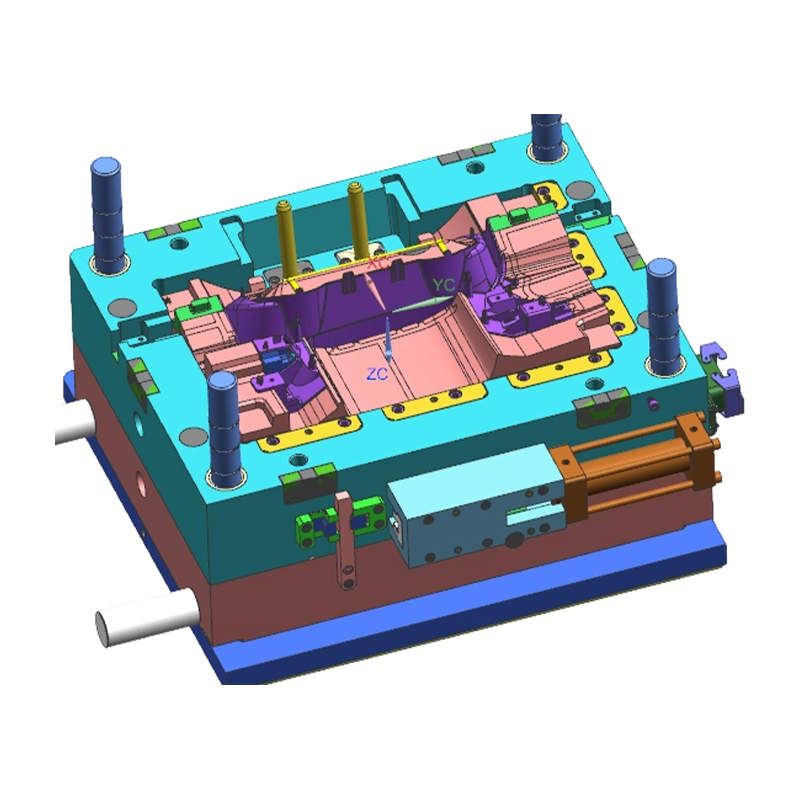 Wholesale Instrument Panel Frame Injection Mold Suppliers, Company, ExporterFanze T&M (Jiashan) Co., Ltd. Is China Wholesale Instrument Panel Frame Injection Mold Suppliers, Company, Exporter, This product line sp...View Product →
The factory runs imported CNC, EDM, and wire-cut machines, plus Japanese and German injection machines, and handles printing and assembly in-house. When comparing quotes, ask the mold maker three questions: how many steel trials are included before mold approval, how shrinkage and warpage data transfer from prototype to production tool, and what maintenance schedule the production mold requires.
Frequently Asked Questions
Can a prototype mold be converted into a production mold?
In most automotive cases, no. Aluminum or P20 prototype tools lack the hardness, cooling layout, and runner system required for serial production, so the steel tool is built separately. The valuable output of the prototype phase is process data: gate position, cooling response, shrinkage, and warpage transfer into the production tool design.
How many parts can a prototype mold produce?
A typical aluminum prototype mold produces 500 to 5,000 shots. With non-abrasive materials such as PP or ABS, some shops pass 5,000. With glass-filled PA66 or PBT, edge wear and flash appear between 2,000 and 4,000 shots, depending on geometry and injection pressure.
Is a prototype mold worth it for a part with only 8,000 pieces per year?
Often yes. Compare the prototype tool cost plus 8,000 molded parts against a production tool plus 8,000 parts. For a non-appearance part in PP or ABS with +/-0.1 mm tolerance, the aluminum tool usually wins economically. The breakeven between prototype and production tooling typically falls between 5,000 and 15,000 parts.
Can PPAP parts come from a prototype mold?
No. PPAP requires parts produced from the production tool, using the production process, at the production site. Prototype mold parts are accepted for design validation, crash testing, and fit-and-function work, but the PPAP submission always comes from the hardened production tool.
Categories
- Company News(2)
- Industry News(32)
Product Category
-
Printer Components & Parts
-
Two-color Plastic component & tool
-
Plastic Multi-way Connectors
-
Threaded Plastic injection molded part
-
Home Appliance Injection Parts
-
Robot shell injection mold
-
High-Gloss Transparent PC injection mold
-
Motorcycle Fairings & Bodywork plastic injection mold
-
EV Charging pile plastic injection mold
-
Automobile wire harness
-
Automotive interior plastic parts injection mold
Related Tag
-
Automotive Dashboard Plastic Parts Injection Mold
Automotive Center Console Plastic Parts Injection Mold
Automotive Interior Trim Plastic Parts Injection Mold
Automotive Instrument Panel Plastic Parts Injection Mold
Automotive Air Vent Plastic Parts Injection Mold
Automotive Door Panel Plastic Parts Injection Mold
Automotive Dashboard Injection Mold
High Precision Automotive Interior Plastic Parts Injection Mold
Hot Runner Automotive Interior Plastic Parts Injection Mold
Multi Cavity Automotive Interior Plastic Parts Injection Mold

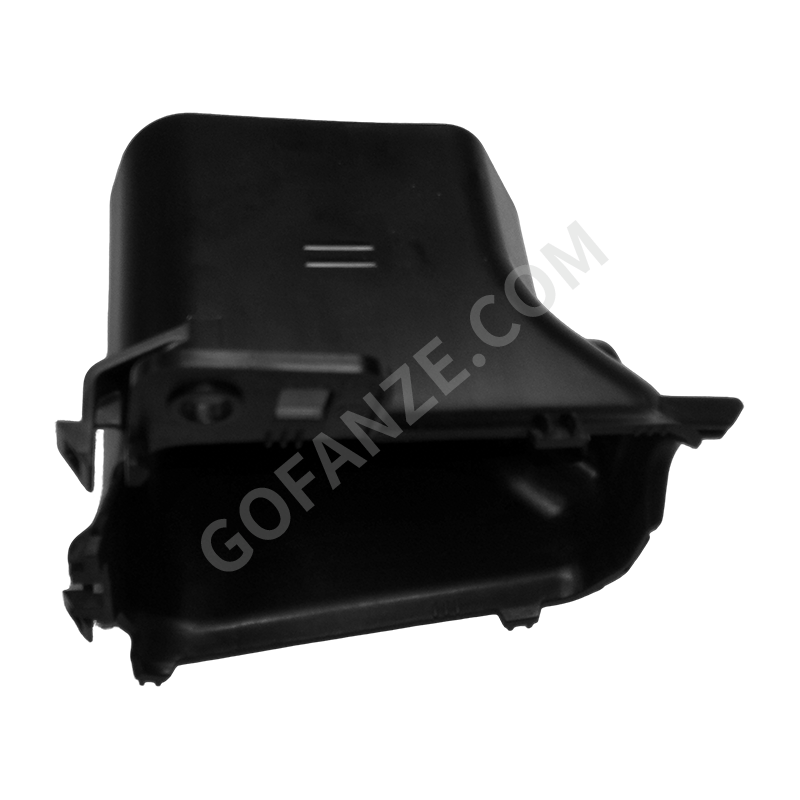

- Automotive interior plastic parts injection mold
- Automobile wire harness
- EV Charging pile plastic injection mold
- Motorcycle Fairings & Bodywork plastic injection mold
- High-Gloss Transparent PC injection mold
- Robot shell injection mold
- Home Appliance Injection Parts
- Threaded Plastic injection molded part
- Plastic Multi-way Connectors
- Two-color Plastic component & tool
- Printer Components & Parts

