



 English
 Français
 Español
 Deutsch


How can conformal cooling improve cycle time and reduce warpage on thin-walled home appliance injection molds?
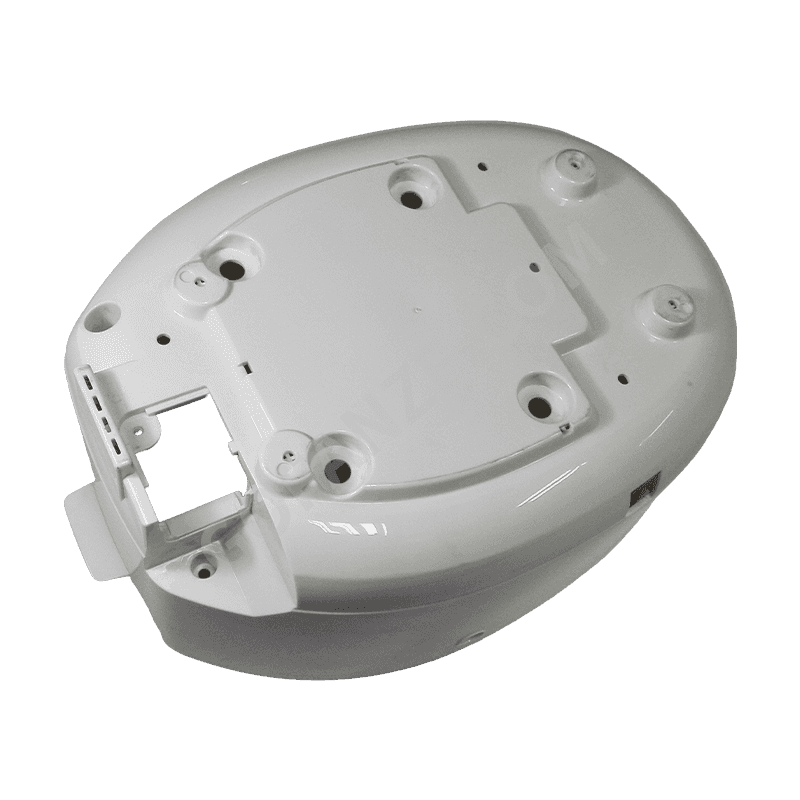
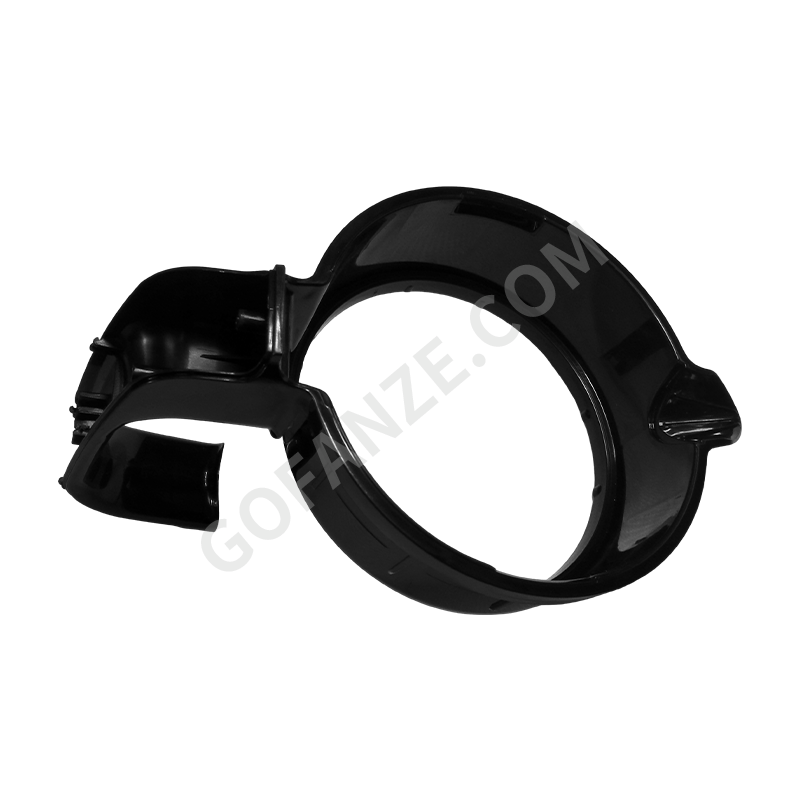
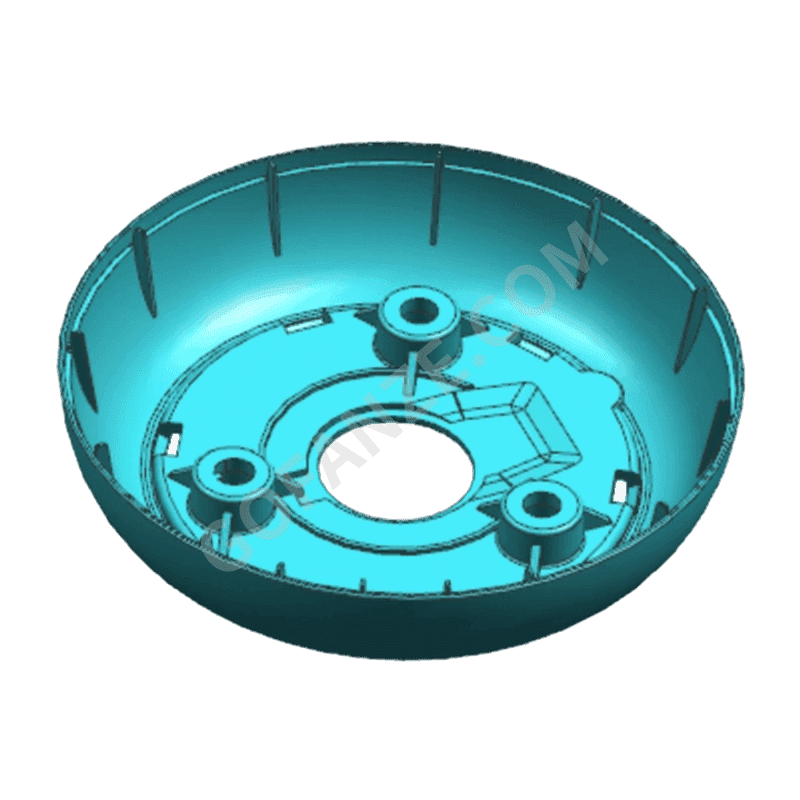
Thin-walled home appliance parts (e.g., blender jugs, air fryer shells, vacuum cleaner bodies) typically have wall thicknesses of 1.5–2.5 mm. Conventional straight-drilled cooling channels often leave hot spots, leading to long cycle times (uneven cooling requires longer holding) and warpage (differential shrinkage). Conformal cooling uses 3D-printed or machined cooling channels that follow the part's contour, providing uniform heat extraction. This technology dramatically improves both productivity and dimensional quality.
1. How Conformal Cooling Improves Cycle Time and Reduces Warpage
| Parameter | Conventional Cooling (Straight Channels) | Conformal Cooling (Contour-Following) | Typical Improvement |
|---|---|---|---|
| Cooling time | 20–40 seconds (for thin-walled parts) | 12–25 seconds | Reduced by 30–50% |
| Cooling uniformity | ΔT across part: 15–25°C (hot spots common) | ΔT across part: 3–8°C | Hot spots eliminated → less warpage |
| Warpage (typical max deviation) | 0.8–1.5 mm per 200 mm length | 0.2–0.5 mm per 200 mm length | Warpage reduced by 60–75% |
| Total cycle time | 45–70 seconds (fill+cool+open) | 30–45 seconds | 30–40% faster production |
| Reject rate (warpage-related) | 5–10% (typical) | 1–3% | Higher yield, lower cost |
2. Conformal Cooling Design Parameters for Thin-Walled Home Appliance Molds
| Design Feature | Recommended Value / Method | Effect on Part Quality | Implementation at Fanze T&M (Jiashan) Co., Ltd. |
|---|---|---|---|
| Channel diameter | 6–10 mm (depending on part curvature) | Balances flow rate and pressure drop. | Optimized via CFD simulation before manufacturing. |
| Distance from cavity surface | 1.5–2.5 x channel diameter (e.g., 12–20 mm) | Efficient heat transfer without weakening mold steel. | Standard design rule for all home appliance molds. |
| Coolant flow rate | Turbulent flow (Reynolds >10,000) – typically 8–15 L/min per circuit. | Maximizes heat transfer coefficient (5000–15000 W/m²·K). | Monitored by flow meters on Japanese/German injection machines. |
| Coolant temperature difference (inlet vs outlet) | ≤2–3°C (conformal) vs ≤5–8°C (conventional). | Uniform cooling = uniform shrinkage = less warpage. | Validated by thermal imaging during trial shots. |
3. Manufacturing Methods for Conformal Cooling Channels at Fanze T&M (Jiashan) Co., Ltd.
- 3D printed (DMLS): For highly complex curves (e.g., blender jug with spiral channels). Uses 17‑4 PH or Maraging steel inserts.
- CNC machined conformal channels: For moderate curvature, the company uses 5‑axis CNC machining to create curved channels in mold plates, then seals them with welded plugs.
- Brazed or stacked plate construction: For large flat thin‑walled parts (e.g., air fryer shells), channels are milled into two plates then brazed together.
- Hybrid cooling: Conformal channels in high‑heat zones (near gate, ribs, bosses) + conventional straight channels elsewhere – a cost‑effective approach for many home appliance molds.
4. Real-World Example: Air Fryer Outer Shell (PP + 20% Talc)
- Wall thickness: 2.0 mm (nominal).
- Conventional cooling cycle: 52 seconds → warpage: 1.2 mm over 300 mm length → reject rate: 7%.
- Conformal cooling (CNC 5‑axis machined channels): Cycle time reduced to 34 seconds (-35%); warpage reduced to 0.4 mm (-67%); reject rate dropped to 2%.
- Return on investment: Mold cost +20%, but annual production savings >40% due to faster cycles and lower scrap.
5. Three FAQs (including company introduction)
FAQ 1: Is conformal cooling only suitable for very expensive molds? Can it be justified for medium-volume home appliance parts?
A: Conformal cooling is not limited to high‑volume production. For medium volumes (50,000–200,000 parts/year), the cycle time reduction (30–50%) and lower reject rate often justify the additional mold cost. Fanze T&M (Jiashan) Co., Ltd. offers a tiered approach: full conformal cooling for high‑volume parts, and hybrid cooling (conformal only in hot zones) for medium volumes. For customers seeking home appliance injection parts with tight dimensional tolerances, the company provides a cost‑benefit analysis before recommending conformal cooling. The company has successfully applied this to air fryer, juicer, and vacuum cleaner molds for Japanese Tiger Electric and domestic brands.
FAQ 2: What maintenance challenges come with conformal cooling channels, especially with 3D printed inserts?
A: Conformal channels, especially 3D printed ones, can be difficult to clean if coolant deposits scale or rust. Fanze T&M (Jiashan) Co., Ltd. addresses this by:
- Using closed‑loop deionized water + corrosion inhibitor (nitrite‑free).
- Designing removable insert blocks for high‑wear zones, so conformal channels can be accessed or replaced.
- Performing ultrasonic cleaning or chemical flushing every 200,000 cycles.
- Specifying stainless steel (e.g., 17‑4 PH) for DMLS inserts to prevent internal rust.
With proper maintenance, conformal cooling inserts have lasted over 1 million cycles on the company's German‑made injection machines.
FAQ 3: What specific experience does Fanze T&M (Jiashan) Co., Ltd. have in thin‑walled home appliance molds with conformal cooling?
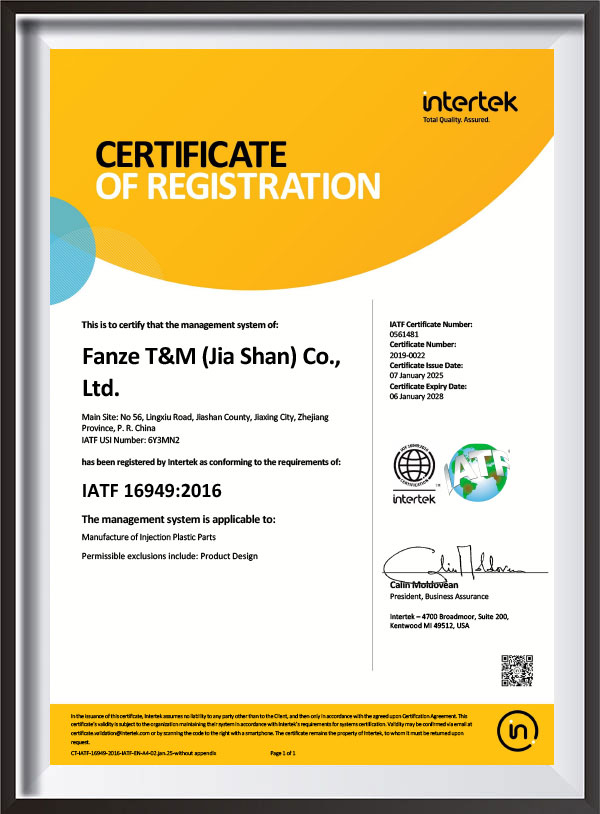
A: Fanze T&M (Jiashan) Co., Ltd. was founded in 2005 and specializes in precision injection molds and injection parts. The company moved to Guigu Park, Jiashan County in 2016, with a 14,000 m² usable plant area and about 100 employees. It owns imported CNC, EDM, slow‑moving wire cutting machines, and high‑performance injection molding equipment from Japan and Germany. The company is IATF16949 certified and has established good cooperative relations with British Land Rover Motors, Triumph Motorcycles, ABB charging stations, and Japanese Tiger Electric.
Specific home appliance conformal cooling experience includes:
- High‑speed blender jug (PC, 1.8mm wall): 3D‑printed conformal channels reduced cooling time from 45s to 24s (‑47%) and eliminated warpage on the bottom sealing surface. Annual production: 300,000 units.
- Air fryer outer shell (PP+T20, 2.0mm wall): 5‑axis machined conformal channels in core and cavity. Cycle time: 52s → 34s; flatness improved from 1.2mm to 0.4mm over 350mm diagonal.
- Robot vacuum top cover (ABS, 2.2mm wall with curved dome): Hybrid cooling (conformal in dome + straight elsewhere) reduced sink marks around sensor window by 80% and cut cycle time from 38s to 28s.
The company adheres to the quality policy of "precision, high efficiency, casting quality" and has won high praise from customers worldwide.


