


 English
 Français
 Español
 Deutsch

Home · News · Industry News · How Mold Surface Finish Affects Automotive Interior Parts: Texture, Gloss & Cost
Industry News
How Mold Surface Finish Affects Automotive Interior Parts: Texture, Gloss & Cost
2026-09-16Table of Contents
- 1 Mold Surface Finish Controls Gloss, Grain, Feel, and Cost
- 2 SPI Grades and VDI Numbers Are the Specification Shortcut
- 3 High Gloss and Textured Grain Fail in Different Places
- 4 Deeper Grain Forces Draft, Steel, and Parting Line Decisions
- 5 Cost Follows the Finish: Mirrors Are the Expensive End
- 6 Match the Finish to the Part, Not to the Mood Board
- 7 Surface Finish Questions Buyers Ask Most Often
Pull a center console trim panel off the molding machine and it can look flawless. Install it in a car parked under summer sun, and the reflection in the windshield tells a different story. That difference is decided weeks earlier at the mold design review, when the finish of the steel cavity is specified. For automotive interior parts, the choice between a mirror-polished cavity, a fine 600-grit finish, or a VDI 30 grain controls gloss, scratch visibility, tactile feel, and tooling cost long before resin enters the mold.
Fanze T&M (Jiashan) Co., Ltd., an IATF 16949-certified precision molding company operating since 2005, builds automotive interior injection molds for air vents, center consoles, instrument panel frames, and airbag housings. The most frequent question from customers in the product development review stage is not about tonnage or cycle time. It is: which surface finish should this tool carry, and what does that finish cost? This guide explains how mold surface finish affects the appearance, durability, and economics of the parts occupants actually touch.
Mold Surface Finish Controls Gloss, Grain, Feel, and Cost
Mold surface finish determines how an interior part reflects light, how it feels to the fingertip, how quickly it shows scratches, and how much the tool costs to build, so the decision must be locked before steel is cut.
During injection molding, the cavity surface is replicated onto the part surface. A polished cavity produces a glossy part; an etched cavity produces a matte grain. Two parts molded in the same resin, with the same wall thickness and the same cycle time, can look like different materials simply because of the steel finish. That is why interior parts programs specify the finish in the tooling contract, not after first trials.
SPI Grades and VDI Numbers Are the Specification Shortcut
SPI grades and VDI 3400 numbers are the two standard shorthand systems for specifying a measurable mold surface, and an experienced mold maker interprets them identically.
SPI A through D describe progressively rougher tool surfaces, from diamond-polished mirror faces to glass-bead blast finishes. VDI 3400 numbers do the same for texture: 21 to 24 is fine, low-profile grain, 27 to 33 covers typical interior trim, and 36 to 42 approaches deep leather-like grain.
| Finish class | Surface character | Typical Ra range | Typical interior use |
| SPI A (A-1 to A-3) | Mirror to high-gloss polished steel | Ra below 0.05 to about 0.1 micron | Decorative trims, dark glossy panels, visible lens surfaces |
| SPI B (B-1 to B-3) | Fine sanded finish, 800 down to 400 grit | Ra about 0.1 to 0.8 micron | Low-gloss instrument parts, painted carriers, secondary-surfaced panels |
| SPI C (C-1 to C-3) | Stone finish, 600 down to 320 grit | Ra about 0.8 to 1.6 micron | Structural carriers, masked areas, non-visible surfaces |
| SPI D and VDI 21-42 | Blasted or chemically etched grain | Ra about 1.1 to 12.5 micron | Air vents, center consoles, IP panels, airbag covers |
High Gloss and Textured Grain Fail in Different Places
A high-gloss SPI A surface sells the car in the showroom, while a VDI 27 to 36 grain protects the cabin from glare and hides daily wear, so the right choice depends on where the part sits and how often it is touched.
Gloss and grain are trade-offs, not quality levels. A mirror surface reads as premium under showroom lighting, but it exposes fingerprints, dust, and fine swirl scratches within days of use. A textured surface absorbs the same marks, but it softens reflections and adds a tactile quality that many automakers deliberately tune.
High Gloss (SPI A)
Visual depth and "wet-look" reflections on dark colors.
Shows fingerprints, dust, and micro-scratches quickly on touch points.
Demolds with more friction on deep walls; visible drag marks are a real risk.
Requires high mold temperature and defect-free polished steel.
Textured Grain (VDI 27-36)
Matte appearance with gloss typically in the 1.5 to 4 GU range.
Hides swirl marks, handling marks, and light scratches.
Lowers windshield and display reflections during daytime driving.
Needs draft angle, clean shutoffs, and consistent grain across mating parts.
A 30 to 60 micron grain does not eliminate scratches; it hides them. A scratch that is obvious on a mirror surface falls below visual attention when the surrounding surface is grained at VDI 30 or deeper.
Deeper Grain Forces Draft, Steel, and Parting Line Decisions
Deeper mold texture demands more draft angle, cleaner steel, and tighter control of shutoffs, because texture is etched into the cavity and becomes a fixed part of the geometry.
Texture is applied by chemical etching after the cavity is machined and polished. The deeper the etch, the more aggressive the steel removal, and the more the mold design must compensate. Five checks matter most at the design review.
Moving from VDI 24 to VDI 42 on the same side wall can raise the required draft from about 1 degree to as much as 8 degrees, enough to force a redesign of deep ribs or snap-fit geometry. These relationships are covered in detail in our guide on automotive interior plastic parts mold design principles.
Cost Follows the Finish: Mirrors Are the Expensive End
Finishing hours grow steeply as the target moves from deep texture toward mirror polish, and large multi-cavity interior tooling turns that difference into weeks of extra lead time.
Texture etching is a defined chemical process with predictable timing. Mirror polishing is manual work, and every inspection of a class A surface carries rework risk. The chart below shows typical relative finishing effort for a medium cavity set, with a VDI 33 texture used as the baseline.
On a complex instrument panel frame tool with large inserts, the difference between VDI 30 and SPI A-1 is not a few extra hours. It is multiple finishing passes, finer abrasive sequences, and a clean environment that prevents dust from being embedded in a mirrored surface. Projects that need optical-like clarity take this logic further; our notes on high-gloss transparent PC molding explain the material and process side of mirror surfaces.
Match the Finish to the Part, Not to the Mood Board
Every interior part has one dominant requirement - glare control, scratch resistance, feel, or decorative gloss - and the correct finish follows that requirement rather than a style reference.
The same texture philosophy does not apply across an entire cockpit. A grained air vent that controls windshield reflection is wrong if the same grain is used on a panel the customer expects to be glossy. The table below lists the finishes Fanze T&M commonly specifies on automotive interior programs.
| Part group | Recommended finish | Primary reason |
| Air-conditioning vent vanes | VDI 28-30 matte grain | Limits reflection in the driver's line of sight; consistent fingertip feel for vane adjustment. |
| Center console side panels | VDI 24-27 or SPI B | Balances fingerprint resistance with cleanability on a frequently touched surface. |
| Instrument panel frame | SPI A-3 to B-1 with low-gloss resin | Adds depth to the visible frame without creating mirror reflection on the windshield. |
| Driver and passenger airbag covers | Controlled VDI 30 grain | Hides the deployment seam and keeps glare low while preserving a predictable tear pattern. |
| Dash speaker covers | VDI 30-33 grain | Masks hole geometry and weld lines while keeping a uniform cabin texture. |
These decisions sit inside the product development review stage that Fanze T&M runs with customers before tooling steel is ordered. The company has delivered an automotive air-conditioning vent injection mold with tuned matte cavities, center console trim panel injection molds for touched surfaces, and an instrument panel frame injection mold where low gloss and dimensional stability had to be balanced. Finish class, resin grade, and texture depth are reviewed as one system, not as separate items. For dashboard programs, the material side of this balance is covered in our comparison of dashboard injection molding material selection.
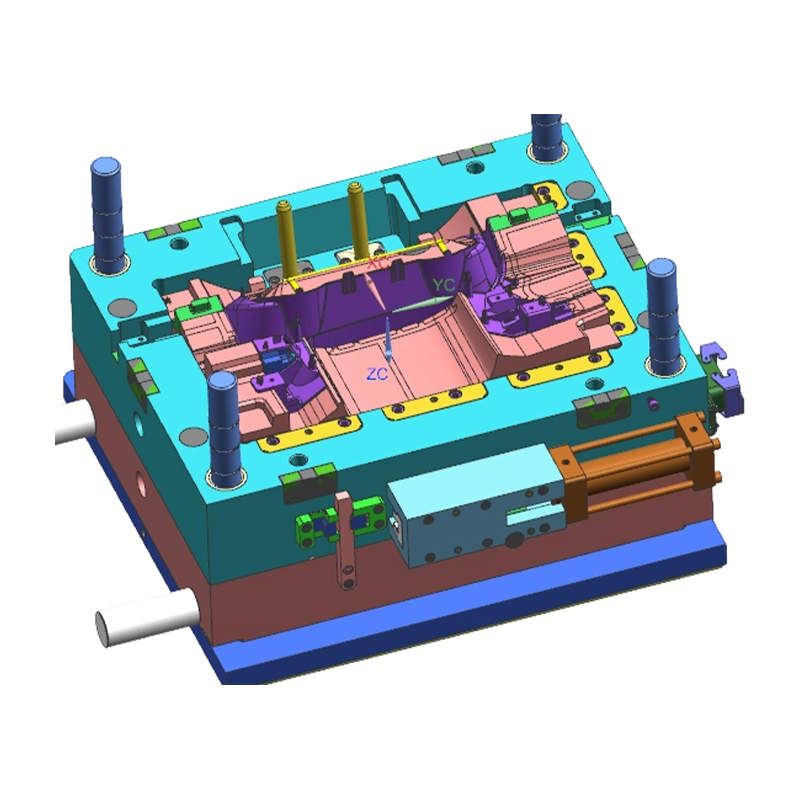 Wholesale Instrument Panel Frame Injection Mold Suppliers, Company, ExporterFanze T&M (Jiashan) Co., Ltd. Is China Wholesale Instrument Panel Frame Injection Mold Suppliers, Company, Exporter, This product line sp...View Product →
 Wholesale Center Console Trim Panels Injection Mold Suppliers, Company, ExporterFanze T&M (Jiashan) Co., Ltd. Is China Wholesale Center Console Trim Panels Injection Mold Suppliers, Company, Exporter, The automotive c...View Product →
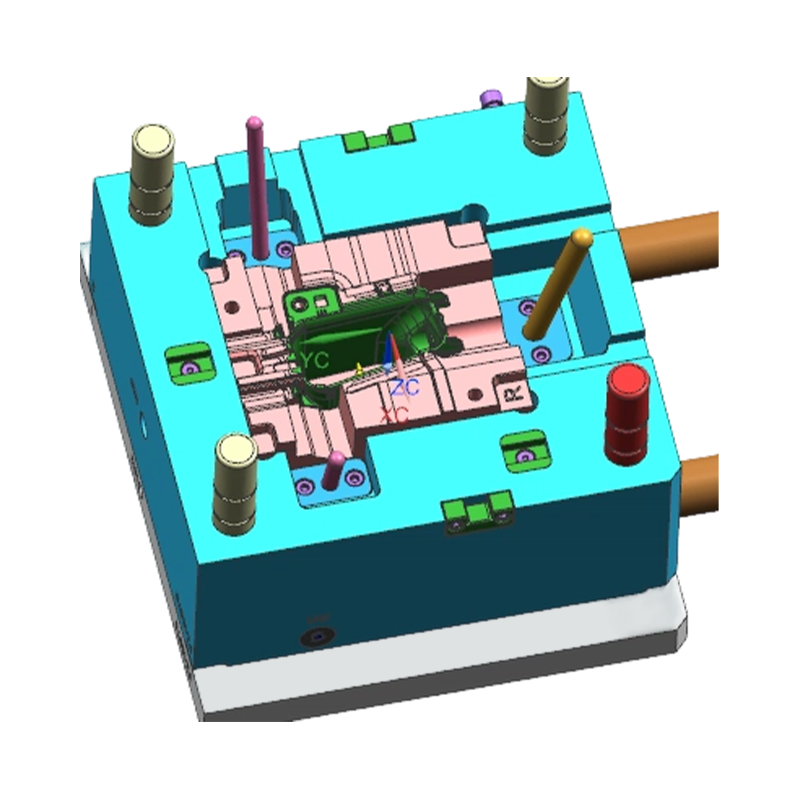 Wholesale Automotive Air Conditioning Vent Plastic Parts Injection Mold SupplierFanze T&M (Jiashan) Co., Ltd. Is China Wholesale Automotive Air Conditioning Vent Plastic Parts Injection Mold Suppliers, Company, Export...View Product →
Define the finish early. Provide a texture plaque or a reference sample. Confirm draft angles before steel cutting, and put the SPI or VDI class plus the GU target into the purchase order. The parts will still be judged by eye and fingertip inside the vehicle, and the finish written on the tool drawing is what makes that judgement predictable.
Surface Finish Questions Buyers Ask Most Often
Does a higher SPI grade always mean a better interior part?
No. SPI A-1 on a dark, frequently touched console shows swirl scratches within weeks, while a VDI 30 grain stays visually stable for years. Choose the grade that matches the part's exposure to light, touch, and cleaning, not the highest polish available.
Can the mold surface finish be changed after the first samples?
Yes, but only in one practical direction. A polished cavity can be chemically etched to a deeper grain, because etching removes steel. Removing a texture to return to a lower Ra normally requires machining or weld repair of the cavity, which changes dimensions and shutoff conditions. That is why the finish decision belongs before steel cutting.
How should surface finish be written on a drawing?
Use codes, not adjectives. Write "VDI 30 on visible surfaces, gloss 2 to 4 GU at 60 degrees, SPI B-3 on shutoff faces, texture stops 1.0 mm before shutoffs, minimum 3 degrees draft on textured walls." A coded specification is measurable, comparable, and controllable in the inspection report.
What does Fanze T&M do before cutting steel on interior projects?
Under the IATF 16949 system, Fanze T&M reviews every visible surface in the product development phase, validates draft against texture depth, confirms resin and gloss targets with the customer, and agrees on the SPI or VDI class before the mold is built. Surface samples and first-shot parts are checked against that agreement.
Categories
- Company News(2)
- Industry News(32)
Product Category
-
Printer Components & Parts
-
Two-color Plastic component & tool
-
Plastic Multi-way Connectors
-
Threaded Plastic injection molded part
-
Home Appliance Injection Parts
-
Robot shell injection mold
-
High-Gloss Transparent PC injection mold
-
Motorcycle Fairings & Bodywork plastic injection mold
-
EV Charging pile plastic injection mold
-
Automobile wire harness
-
Automotive interior plastic parts injection mold
Related Tag
-
Automotive Interior Trim Plastic Parts Injection Mold
Automotive Dashboard Plastic Parts Injection Mold
Automotive Center Console Plastic Parts Injection Mold
Automotive Instrument Panel Plastic Parts Injection Mold
Automotive Air Vent Plastic Parts Injection Mold
High Precision Automotive Interior Plastic Parts Injection Mold
Hot Runner Automotive Interior Plastic Parts Injection Mold
Multi Cavity Automotive Interior Plastic Parts Injection Mold
Automotive Interior Plastic Components Injection Mold
Automotive Door Panel Plastic Parts Injection Mold


- Automotive interior plastic parts injection mold
- Automobile wire harness
- EV Charging pile plastic injection mold
- Motorcycle Fairings & Bodywork plastic injection mold
- High-Gloss Transparent PC injection mold
- Robot shell injection mold
- Home Appliance Injection Parts
- Threaded Plastic injection molded part
- Plastic Multi-way Connectors
- Two-color Plastic component & tool
- Printer Components & Parts

