



 English
 Français
 Español
 Deutsch
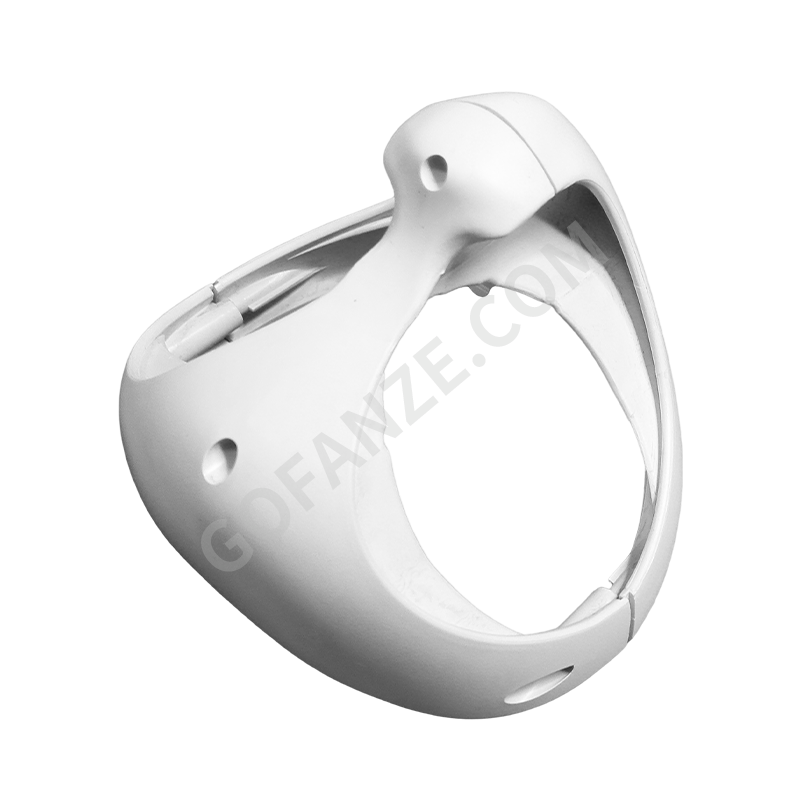
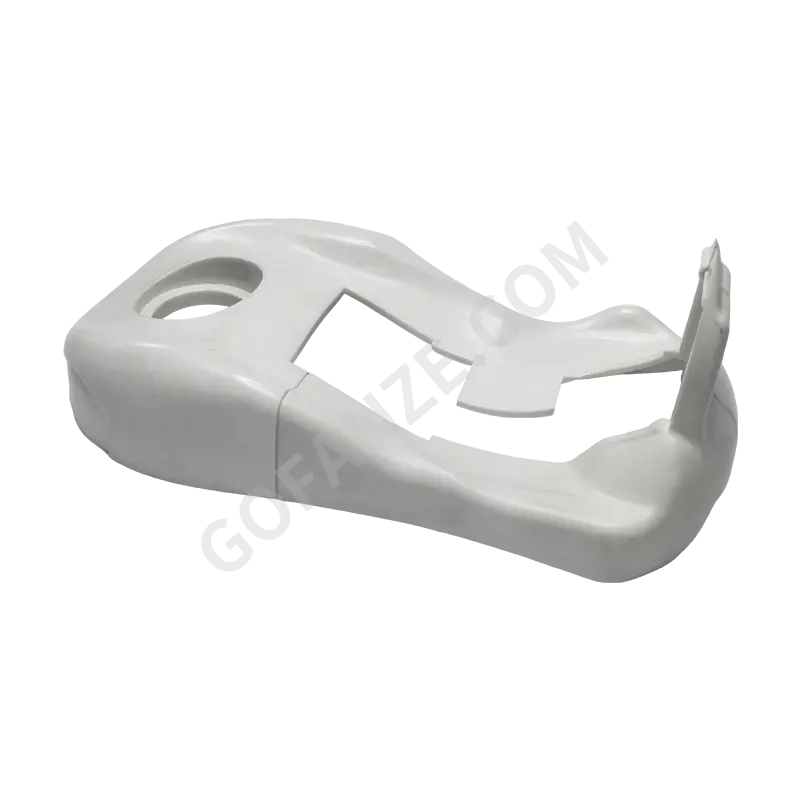
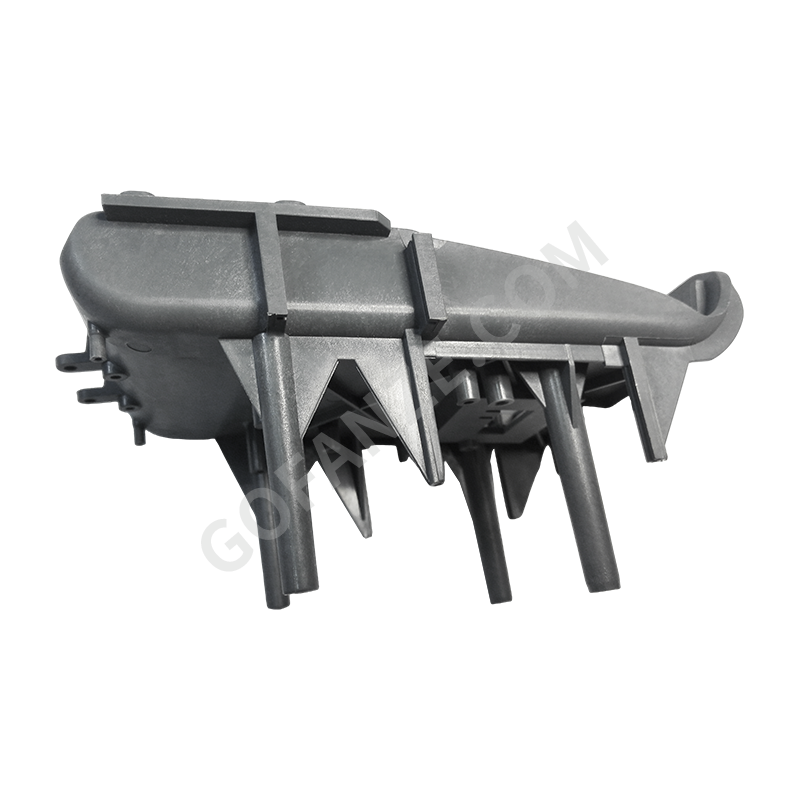


How do you design injection molds to prevent visible knit lines on high-gloss robotic shell surfaces with complex curvature?
High-gloss robotic shells (e.g., for service robots, vacuum cleaners, or industrial robot covers) demand flawless aesthetic surfaces. A knit line (weld line) forms when two melt fronts meet around an obstacle (e.g., boss, rib, or opening) and fails to completely fuse. On complex curved surfaces, these lines are highly visible under grazing light and can be perceived as defects. Preventing visible knit lines requires a combination of melt flow control, gate placement, mold temperature management, and surface engineering.
1. Key Design Strategies to Prevent Visible Knit Lines
| Strategy | Design Method | Effect on Knit Line Visibility | Typical Parameter | |
|---|---|---|---|---|
| Gate location & number | Place gate(s) so that melt front convergence occurs at non-visible areas (e.g., future label area, edge, or under a snap-fit). Use sequential valve gating to eliminate convergence entirely. | Reduces visibility from "clearly visible" to "not detectable" (grade 1 under ASTM D2457). | Valve gate delay: 0.1–0.5s between gates. | |
| Mold temperature (localized control) | Use independent heating cartridges or oil channels near knit line zones to raise local mold temperature by 20–30°C above nominal. | Improves molecular diffusion, reduces notch depth at knit line by 40–60%. | Nominal: 70–90°C (PC/ABS); Local: 100–120°C. | |
| Melt front velocity profiling | Use high-speed injection (200–300 mm/s) just before knit line formation to increase melt temperature via shear heating, then immediately reduce speed to avoid overpacking. | Raises melt temperature by 5–10°C at knit line, improving fusion. | Profile: 80% speed → knit line zone → 120% speed for 5mm → back to 80%. | |
| Venting at knit line | Add 0.02–0.03 mm deep vent exactly at predicted knit line location to allow trapped air to escape, preventing air entrapment that deepens the visible mark. | Eliminates "silver" appearance; reduces visual width to <0.05 mm. | Vent land length: 1–2 mm, followed by 0.5 mm relief. | |
| Mold surface finish | Maintain SPI A-1 (diamond buff) or A-2 (6000 grit) finish on cavity surface. Knit lines are less visible on highly polished surfaces because light reflection is more uniform. | Reflection scattering decreases, making knit lines nearly invisible. | Rz ≤ 0.05 μm. | |
| Material (Typical for Robot Shells) | Mold Temperature (°C) | Melt Temperature (°C) | Knit Line Visibility (Before Optimization) | Visibility After Best Practices |
| PC/ABS (e.g., Bayblend T65) | 80–100 | 260–280 | Moderate (width 0.15–0.25 mm) | Nearly invisible (width ≤0.05 mm) |
| PC (unfilled, transparent or opaque) | 90–110 | 280–310 | High (sharp notch) | Low (but still visible under grazing light without valve gating) |
| ABS (high gloss grade) | 70–85 | 230–250 | Low to moderate | Invisible (with venting + velocity profiling) |
| PC+10%GF (structural robot shell) | 90–110 | 280–310 | High (GF orientation amplifies visibility) | Moderate (requires valve gate for elimination) |


