


 English
 Français
 Español
 Deutsch

Home · News · Industry News · How to Choose a Reliable Automotive Interior Plastic Parts Injection Mold Manufacturer
Industry News
How to Choose a Reliable Automotive Interior Plastic Parts Injection Mold Manufacturer
2026-09-02Table of Contents
- 1 What separates automotive interior molds from general plastic molds
- 2 Five verification points that screen out weak suppliers
- 3 What a factory audit should actually verify
- 4 Design review and material decisions control most of the cost
- 5 Quality systems are judged by execution, not certificate
- 6 Red flags and green flags during supplier evaluation
- 7 Frequently asked questions about choosing an interior mold manufacturer
An automotive interior plastic part sits in the most visible and most safety-regulated zone of the cabin. A passenger airbag deployment cover must tear open along a molded seam within 30 milliseconds at minus 35 degrees Celsius; a cup holder shutter has to survive 100,000 slide cycles; a dashboard frame carries more than 40 dimensional characteristics that must hold within 0.05 millimeters across millions of shots. What decides whether those parts pass validation is not the injection press on the floor, but the injection mold manufacturer behind the tool. Choosing a reliable automotive interior plastic parts injection mold manufacturer is a technical qualification process, not a price negotiation.
What separates automotive interior molds from general plastic molds
Automotive interior molds belong to a separate quality class, because they combine cosmetic Class A surfaces, tight tolerances, moving mechanisms and safety-related validation in one tool.
General-purpose molds are quoted to 0.2-0.5 mm tolerances with modest appearance requirements. Interior components operate under a different contract: visible surfaces match a specified grain, gloss and shade; parting lines sit where the eye does not travel; and critical dimensions are tracked through 30-to-50-point dimensional reports.
Mold qualification is the structured gate process by which a new tool proves it can repeatedly produce parts inside the agreed dimensional, appearance, cycle-time and capability targets before production parts are approved.
The material mix narrows the field just as much. Instrument panel carriers use PC/ABS; trim panels run ABS or ASA; hidden structures use PP plus EPDM-TD20. Each resin shrinks and flows differently, so a mold maker that has proven tools across these materials predicts weld line and sink mark risks during flow analysis, while an inexperienced one discovers them at trial shots.
Five verification points that screen out weak suppliers
A reliable automotive interior mold manufacturer proves itself in five areas: certification, machining assets, design engineering, injection validation and program control.
Check the quality system first: IATF16949 is the working standard because it governs APQP, PPAP, control plans and traceability, which ISO9001 alone does not. Then review the machining floor; a supplier that outsources all milling, burning and polishing breaks the dimensional chain between design and finished tool steel.
| Verification point | What to check | Why it matters | Warning sign |
| Quality system | IATF16949, PPAP records, control plans | OEMs audit process control, not just samples | ISO9001 only, no PPAP to show |
| Machining floor | CNC, EDM, wire-cut, CMM in-house | Cavity accuracy decides parting lines | All machining outsourced |
| Design engineering | DFM, mold flow, gating, cooling plan | Shrinkage and sink marks are decided pre-cut | No DFM before purchase order |
| Injection validation | Production-class presses for trials | Shutoff and cycle time proven on a real press | Trials at third-party shop |
| Program control | Tooling schedule, steel certificates, maintenance | Interior tools need years of support | No documented repair history |
As a threshold benchmark, Fanze T&M (Jiashan) Co., Ltd., a precision molding specialist in Jiashan, China, operates 14,000 m2 of usable plant space with about 100 employees, holds IATF16949 and runs imported machining alongside Japanese and German injection presses.
What a factory audit should actually verify
A factory visit turns a paper qualification into a technical judgment, because equipment, process discipline and trial capability can only be assessed on the shop floor.
Walk the floor with a checklist and look for these five capabilities in operation:
- Imported CNC machining centers cutting cavity and insert profiles to within 0.01 millimeter
- EDM machines producing shutoff faces and sharp internal corners without secondary handwork
- Slow wire-cut machines generating replaceable inserts and precise core geometry
- CMM and measurement fixtures issuing a printed dimensional report for every trial batch
- In-house injection machines running trial shots under the process conditions planned for production
After the capability screen, check that the tooling schedule follows a standard seven-gate sequence:
- DFM review and design freeze
- Mold design, steel order and heat treatment plan
- Machining, electrode burn, polish and texture
- First trial shot and visual inspection
- Dimensional report, fitting and rework loops
- PPAP samples, appearance sign-off and capability run
- Mold handover, maintenance plan and serial support
For safety-related structures the same logic applies with more force. An automotive plastic airbag mounting support bracket injection mold must hold its datum through minus 40 to plus 105 degrees Celsius, because the bracket carries the load path of the airbag module. A proven supplier shows trial records, wall-thickness measurements and warpage data on demand.
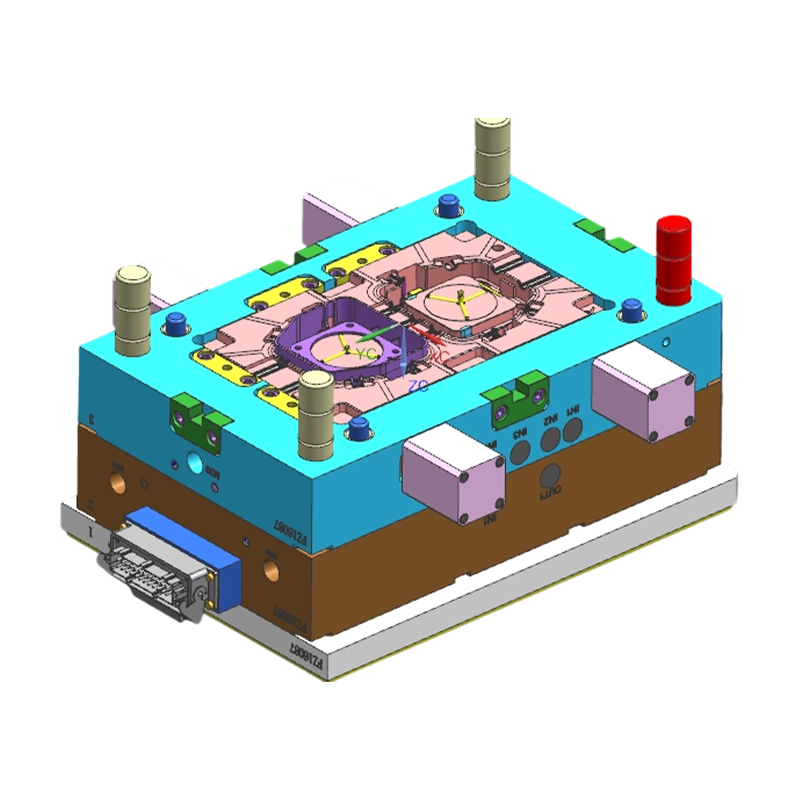 Wholesale Automotive Plastic Airbag Mounting & Support Bracket injection mold SuFanze T&M (Jiashan) Co., Ltd. Is China Wholesale Automotive Plastic Airbag Mounting & Support Bracket injection mold Suppliers, Company, ...View Product →
Independent evidence beats presentations. European customers who visited the factory to inspect Fanze molds asked exactly these questions: equipment in operation, trial data on the desk, and process documents that match the production floor.
Design review and material decisions control most of the cost
The design review, not the mold price, decides most of the downstream cost and risk in an interior program.
A competent DFM report addresses gate location, weld line position, shutoff angles, texture draft and cooling layout before steel is cut. Those choices fix how the part looks, how it warps and how long the cycle runs.
Steel specification belongs in the same discussion. S136 suits high-gloss and transparent details; NAK80 holds grain detail longer through cleaning cycles; 718H or 2738 remain the workhorse for structural parts. A quotation that lists only "tool steel", without grade, hardness and heat treatment, is a screen-failing answer.
The resin choice interacts with the tool directly. Review the key material properties for reliable automotive plastic parts before fixing the grade, because shrinkage data feeds the cavity calculation.
Complex appearance-and-function parts show the value of matching experience. An air-conditioning vent combines sliding cores, thin ribs and a visible gate area that can ruin a glossy surface, so buyers prefer a supplier with a documented automotive air conditioning vent plastic parts injection mold reference.
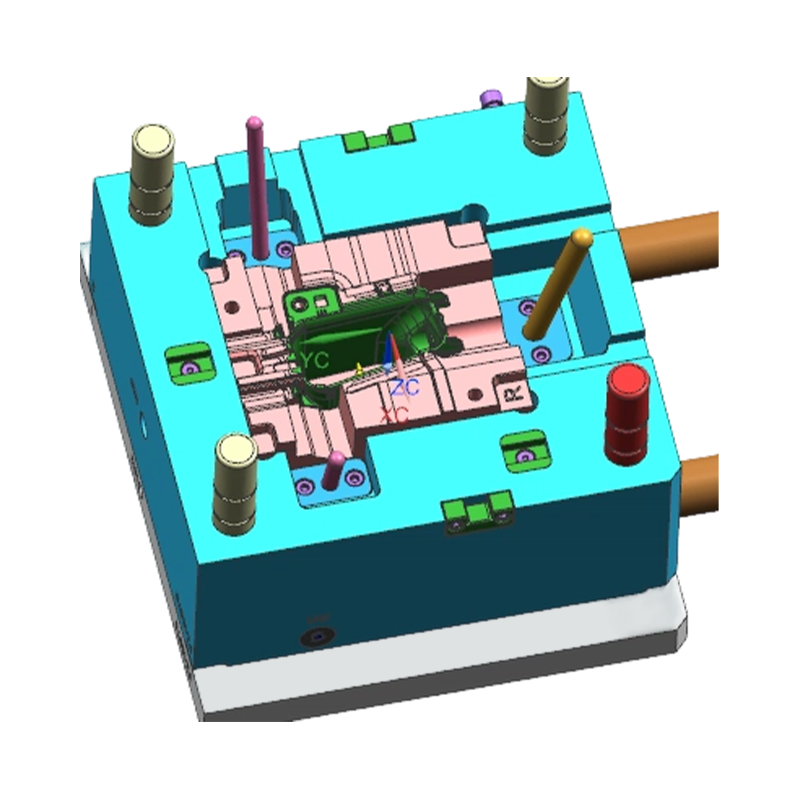 Wholesale Automotive Air Conditioning Vent Plastic Parts Injection Mold SupplierFanze T&M (Jiashan) Co., Ltd. Is China Wholesale Automotive Air Conditioning Vent Plastic Parts Injection Mold Suppliers, Company, Export...View Product →
Quality systems are judged by execution, not certificate
IATF16949 is the entry ticket; the value of the system is visible in how it runs when a trial batch shows dimensional drift on a Friday afternoon.
Behind the certificate, the supplier should open a completed PPAP file for a previous interior tool and walk through the APQP gates, control plan, capability study and dimensional report. Resin lot, regrind ratio, steel certificate and heat treatment record should all be traceable.
PPAP, or Production Part Approval Process, is the documented evidence package that confirms a mold and its process can produce parts to specification under production conditions.
For a glossy trim panel, the appearance approval report must be signed against a master sample, not a rendering. A mold maker that delivers a center console trim panel injection mold with documented master-sample matching removes most downstream disputes with Tier-1 integrators.
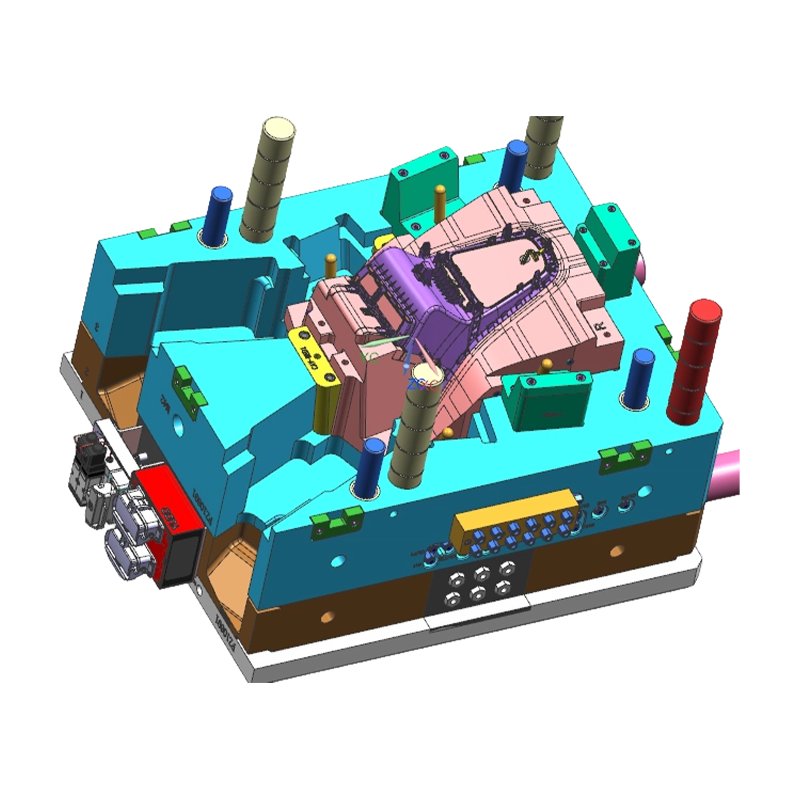 Wholesale Center Console Trim Panels Injection Mold Suppliers, Company, ExporterFanze T&M (Jiashan) Co., Ltd. Is China Wholesale Center Console Trim Panels Injection Mold Suppliers, Company, Exporter, The automotive c...View Product →
Check the supplier's DFM logic against established practice, such as the automotive interior injection mold design principles and material selection guide, before approving the tooling concept.
Red flags and green flags during supplier evaluation
Supplier shortlisting can be compressed into one question: does the supplier's quoting and engineering behavior match the practices proven inside Tier-1 automotive programs?
- A DFM report issued within one to two weeks, listing weld line, sink mark and draft risks honestly
- Steel grade, hardness and heat treatment specified in the quotation
- A trial and sampling schedule included in the tooling plan
- PPAP documentation offered without being requested
- The same project engineer stays on the program from design review to serial support
- A price quoted within 24 hours with no design review
- Mold price calculated only from part weight
- All machining, polishing and texturing outsourced
- No in-house injection machine, with trials at a partner shop
- Automotive references replaced by vague claims of similarity
Frequently asked questions about choosing an interior mold manufacturer
How long should an automotive interior injection mold last?
With pre-hardened grades such as 718H or 2738, most interior tools run 500,000 to 1,000,000 shots before cavity reconditioning. With S136 or NAK80, 1.5 million shots is a realistic benchmark for high-gloss parts. Actual life depends on glass-fiber content, cooling design, shutoff protection and maintenance discipline.
Is IATF16949 certification enough to qualify a mold supplier?
No. Certification is a threshold, not proof of competence. Verify how the system is practiced: request a sample PPAP file, check whether control plans exist for previous interior tools and confirm that dimensional, SPC and change management records are complete and accessible.
Should the mold supplier also operate injection molding machines?
Yes. In-house molding allows trials under production conditions, faster dimensional iteration and PPAP samples molded with the same resin lot and process window planned for series production. Mold-only shops depend on third-party trials, which add lead time and lose process knowledge.
Which plastics are common for automotive interior parts?
Typical resins are PC/ABS for instrument panel frames and center carriers, ABS for decorative trims, PP plus EPDM-TD20 for hidden supports, ASA for grained visible parts, and PMMA or PC for lenses and transparent covers. Each material requires different shrinkage compensation, gate design and molded-in stress control.
Categories
- Company News(2)
- Industry News(32)
Product Category
-
Printer Components & Parts
-
Two-color Plastic component & tool
-
Plastic Multi-way Connectors
-
Threaded Plastic injection molded part
-
Home Appliance Injection Parts
-
Robot shell injection mold
-
High-Gloss Transparent PC injection mold
-
Motorcycle Fairings & Bodywork plastic injection mold
-
EV Charging pile plastic injection mold
-
Automobile wire harness
-
Automotive interior plastic parts injection mold
Related Tag
-
Automotive Interior Trim Plastic Parts Injection Mold
Automotive Dashboard Plastic Parts Injection Mold
Automotive Center Console Plastic Parts Injection Mold
Automotive Instrument Panel Plastic Parts Injection Mold
Automotive Air Vent Plastic Parts Injection Mold
High Precision Automotive Interior Plastic Parts Injection Mold
Hot Runner Automotive Interior Plastic Parts Injection Mold
Multi Cavity Automotive Interior Plastic Parts Injection Mold
Automotive Interior Plastic Components Injection Mold
Automotive Door Panel Plastic Parts Injection Mold

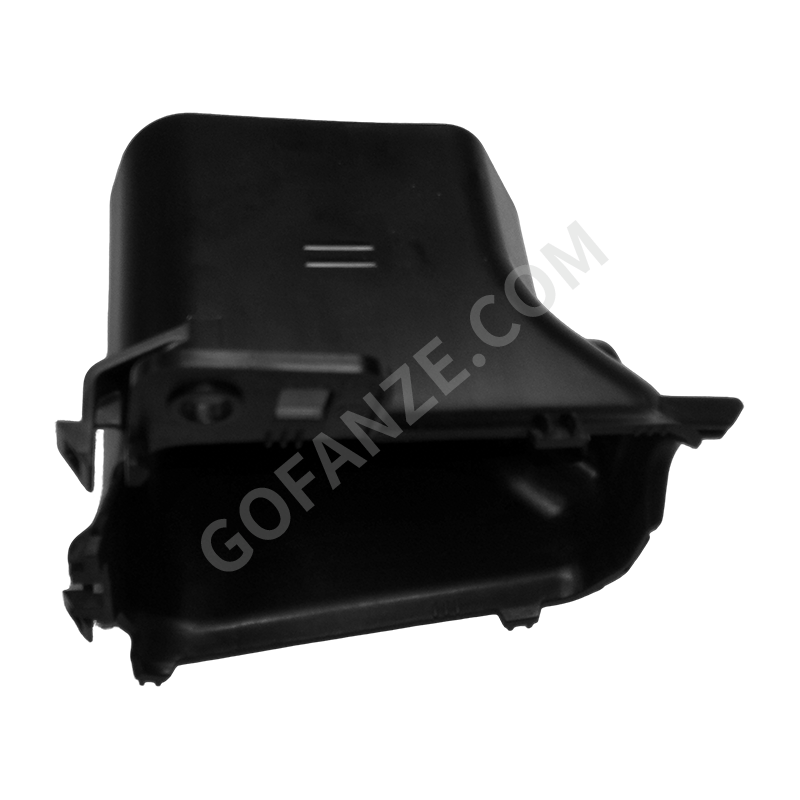

- Automotive interior plastic parts injection mold
- Automobile wire harness
- EV Charging pile plastic injection mold
- Motorcycle Fairings & Bodywork plastic injection mold
- High-Gloss Transparent PC injection mold
- Robot shell injection mold
- Home Appliance Injection Parts
- Threaded Plastic injection molded part
- Plastic Multi-way Connectors
- Two-color Plastic component & tool
- Printer Components & Parts

