


 English
 Français
 Español
 Deutsch

Home · News · Industry News · How Injection Molding Improves Automotive Interior Production Efficiency
Industry News
How Injection Molding Improves Automotive Interior Production Efficiency
2026-09-23Table of Contents
- 1 Where Interior Production Efficiency Actually Comes From
- 2 Short Cycle Times and Multi-Cavity Output Lower Unit Cost
- 3 Mold Design Consolidates Functions and Removes Assembly Work
- 4 Tighter Tolerances Remove Secondary Machining and Rework
- 5 Material Consistency and Process Data Keep the Line Stable
- 6 One Supplier for Mold, Molding, Printing, and Assembly Shortens Launch Time
- 7 Which Efficiency Levers Matter Most for Interior Programs
- 8 How to Evaluate a Molding Partner Before You Commit
Where Interior Production Efficiency Actually Comes From
When an interior trim program reaches the mold kickoff stage, the team is usually looking at three numbers: the component count, the launch date, and the piece price. A mid-size SUV interior can include more than 60 injection molded plastic parts, from air vent louvers to the instrument panel frame, and each one has to pass dimensional, appearance, and durability checks before the vehicle enters production. Injection molding improves automotive interior production efficiency because it compresses cycle time, builds assembly features directly into the part, and holds tolerances that eliminate downstream machining. The efficiency, however, is not created on the injection machine alone. It is designed into the mold, confirmed during tooling trials, and protected by a disciplined quality system during serial production.
Short Cycle Times and Multi-Cavity Output Lower Unit Cost
A single-cavity mold for an instrument panel frame, equipped with a hot runner, can run a cycle of 50 to 65 seconds. A four-cavity mold for air conditioning vents or cup holders can produce four parts in roughly the same period. Over three shifts, the difference in throughput between injection molding and alternative processes such as machining or compression forming is substantial, which is why injection molding remains the default process for interior plastic components.
Cycle time in injection molding is dominated by cooling. Mold designers place cooling channels close to the part surface to remove heat evenly, and conformal cooling channels that follow the part contour can shorten cycle times by 15% to 30% on thick sections like armrest bases and glove box shells.
The process window matters as much as the nominal cycle time. If a mold needs constant adjustment to hit dimensional targets, effective output falls even though the machine is running. Stable melt temperature, injection pressure, and cooling time produce parts inside specification from the first shot of the shift. That consistency is what turns a fast cycle into a genuinely low cost per part.
Mold Design Consolidates Functions and Removes Assembly Work
Efficiency in automotive interiors is not only about how many parts come out of the machine; it is also about how much work disappears from the assembly line. A well-designed injection mold integrates features that would otherwise require fasteners, adhesive, or a separate operation.
A flip-up dash storage box can be molded with a living hinge so the cover and the box body come out of the mold as one assembly. A push-to-open center console storage unit uses molded-in spring bosses to locate the damper without extra hardware. An air vent louver with a precise pivot hole and controlled draft snaps into the housing without glue.
The same logic applies to structural components. A center stack carrier injection mold can produce one part with molded-in mounting bosses, guide rails, and clip receivers, replacing several stamped brackets and the screws that hold them. Every feature eliminated in the mold reduces direct labor on the vehicle assembly line, and those seconds add up over a production volume of hundreds of thousands of units.
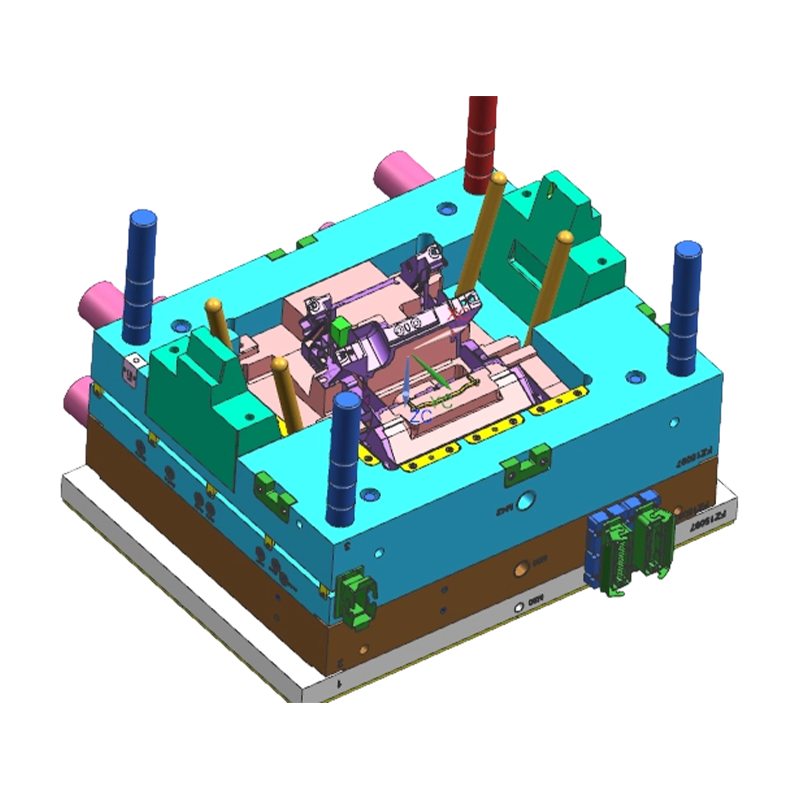 Wholesale Center Stack Carrier Injection Mold Suppliers, Company, ExporterFanze T&M (Jiashan) Co., Ltd. Is China Wholesale Center Stack Carrier Injection Mold Suppliers, Company, Exporter, The Center Console Bra...View Product →
Tighter Tolerances Remove Secondary Machining and Rework
Secondary operations are the hidden cost of interior parts. Machining, sanding, painting, and manual fitting each add labor, floor space, and the risk of handling damage. Injection molding avoids most of these steps when the mold delivers the required tolerance and surface finish directly from the press.
For mating surfaces around airbags and vents, critical dimensions are typically held to ±0.05 mm. Class A surfaces with a molded-in grain texture need no paint or protective coating, eliminating an entire process step along with its color-match and emission concerns.
Warpage control is where process design decides success. A dashboard part that exits the mold twisted by one millimeter will need force-fitting on the assembly line or will be scrapped. Gate location, rib layout, and wall-thickness balance are verified through mold flow analysis before steel is cut. When these parameters are right, first-shot approval becomes realistic, and the efficiency gain appears as fewer engineering changes and less rework during ramp-up. The interaction between wall thickness, flow length, and material shrinkage is covered in more detail in the discussion of automotive interior injection mold design and material selection principles.
Material Consistency and Process Data Keep the Line Stable
Material choice affects efficiency long before the first production order. Interior components commonly use PC/ABS for impact resistance, PP-LGF for thin-wall structural parts, and PBT+GF for heat resistance around HVAC outlets. Each material has a specific shrinkage range, and the mold must be sized using realistic shrinkage data. Otherwise, dimensions drift and the process requires continuous correction.
In serial production, efficiency depends on keeping the process inside an approved window. Modern injection machines with closed-loop control maintain injection speed and packing pressure within tight limits. Data logging, batch traceability, and first-article inspection are standard practices under the IATF 16949 quality system, which is a de facto requirement for automotive interior suppliers.
A molder that treats the process as controlled engineering data will deliver consistent parts, while a workshop without documented process standards will consume time through trial and error. For teams benchmarking suppliers, the related guide on how to choose automotive interior plastic injection molding for dashboard programs explains the evaluation criteria in practical terms.
One Supplier for Mold, Molding, Printing, and Assembly Shortens Launch Time
The largest time loss in an interior program is rarely the molding operation itself; it is the handoff between the mold maker, the molder, and the assembly shop. When mold development, injection molding, printing, and assembly are provided under one roof, each decision is made by a team that can see the entire picture.
A mold maker with experience on similar parts knows where wall thickness will cause sink marks and where the gate should be placed to avoid visible weld lines. Bringing that knowledge into the design phase prevents re-cutting the mold and keeps the launch schedule realistic.
For structural parts, tolerance stack-up between the molded frame and the components mounted on it is the main risk. A molder with automotive experience can simulate warpage and adjust gate locations before the mold is built. The instrument panel frame injection mold is a good example: early design-for-manufacturing review determines whether the part achieves dimensional approval in the first trial, skipping the typical three or four rounds of tooling corrections.
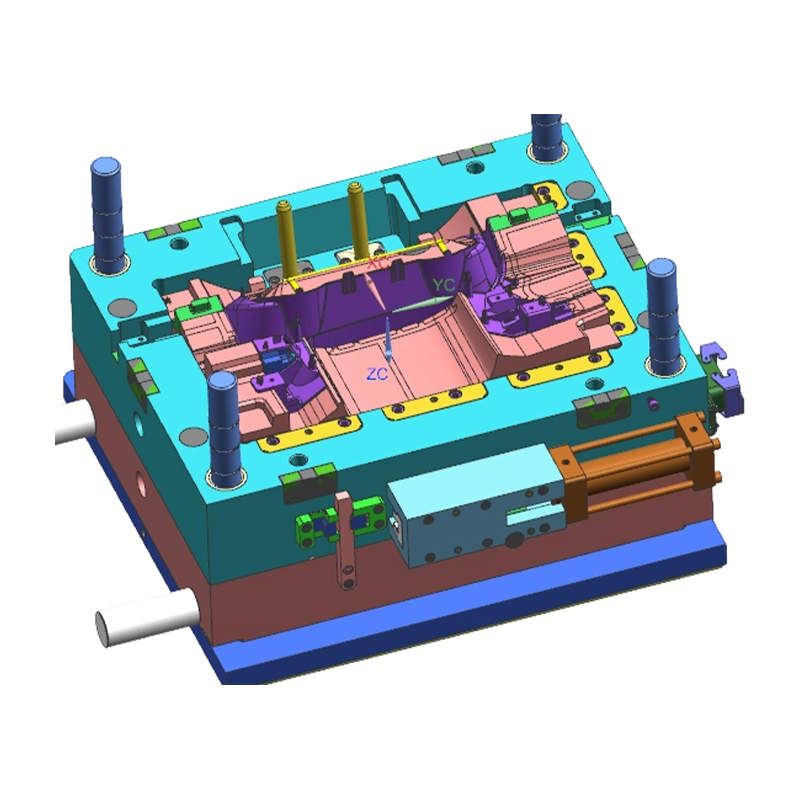 Wholesale Instrument Panel Frame Injection Mold Suppliers, Company, ExporterFanze T&M (Jiashan) Co., Ltd. Is China Wholesale Instrument Panel Frame Injection Mold Suppliers, Company, Exporter, This product line sp...View Product →
The same integrated logic applies to finished-part delivery. A supplier that can print logos or texture on molded parts and assemble subcomponents in-house removes at least three supplier interfaces from the program. This is also where a broader reference such as the complete guide to injection plastic parts design and manufacturing becomes useful for teams that want to align their internal specification with the molder's capabilities.
Which Efficiency Levers Matter Most for Interior Programs
Not every efficiency lever has the same impact. The table below summarizes the levers discussed in this article, their typical effect, and the stage at which the decision is made.
| Efficiency lever | Typical impact | Decided at |
|---|---|---|
| Multi-cavity and hot runner design | 2 to 8 parts per cycle with lower scrap per part | Mold design |
| Conformal cooling | 15% to 30% shorter cycle on thick sections | Mold design |
| Molded-in functions | Removes fasteners, clips, and assembly labor | DFM review |
| Dimensional tolerance held to ±0.05 mm | Eliminates machining and manual fitting | Tool build and process |
| Reliable shrinkage data | Less drift in part dimensions during production | Material selection |
How to Evaluate a Molding Partner Before You Commit
Efficiency claims should be verified against evidence. A supplier that promises fast cycles and low piece prices needs to demonstrate the factors that make those numbers achievable.
Check the quality system.
IATF 16949 certification is a baseline for automotive interior components. It shows that the supplier has documented procedures for control plans, PPAP, and corrective action. Reviewing the scope of the certificate also confirms whether molding, printing, and assembly are included in the certified process chain.
Review mold trial reports.
Ask for first-trial results from similar projects. A pattern of first-shot or second-shot approval indicates that the mold design process is working. If most projects need multiple corrections, the quoted lead time and cost will be exceeded.
Verify the production process window.
The quoted cycle time is only meaningful if the part can be produced repeatedly at that speed. Ask how the molder sets the process window, what data is recorded per shift, and how out-of-spec parts are contained.
The practical test for any partner is whether its engineering team can answer two questions: what tolerance will this part hold in production, and how much labor will the molded design save on the assembly line. A supplier that can document both, such as one using a dedicated automotive air conditioning vent plastic parts injection mold with molded-in texture and pivot tolerances, has removed several supplier interfaces from the program before mass production starts.
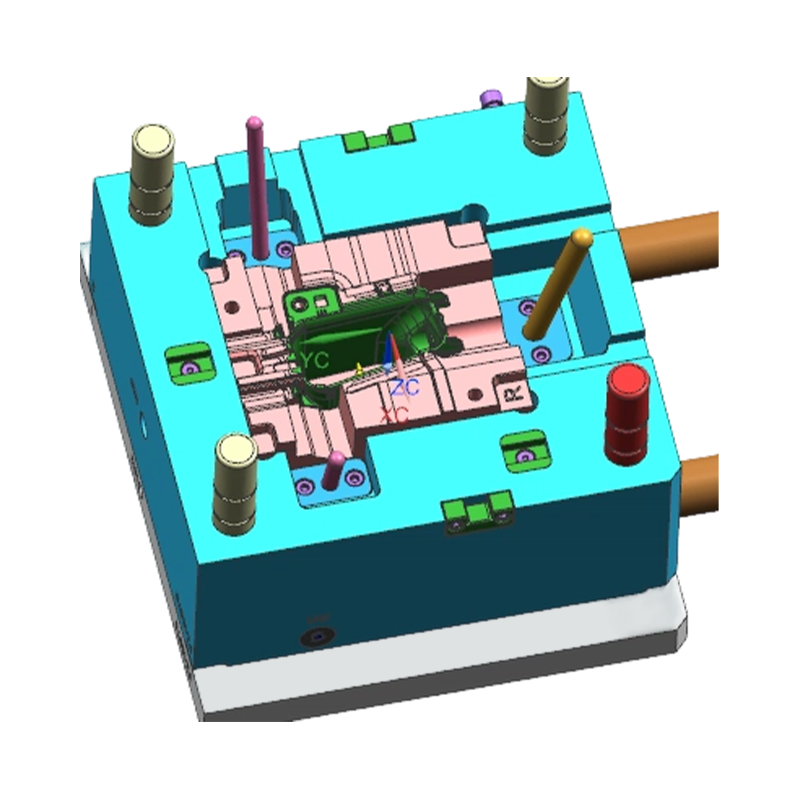 Wholesale Automotive Air Conditioning Vent Plastic Parts Injection Mold SupplierFanze T&M (Jiashan) Co., Ltd. Is China Wholesale Automotive Air Conditioning Vent Plastic Parts Injection Mold Suppliers, Company, Export...View Product →
The conclusion worth remembering for a procurement review is straightforward: injection molding improves automotive interior production efficiency when the mold design, process control, and supplier integration are aligned before mass production begins. Total cost is decided on the drawing board, not on the production line. Teams that understand this tend to choose partners that can show, in writing, how each interior part will meet its tolerance, cycle time, and quality targets before steel is cut.
Categories
- Company News(2)
- Industry News(32)
Product Category
-
Printer Components & Parts
-
Two-color Plastic component & tool
-
Plastic Multi-way Connectors
-
Threaded Plastic injection molded part
-
Home Appliance Injection Parts
-
Robot shell injection mold
-
High-Gloss Transparent PC injection mold
-
Motorcycle Fairings & Bodywork plastic injection mold
-
EV Charging pile plastic injection mold
-
Automobile wire harness
-
Automotive interior plastic parts injection mold
Related Tag
-
Automotive Interior Trim Plastic Parts Injection Mold
Automotive Interior Plastic Components Injection Mold
Automotive Interior Injection Mold
Automotive Dashboard Plastic Parts Injection Mold
Automotive Door Panel Plastic Parts Injection Mold
Automotive Center Console Plastic Parts Injection Mold
Automotive Instrument Panel Plastic Parts Injection Mold
Automotive Air Vent Plastic Parts Injection Mold
High Precision Automotive Interior Plastic Parts Injection Mold
Hot Runner Automotive Interior Plastic Parts Injection Mold


- Automotive interior plastic parts injection mold
- Automobile wire harness
- EV Charging pile plastic injection mold
- Motorcycle Fairings & Bodywork plastic injection mold
- High-Gloss Transparent PC injection mold
- Robot shell injection mold
- Home Appliance Injection Parts
- Threaded Plastic injection molded part
- Plastic Multi-way Connectors
- Two-color Plastic component & tool
- Printer Components & Parts

