


 English
 Français
 Español
 Deutsch

Home · News · Industry News · How Long Does an Automotive Interior Injection Mold Last? | Mold Life Guide
Industry News
How Long Does an Automotive Interior Injection Mold Last? | Mold Life Guide
2026-08-20Table of Contents
- 1 The Short Answer for Automotive Interior Molds
- 2 What a Mold-Life Number Really Means for Interior Parts
- 3 The Four Factors That Decide How Long an Interior Mold Lasts
- 4 How Wear Shows Up on an Interior Mold Before It Fails
- 5 What to Ask a Mold Supplier Before You Commit
- 6 Set Expectations with Numbers, Not Hope
The Short Answer for Automotive Interior Molds
A tooling buyer for a new SUV interior program usually asks the same question in the first technical meeting: how many cycles will the mold survive before we have to re-tool? The short, practical answer is that a production-grade automotive interior mold lasts between 100,000 and more than 1,000,000 shots, depending on the application, and a well-built Class 101 tool for a high-volume part such as an instrument panel frame or airbag cover can genuinely exceed one million cycles. The number that applies to your program depends on four things: steel selection, mold design, resin behavior, and how the tool is operated once it reaches the production floor.
Calendar age is not a useful measure for an injection mold. A tool that sits in storage for two years loses almost nothing; the same tool running three shifts with aggressive cycle times, weak cooling, and skipped maintenance can lose most of its useful life within months. That is why automotive suppliers quote mold life in cycles, and why the right follow-up question is not when the mold was built, but how it is run.
What a Mold-Life Number Really Means for Interior Parts
The most widely used reference system is the SPI mold classification, which sorts tools by the number of cycles they are engineered to survive. The table below summarizes the classes you will encounter when quoting an automotive interior mold.
| SPI Class | Typical Cycle Life | Where It Appears in Automotive Interiors |
|---|---|---|
| Class 101 | Over 1,000,000 cycles | High-volume instrument panel frames, airbag covers, center stack carriers |
| Class 102 | Up to 1,000,000 cycles | Mid-to-high-volume interior trim, air vents, cup holders, console parts |
| Class 103 | 300,000–500,000 cycles | Pilot builds, mid-volume decorative covers, short-run interiors |
| Class 104 | About 100,000 cycles | Low-volume service parts, niche trim variants |
| Class 105 | Under 500 cycles | Prototype and validation samples only |
For automotive interior parts, most serial tools are quoted as Class 101 or Class 102 because these parts are appearance-critical, structurally complex, and produced in high volumes. A lower class saves money at the tooling stage but usually costs more in repairs, downtime, and piece-price risk before the program ends. The classification describes how the tool is built, not a guarantee of how long it will run.
The Four Factors That Decide How Long an Interior Mold Lasts
Once you stop looking for a single number, the picture becomes clearer. Four factors do most of the work.
Steel Grade and Surface Treatment
Tool steel is the first line of defense. High-volume interior molds should be cut from pre-hardened or fully hardened steel, typically in the 48–54 HRC range at the cavity surface, with moving components treated for wear resistance. An instrument panel frame injection mold, for example, is normally built with hardened steel on both core and cavity because the part is structural, visible, and runs at high volume. Choosing a softer grade to reduce the initial investment simply moves the repair budget into the middle of the program.
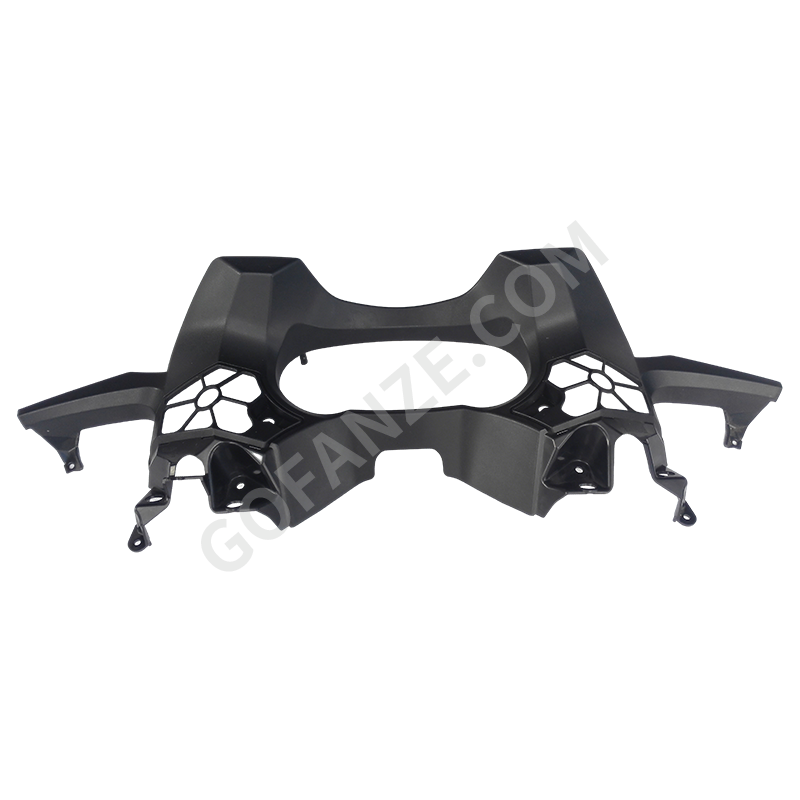
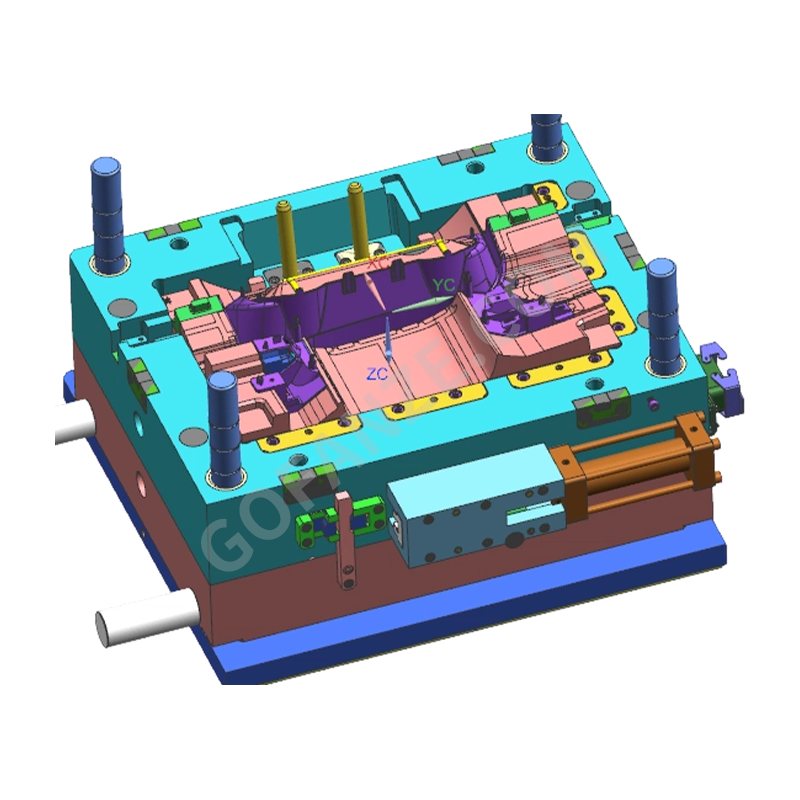 Wholesale Instrument Panel Frame Injection Mold Suppliers, Company, ExporterFanze T&M (Jiashan) Co., Ltd. Is China Wholesale Instrument Panel Frame Injection Mold Suppliers, Company, Exporter, This product line sp...View Product →
Surface treatment matters just as much. Nitriding, chrome plating, or PVD coating on shut-off areas and slide faces slows the abrasive wear caused by glass-filled resins. Textured A-surfaces wear more slowly when the texture is cut at the correct depth and the steel is hardened before texturing. These choices follow the broader logic behind automotive interior mold design principles and material selection, which is worth reviewing before the tool is quoted.
Mold Design and Part Geometry
The geometry of the part determines how much stress the tool has to absorb. Interior parts are full of undercuts: snap-fits for trim panels, cup holder mechanisms, air vent louvers, and the soft openings of storage compartments. Every undercut requires a slide, lifter, or rotating core, and every moving steel component is a wear point. Uniform wall thickness, generous radii, and a cooling layout that removes heat evenly reduce both part defects and tool stress.
A DFM review should flag these areas before steel is cut. Once the part geometry is fixed, the mold designer decides where shut-offs can be simplified, where inserts can be replaced instead of rebuilt, and where water lines must be routed to avoid hot spots. These decisions have a bigger effect on mold life than any single material choice.
Resin Choice and Processing Conditions
What goes through the mold is as important as what the mold is made of. Glass-filled polypropylene and nylon are common in interior structures and act like sandpaper on gates, shut-offs, and runner systems. Transparent and high-gloss PC parts require higher melt temperatures, which accelerate oxidation at venting areas. Corrosive byproducts from flame-retardant materials can pit the steel if venting is not cleaned regularly.
Processing conditions complete the picture. Short cycle times are tempting because they increase output, but pulling a part too early, packing it against excessive pressure, or running the barrel at the top of the temperature window all shorten tool life. The supplier that quotes a realistic cycle time is protecting the mold, not just the schedule.
Maintenance and Operating Discipline
The difference between a mold that reaches 500,000 cycles and one that reaches 1,000,000 cycles is often maintenance, not the original steel. Preventive maintenance looks boring on a project plan, but it is the single most controllable factor in the life of an automotive interior mold. Vents need cleaning, slides and lifters need clearance checks, water channels need descaling, and hot runner systems need temperature and leak verification on a fixed schedule.
An operator who reports a slight hesitation in slide movement, a faint mark at the gate, or a gradual increase in flash is giving you an early warning. If those signals are ignored, the next signal is flash, and the one after that is a repair that always costs more than the maintenance that would have prevented it.
How Wear Shows Up on an Interior Mold Before It Fails
Wear rarely announces itself as a sudden break. It appears as small changes in the molded part, and each change points to a specific area of the tool.
- Flash along shut-off edges is the first warning that steel is wearing or the parting line is no longer sealing correctly. On a driver airbag housing cover injection mold
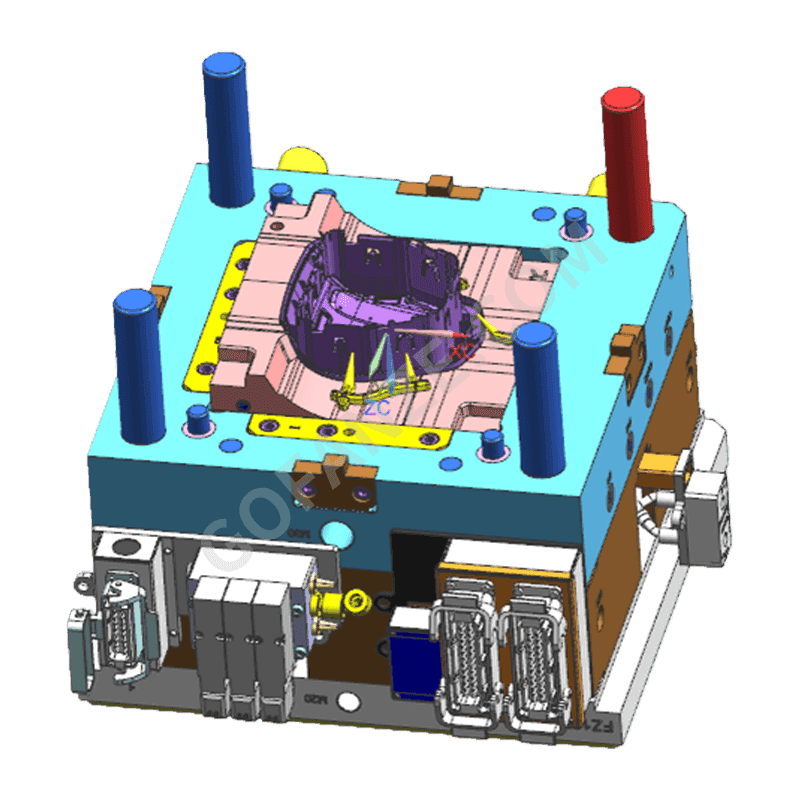 Wholesale Driver Airbag Housing / Cover injection mold Suppliers, Company, ExporFanze T&M (Jiashan) Co., Ltd. Is China Wholesale Driver Airbag Housing / Cover injection mold Suppliers, Company, Exporter, This product ...View Product →, flash at the tear seam is especially serious because the cover must open along a controlled line during airbag deployment. Shut-off condition should be checked from the first trial onward.
 - Sink marks on visible A-surfaces usually mean the wall-thickness transition or the cooling layout is producing uneven shrinkage. Sink marks are a design and process symptom at first; if they appear after months of stable production, the cooling channels may have scaled over or the core support may be weakening.
- Gloss differences or scratches on textured surfaces indicate that the texture itself is wearing down. Re-texturing is possible, but only a limited number of times before the steel loses its shape. Protecting textured areas with correct release coating and sufficient ejection loading avoids premature rework.
- Flow lines and burn marks often start at the gate or the vent area. Eroded gates change the flow pattern, and clogged vents trap air that burns the resin. Both are cheap to fix if caught early.
Parts with moving mechanisms fail earlier than static parts. An automotive air conditioning vent plastic parts injection mold contains louvers, fins, and slider cores that wipe against each other on every cycle, so wear appears at the pivot and guide faces long before the cavity itself shows damage. For molds like this, spare inserts for the moving components are not an option; they are a necessity.
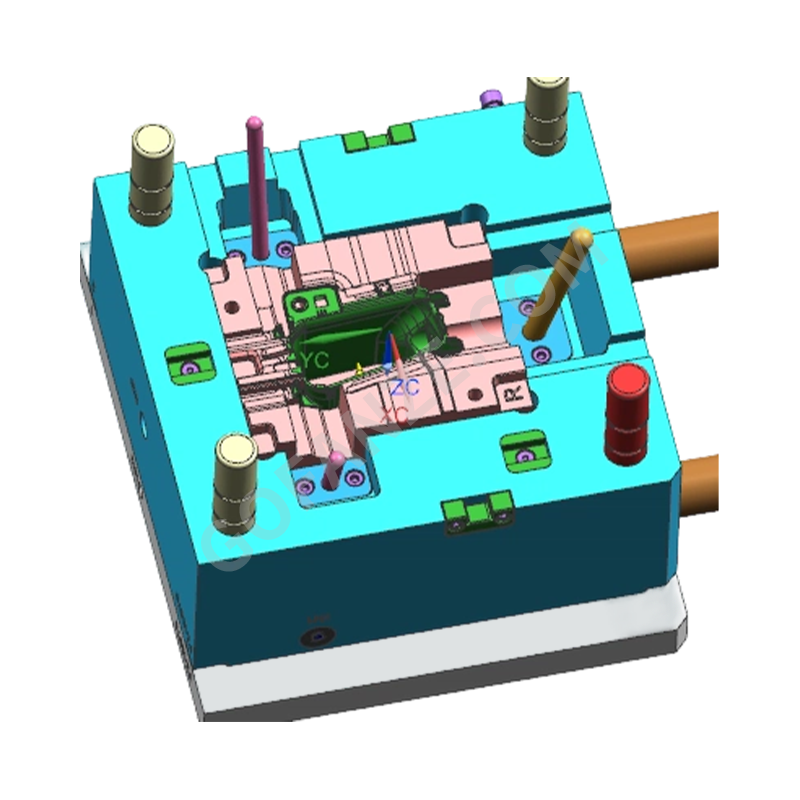 Wholesale Automotive Air Conditioning Vent Plastic Parts Injection Mold SupplierFanze T&M (Jiashan) Co., Ltd. Is China Wholesale Automotive Air Conditioning Vent Plastic Parts Injection Mold Suppliers, Company, Export...View Product →
What to Ask a Mold Supplier Before You Commit
Mold life is a specification, and it should be negotiated as one. Before the tooling purchase order is signed, ask for concrete answers:
- What SPI class and steel specification are being quoted, and where is the steel hardened to what hardness?
- Which areas of the part geometry are identified as wear-prone in the DFM review, and what does the design do to reduce that wear?
- At what cycle time, resin, and pack pressure is the mold expected to reach its target life, and what happens if the program exceeds that duty?
- What maintenance schedule is assumed, and which inserts, slides, or cores are supplied as spare parts?
- What track record does the supplier have with similar interior parts, such as dashboard structures, and what mold-life results were achieved in production?
If the part is a large visible structure, start with how to choose automotive interior plastic injection molding for dashboard parts before you finalize the RFQ. And before you sign, look at the workshop. Serious buyers treat tooling qualification as a physical review, which is why European customers visit our factory to inspect mold tooling before serial production. Machine condition, measurement equipment, and maintenance records tell you more about real mold life than any brochure.
Set Expectations with Numbers, Not Hope
An automotive interior mold is one of the largest single investments in a plastic part program, and it deserves a lifecycle plan rather than a guess. The practical formula is simple: choose the SPI class that matches the forecast volume, specify hardened steel for the wear areas, fix the geometry early through DFM, run the process inside the window the tool was designed for, and maintain the mold on a calendar that is not negotiable when production gets busy.
At Fanze T&M, we build automotive interior molds for airbag covers, instrument panel frames, air vents, center consoles, and cup holders, and we run the parts in our own injection molding shop. That means DFM feedback comes from people who have produced the parts, not only designed the tool. The result is a mold-life target agreed in cycles at the quotation stage, based on the volume, resin, and production plan you define, and supported by IATF 16949 process discipline from first trial to mass production.
Ask for the number, then ask how it will be achieved. A mold life estimate is only useful when it comes with the design, process, and maintenance plan that makes it true.
Categories
- Company News(2)
- Industry News(32)
Product Category
-
Printer Components & Parts
-
Two-color Plastic component & tool
-
Plastic Multi-way Connectors
-
Threaded Plastic injection molded part
-
Home Appliance Injection Parts
-
Robot shell injection mold
-
High-Gloss Transparent PC injection mold
-
Motorcycle Fairings & Bodywork plastic injection mold
-
EV Charging pile plastic injection mold
-
Automobile wire harness
-
Automotive interior plastic parts injection mold
Related Tag
-
Automotive Door Panel Plastic Parts Injection Mold
Automotive Interior Trim Plastic Parts Injection Mold
Automotive Instrument Panel Plastic Parts Injection Mold
Automotive Interior Plastic Components Injection Mold
Automotive Interior Injection Mold
Automotive Dashboard Plastic Parts Injection Mold
Automotive Center Console Plastic Parts Injection Mold
Automotive Air Vent Plastic Parts Injection Mold
High Precision Automotive Interior Plastic Parts Injection Mold
Hot Runner Automotive Interior Plastic Parts Injection Mold


- Automotive interior plastic parts injection mold
- Automobile wire harness
- EV Charging pile plastic injection mold
- Motorcycle Fairings & Bodywork plastic injection mold
- High-Gloss Transparent PC injection mold
- Robot shell injection mold
- Home Appliance Injection Parts
- Threaded Plastic injection molded part
- Plastic Multi-way Connectors
- Two-color Plastic component & tool
- Printer Components & Parts

