


 English
 Français
 Español
 Deutsch

Home · News · Industry News · Automotive Plastic Injection Molding: Future Mold Technology Trends Through 2030
Industry News
Automotive Plastic Injection Molding: Future Mold Technology Trends Through 2030
2026-09-14Table of Contents
- 1 Lightweighting Is Redefining Mold Geometry and Material Windows
- 2 Electrification Adds a New Part Portfolio Beyond Interior Trim
- 3 Two-Shot and Overmolding Become Core Capabilities
- 4 Simulation, Precision Machining, and IATF 16949 Set the New Baseline
- 5 Adoption Benchmarks for New Automotive Mold Programs
- 6 How OEMs and Tier Suppliers Should Qualify a Future-Ready Mold Partner
- 7 Frequently Asked Questions About Automotive Injection Molding Technology
Lightweighting Is Redefining Mold Geometry and Material Windows
Lightweighting is the strongest driver of new automotive mold designs, pushing wall thicknesses from roughly 2.0 mm toward 1.2 mm in interior panels and forcing tooling to run high-flow, fiber-reinforced resins without short shots or visible knit lines.
Every 0.1 mm of wall removed cuts part mass and cycle time, but it also changes the entire mold system. The steel must resist abrasion from glass fibers, venting must be deep enough to evacuate trapped gas at higher fill speeds, and cooling channels must be positioned close to the cavity surface to hold a stable cycle. Materials tell the same story: long-glass-fiber polypropylene for structural carriers, PC/ABS blends for instrument panel substrates, and high-heat grades for components mounted near electronics.
Automotive plastic injection molding technology is the combination of mold design, tool steel selection, polymer engineering, and process control used to produce repeatable plastic components for vehicle interiors, exteriors, and electric drive systems.
Three process responses now belong in every future RFQ for automotive plastic molds:
- Mold-flow analysis that verifies filling pattern, weld-line position, and shrinkage before steel is cut.
- Abrasion-resistant tool steel with a surface treatment matched to the glass loading of the resin.
- Conformal or near-conformal cooling to stabilize cycle time across the full production run.
Mold makers that treat simulation as a sales document rather than an engineering step will struggle with thin-wall programs, because the tolerance window at 1.2 mm wall thickness is far narrower than at 2.5 mm. For a detailed breakdown of how interior part geometry and material selection interact, review our guide to automotive interior mold design principles and material selection.
Electrification Adds a New Part Portfolio Beyond Interior Trim
Electrification expands the automotive mold portfolio into EV charging hardware, high-voltage wire harnesses, and battery-adjacent housings that require flame-retardant resins, higher thermal resistance, and tighter dimensional control than most legacy interior programs.
Charging pile shells with display windows bring two conflicting demands: a Class-A surface for the operator-facing area and precise control of the display bezel opening to avoid gap and flush defects. Versions without screens simplify the surface requirement but still need outdoor weathering performance and impact resistance. Wire harness molds for ABS and wheel-speed sensors add another layer, because connector housings hold metal terminals that shift if cavity pressure is not balanced.
| Program type | Typical material | Core mold requirement |
| Interior trim and consoles | PC/ABS, PP | Class-A surface, low gloss, 0.05 mm fit |
| EV charging pile shell | PC, PC/ABS, flame-retardant grades | Weather resistance, display window alignment |
| Wire harness connector | PBT, PA66 | Narrow tolerance, stable insert placement |
| Battery-adjacent bracket | PA66+GF, PPA | Thermal resistance, long-term dimensional stability |
For EV charging housings specifically, the mold must also manage large part size, uniform packing, and draft angles that do not distort the visible face. A dedicated design methodology is needed, and Fanze T&M (Jiashan) Co., Ltd., a precision molding company active in automotive interior, charging, and appliance programs, covers this in its EV charging station injection mold design and materials guide. For programs that include a display, the EV charging pile shell mold with an integrated display window is an example of how the housing and the bezel are handled in one tool.
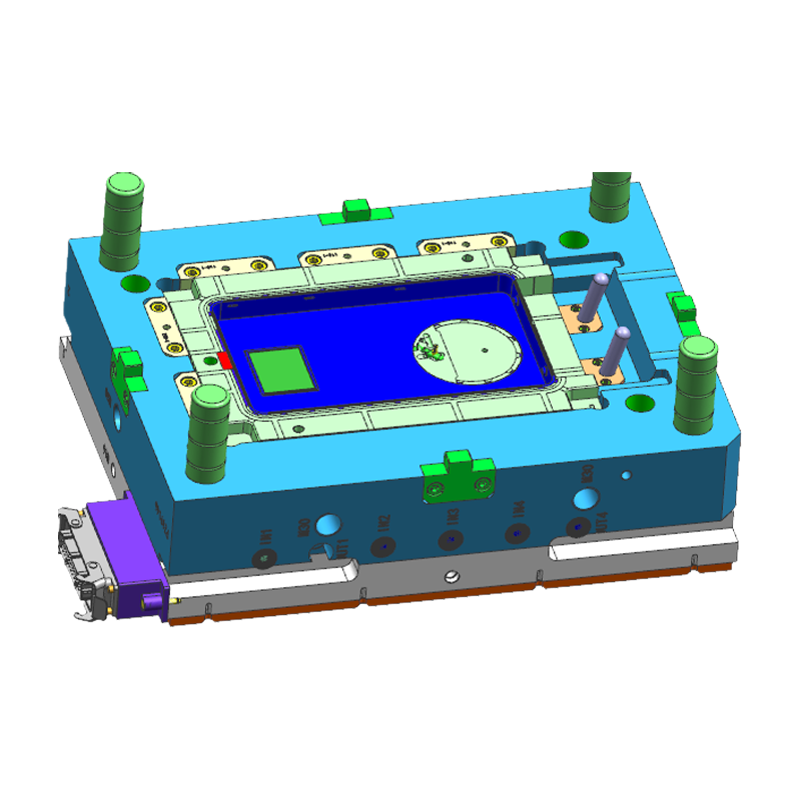 Wholesale Charging Pile Shell With Screen Injection Mold Suppliers, Company, ExpFanze T&M (Jiashan) Co., Ltd. Is China Wholesale Charging Pile Shell With Screen Injection Mold Suppliers, Company, Exporter, This produc...View Product →
Practical impact: a Tier supplier that can run interior, charging pile, and wire-harness programs under one IATF 16949 quality system reduces supplier qualification time and keeps dimensional data comparable across all three program families.
Two-Shot and Overmolding Become Core Capabilities
Two-shot and overmolding are moving from optional extras to core capabilities because they replace secondary assembly with a single molding cycle that integrates soft-touch surfaces, sealing lips, and two-color aesthetics.
Automotive interiors are crowded examples: steering wheel trim that combines a hard substrate with a soft-touch skin, cup holders with a molded seal, and airbag covers where the tear seam and the decorative surface must be produced in one component. Two-shot molding does this by injecting a first material, rotating or shifting the core, and injecting a second material over or beside it. The mold must control thermal separation between the two shots and keep the first material at the right temperature when the second shot touches it.
- Hard-soft combinations for premium touch points on steering wheels and armrests.
- Sealing geometry molded directly into cup holders and storage compartments.
- Two-color cosmetic parts for buttons, bezels, and brand marks that survive wear testing.
Rule of thumb: if a second shot can eliminate a gasket or a mechanical fastener, unit cost drops even when the mold itself costs more. The payback is usually less than one production year at typical interior-part volumes.
Fanze builds this capability explicitly: its two-color automotive component mold program covers multi-material parts and precision overmolding, which is increasingly requested in the same RFQ as the standard single-shot tool.
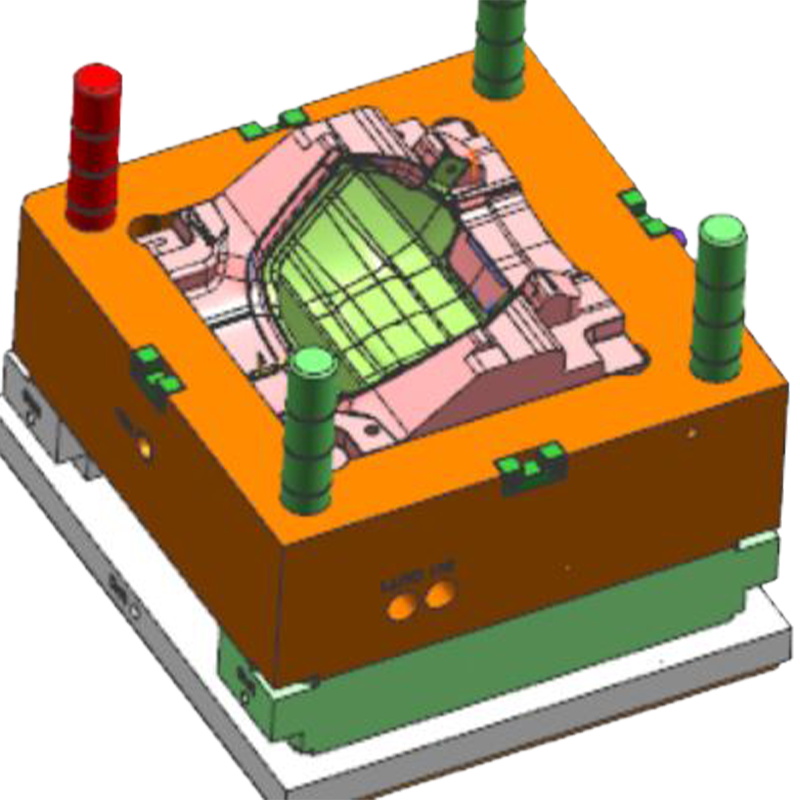 Wholesale Two-Color Injection Molded Part Injection Mold Parts Suppliers, CompanFanze T&M (Jiashan) Co., Ltd. Is China Wholesale Two-Color Injection Molded Part Injection Mold Parts Suppliers, Company, Exporter, This ...View Product →
Simulation, Precision Machining, and IATF 16949 Set the New Baseline
Simulation-driven mold design and precision machining are the baseline for future automotive programs because first-shot accuracy decides whether a program hits PPAP timing or slips into repeated try-out loops.
Five-axis CNC, EDM, and wire cutting have brought mold steel tolerances to a point where a critical cavity detail can be held to 0.01 mm, but achieving that in production still depends on the team's ability to read shrinkage data and adjust cooling locally. The quality layer matters just as much. IATF 16949 is the automotive-specific quality system that governs design reviews, process control, traceability, and customer-specific requirements; without it, a mold shop is rarely eligible to quote OEM or Tier 1 work.
What OEMs and Tier suppliers should measure in a mold try-out: first-shot hit rate, dimensional repeatability across a 300-piece capability run, and cycle-time stability at rated cooling capacity.
A supplier with in-house machining, molding, printing, and assembly closes the loop between the tool and the finished part. This is the operating model at Fanze, which started as Shanghai Fanze Precision Mold Co., Ltd. in 2005 and now operates a 7,000 sq m plant in Jiashan with about 100 employees, supporting automotive, charging pile, appliance, printer, and robotic programs.
Adoption Benchmarks for New Automotive Mold Programs
Across new automotive mold programs, thin-wall molding and insert molding lead adoption today, while two-shot molding is growing fastest as OEMs consolidate parts and remove assembly steps.
The chart below shows indicative benchmarks for how frequently specific process technologies appear in new automotive mold program reviews. Exact values vary by OEM, region, and vehicle segment, but the ranking is consistent across interior, charging, and connector programs.
For procurement teams, the takeaway is direct: if a prospective mold partner cannot demonstrate thin-wall capability and a documented two-shot program, the supplier list for future automotive work is already shrinking.
How OEMs and Tier Suppliers Should Qualify a Future-Ready Mold Partner
Qualify mold partners on process breadth, quality certification, and the ability to deliver both the mold and the molded part, not only on quoted mold price.
The buying decision has changed because the deliverable has changed. In the EV era, a mold is not a standalone asset; it is one link in a chain that includes material validation, process capability, printing, and assembly. The comparison below shows why integrated suppliers reduce program risk.
- Quotes tooling price and machining time.
- Transfers the mold to a separate molder for trials.
- Quality data stops at the tool steel level.
- Dimensional issues become a dispute between mold shop and molder.
- Runs design review, mold build, and injection trials in one team.
- Owns the injection machine and the process data.
- Provides PPAP documentation from a single IATF 16949 system.
- Can add printing and assembly before shipment.
Beyond structure, evaluate the technical evidence: mold-flow analysis with proposed gate locations, a tolerance capability study on a similar past tool, and a documented trial plan with a defined number of shot iterations. A supplier like Fanze, which supports OEM interior programs with components such as the automotive instrument panel frame injection mold, can show this evidence across established product lines. For a practical selection framework, see our guide on choosing a dashboard plastic injection molding partner.
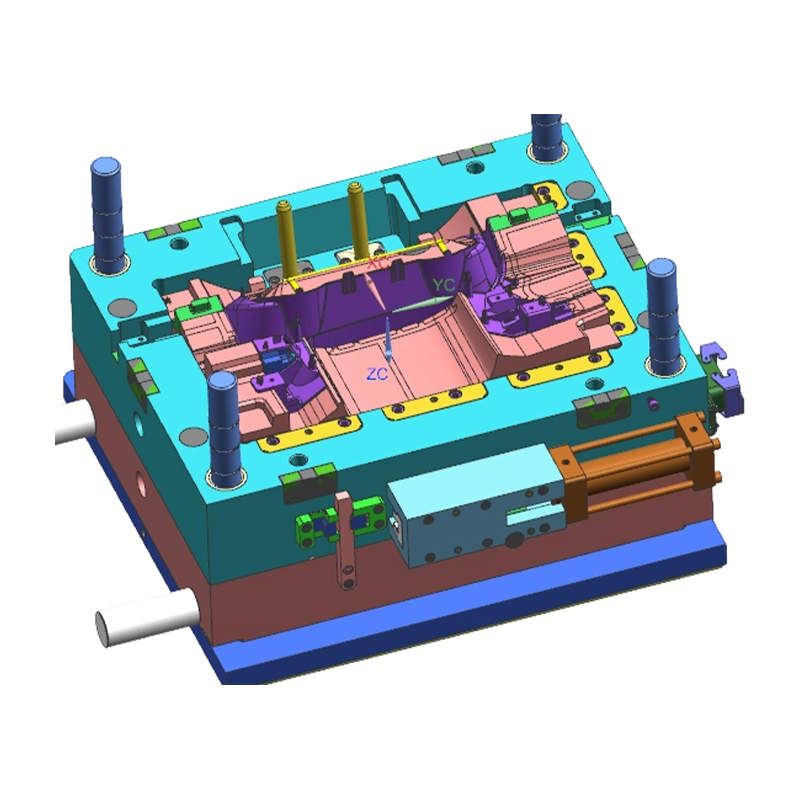 Wholesale Instrument Panel Frame Injection Mold Suppliers, Company, ExporterFanze T&M (Jiashan) Co., Ltd. Is China Wholesale Instrument Panel Frame Injection Mold Suppliers, Company, Exporter, This product line sp...View Product →
A partner certified to IATF 16949 with in-house mold design, machining, molding, printing, and assembly can close the loop between tooling and part quality faster than any hand-off arrangement.
Frequently Asked Questions About Automotive Injection Molding Technology
What is the biggest future trend in automotive plastic injection molding?
Lightweighting is the biggest trend because it affects almost every mold program. Thin-wall geometries, fiber-reinforced resins, and multi-material designs are all responses to the same pressure to reduce mass and energy consumption without sacrificing stiffness or surface quality.
How does electrification change automotive injection mold requirements?
Electrification adds new part families such as charging pile housings, wire-harness connectors, and battery-adjacent brackets. These parts demand flame-retardant materials, higher continuous-use temperatures, and dimensional stability over a wider thermal range than traditional interior trim.
Why is two-shot molding important for automotive interior parts?
Two-shot molding eliminates secondary assembly by producing hard-soft combinations, seals, and two-color surfaces in a single cycle. The result is lower part cost, fewer quality interfaces, and better long-term durability of the bonded surface.
What quality certification should an automotive mold supplier hold?
IATF 16949 is the relevant automotive quality system certification. It covers product design, process control, traceability, and customer-specific requirements, and it is the minimum entry requirement for most OEM and Tier 1 mold and molding programs.
Before quoting a future automotive mold program, ask the supplier for evidence: mold-flow analysis, proposed gate locations, a tolerance capability study, and a documented two-week trial plan.
Categories
- Company News(2)
- Industry News(32)
Product Category
-
Printer Components & Parts
-
Two-color Plastic component & tool
-
Plastic Multi-way Connectors
-
Threaded Plastic injection molded part
-
Home Appliance Injection Parts
-
Robot shell injection mold
-
High-Gloss Transparent PC injection mold
-
Motorcycle Fairings & Bodywork plastic injection mold
-
EV Charging pile plastic injection mold
-
Automobile wire harness
-
Automotive interior plastic parts injection mold
Related Tag
-
Automotive Dashboard Plastic Parts Injection Mold
Automotive Door Panel Plastic Parts Injection Mold
Automotive Center Console Plastic Parts Injection Mold
Automotive Interior Trim Plastic Parts Injection Mold
Automotive Instrument Panel Plastic Parts Injection Mold
Automotive Air Vent Plastic Parts Injection Mold
Automotive Interior Plastic Components Injection Mold
High Precision Automotive Interior Plastic Parts Injection Mold
Hot Runner Automotive Interior Plastic Parts Injection Mold
Multi Cavity Automotive Interior Plastic Parts Injection Mold


- Automotive interior plastic parts injection mold
- Automobile wire harness
- EV Charging pile plastic injection mold
- Motorcycle Fairings & Bodywork plastic injection mold
- High-Gloss Transparent PC injection mold
- Robot shell injection mold
- Home Appliance Injection Parts
- Threaded Plastic injection molded part
- Plastic Multi-way Connectors
- Two-color Plastic component & tool
- Printer Components & Parts

