


 English
 Français
 Español
 Deutsch

Home · News · Industry News · Plastic Injection Mold Procurement: Key Parameters to Include in RFQs | Buyer Guide
Industry News
Plastic Injection Mold Procurement: Key Parameters to Include in RFQs | Buyer Guide
2026-09-18Table of Contents
Three molders returned quotes for the same dashboard storage bin, and the numbers landed 38 percent apart. The cheapest bid was not the cheapest tool: two bidders had assumed short-life tooling in prehardened steel because the RFQ never stated annual volume, program life, or guaranteed shots. Nothing in those quotes was dishonest. Every parameter the buyer left blank became an assumption, and suppliers price unknowns defensively. In plastic injection mold procurement, the RFQ is the specification of record for a tool you may run for a decade, so the parameters it contains decide the quotes you receive.
quote spread recorded on one reviewed tooling program where annual volume and guaranteed tool life were missing from the RFQ package.
The Parameter Set Every Injection Mold RFQ Must Contain
A complete injection mold RFQ covers four blocks: part definition, tool definition, volume profile, and acceptance criteria. Remove any block and bidders stop pricing your tool and start pricing their risk.
An RFQ-complete mold package is a quotation package detailed enough that two competent mold makers, working independently, would quote tools of the same steel class, the same cavity count, and the same guaranteed life.
Part-level inputs come first because every tooling decision hangs off them. At minimum, the package should name:
- 3D CAD data in STEP format plus 2D drawings with GD&T (geometric dimensioning and tolerancing) and critical dimensions flagged
- Resin by full grade and supplier code, since glass-filled PA6-GF30 and unfilled PA6 wear steel and shrink at very different rates
- Annual volume, peak-month volume, program life, and total lifetime shots stated separately
- Target piece price and a tooling budget range, so cavity count is engineered rather than guessed
- Surface finish callouts using SPI (Society of the Plastics Industry) polish grades or VDI 3400 texture numbers instead of adjectives
- Color, masterbatch source, maximum regrind percentage, and packaging requirements
A quick internal test: hand the package to a colleague outside the project. If they cannot tell whether it describes a generic enclosure or a Class-A interior part such as an instrument panel frame, parameters are still missing.
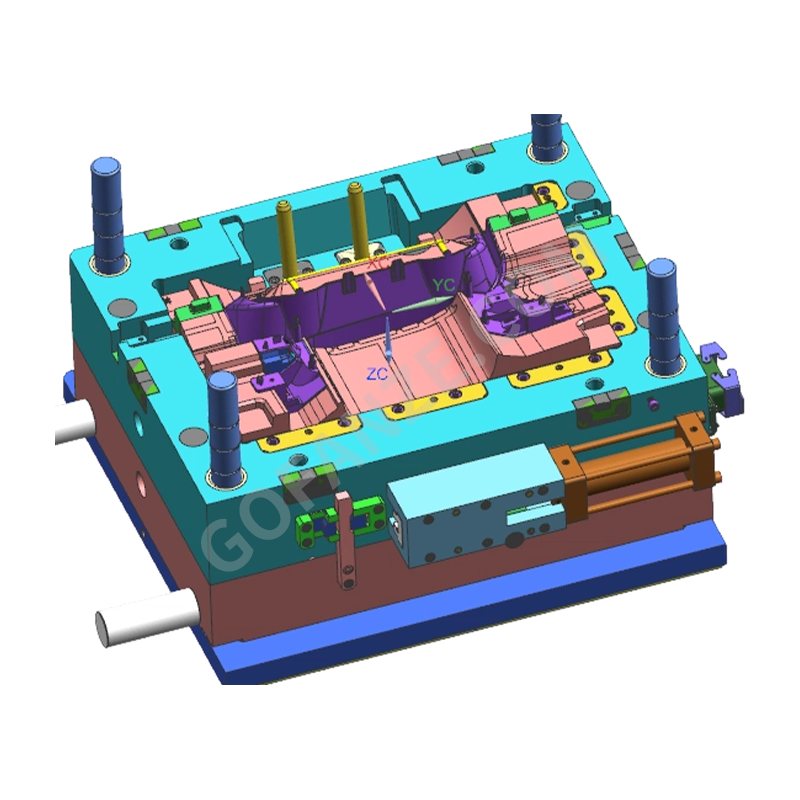 Injection Mold for Automotive Instrument Panel FramesDashboard light frames demand Class-A surface quality, tight ±0.05 mm tolerances, and light-shielding control. Following the steel-selection discussion, this mold line shows how material, standards, and precision tooling support such long-run interior parts.View Product →
Tool-Level Parameters: Steel, Cavity Count, and Guaranteed Life
Steel class and guaranteed life are the most expensive omissions in mold RFQs, because they change both the price and the physical object being priced. Match the steel to the resin and the run length: prehardened P20 (1.2311) suits moderate volumes and non-abrasive resins, through-hardened H13 (1.2344) handles glass-filled compounds and million-shot programs, and stainless S136 (1.2083) protects high-gloss surfaces when molding transparent PC. Table 1 condenses the usual mapping.
| Mold Steel | Typical Hardness | Realistic Life Class | Best Suited For |
| P20 / 1.2311 | 28-32 HRC | up to about 500,000 shots | Moderate volumes, large molds, non-abrasive resins |
| 718H / 1.2738 | 30-36 HRC | 300,000 to 800,000 shots | Larger automotive parts needing through-hardened plates |
| H13 / 1.2344 | 48-52 HRC | 800,000 to 1,000,000+ shots | Glass-filled and abrasive compounds, high-volume tools |
| S136 / 1.2083 | 48-52 HRC | 1,000,000+ shots | Transparent PC optical parts, corrosive resins, high-gloss surfaces |
Cavity count should follow from your volume profile, not from the supplier's habit. Ask each bidder to justify a cavity count against your annual and lifetime figures, and require tool price plus piece price for every option. The same logic applies to runners: hot runner systems commonly add 15 to 25 percent to tool cost while reducing material waste on long-running programs, so the RFQ should state whether hand-trimmed cold runners are acceptable.
Specify the guarantee, not the grade: warrant tool life in guaranteed shots at a named resin, and let steel selection follow from that commitment.
Application-Specific Parameters That Change the Quote
The end-use environment rewrites the tool specification, and an RFQ that omits it routinely comes back priced for the wrong mold.
Visible, regulated, and sealed surfaces
Automotive interior parts carry requirements that never appear on a generic part print: grain class matched across all tools in a program, gap and flush dimensions held near 0.1 mm, low-gloss targets, and fogging or emissions limits for cabin trim. Outdoor electrical enclosures add UV-stabilized resin grades, UL94 flame classification, and flatness targets on gasket lands to achieve an IP-rated seal.
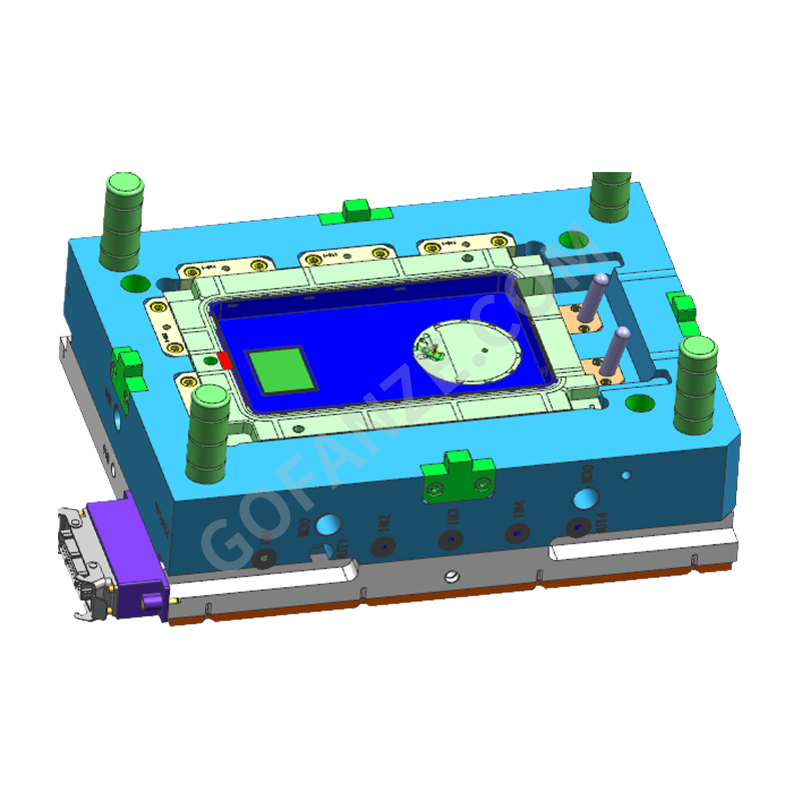 Injection Mold for EV Charging Station Shells With Display WindowsIllustrating outdoor enclosure requirements, this mold line covers flatness at screen mating areas, IP54/IP65 sealing paths, UL94V0 flame-retardant and UV-resistant resins, plus welding and assembly for finished outdoor housings.View Product →
EV charging hardware shows the pattern clearly. A housing with a display window needs tight flatness where the screen mates to the shell, a defined sealing path, and a finish class that survives outdoor installation. None of that is negotiable after steel is cut, so all of it belongs in the RFQ.
Multi-material and precision features
Two-shot and overmolding RFQs must name the material pair, the bonding expectation, and the shot orientation, because substrate compatibility drives the entire tool architecture; the risks are significant enough to warrant a separate review, such as this breakdown of the key process challenges in two-color plastic injection molding. Threaded parts raise a parallel question: state the thread class and confirm whether the mold needs an unscrewing device or a collapsible core, a decision that can move tool price by double digits.
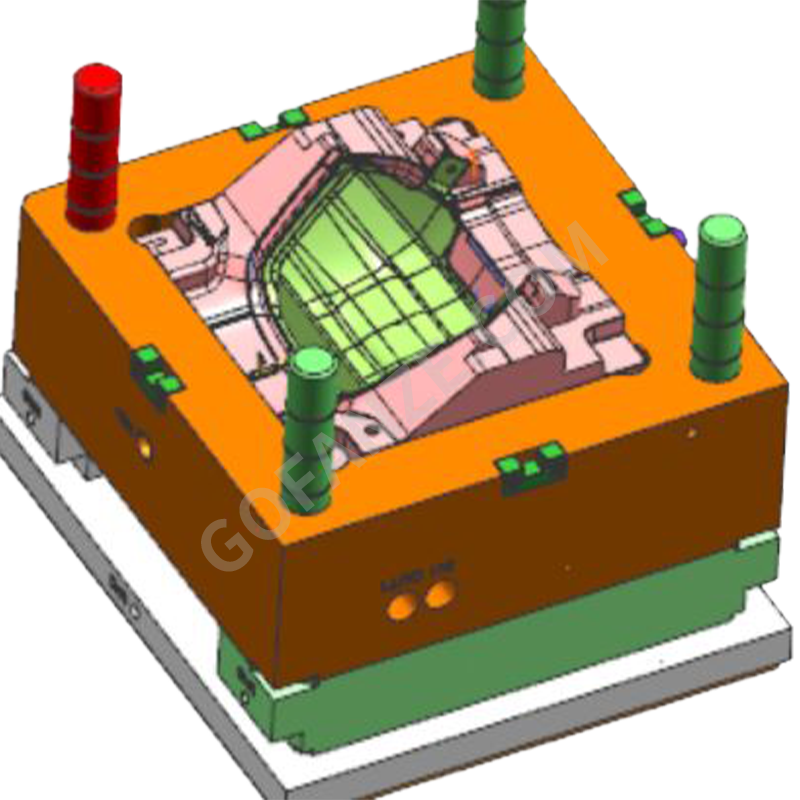 Two-Color Injection Molded Plastic Multiway JointA two-shot multiway joint connecting multiple pipelines, customized from drawings or 3D models. It exemplifies why material pairs, bonding expectations, and shot orientation must be defined before tool architecture is priced.View Product →
Commercial Terms That Protect the Investment
The commercial block turns a quoted price into an enforceable commitment, and it is the block buyers most often leave to chance. Five terms belong in every mold RFQ:
- T1 (first trial) acceptance: state the sample quantity, which dimensions receive full layout measurement, and the cosmetic standard applied at a defined light source.
- Tool ownership: declare in writing that the mold, its design data, and its spare components belong to the buyer after final payment.
- Payment milestones tied to events such as order placement, first trial, and final acceptance rather than calendar dates.
- Maintenance responsibility, plus a recommended spare parts list delivered with the tool.
- Data deliverables: mold design files, trial reports with process parameter sheets, and dimensional inspection records.
Ask every bidder to price the same three volume scenarios: their recommended cavity count, one cavity higher, and one cavity lower. Comparable curves expose which supplier engineers the tool and which one quotes a habit.
Capability evidence belongs in the package as well. Request quality certifications such as IATF 16949, the automotive quality management standard, along with machine lists and in-house trial capacity. Suppliers that pair moldmaking with production molding, such as Fanze T&M (Jiashan) Co., Ltd., can trial and correct a tool under real production conditions before it ships.
What Incomplete RFQs Actually Cost
An incomplete RFQ charges you three times: once in defensive pricing, once in trial-and-error corrections, and once in change orders after steel is already cut.
- Quotes compare like for like
- Piece price engineered from real volumes
- T1 criteria agreed before steel is ordered
- Quotes spread widely on hidden assumptions
- The safest steel and lowest cavity count win by default
- Disputes surface at trial, when every change costs the most
Representative distribution for a mid-volume production tool; most of this spend is committed by parameters fixed at the RFQ stage.
Frequently Asked Questions
Should the buyer specify mold steel or leave it to the supplier?
Specify the outcome and set a floor. State guaranteed life in shots at a named resin, and require a minimum steel family only where field history demands it. Suppliers stay accountable for life while retaining room to select grade, hardness, and heat treatment they can honestly warrant.
How detailed must the resin specification be?
Name the exact grade, supplier code, and every additive that matters, including fillers, UV stabilizers, flame retardants, and lubricants. A tool quoted for unfilled resin and then run with glass-filled compound loses life quickly, and neither party priced that risk.
What should T1 sample acceptance include?
A defined sample quantity, full dimensional layout on flagged critical dimensions with the gauge list, a cosmetic review at an agreed light source against signed limit samples, and short functional trials where parts move or mate. Criteria belong in the RFQ, not in the trial room.
How many cavity scenarios should I request?
Three. Ask for the supplier's recommended cavity count plus one higher and one lower, each with tool price, piece price at your annual volume, and the expected maintenance interval. The comparison reveals the real cost curve instead of a single point.
A mold RFQ that names its steel, its volumes, its surfaces, and its acceptance tests costs a few more lines to write and far less per part to live with.
Categories
- Company News(2)
- Industry News(32)
Product Category
-
Printer Components & Parts
-
Two-color Plastic component & tool
-
Plastic Multi-way Connectors
-
Threaded Plastic injection molded part
-
Home Appliance Injection Parts
-
Robot shell injection mold
-
High-Gloss Transparent PC injection mold
-
Motorcycle Fairings & Bodywork plastic injection mold
-
EV Charging pile plastic injection mold
-
Automobile wire harness
-
Automotive interior plastic parts injection mold
Related Tag
-
Plastic Pipe Connector Injection Mold
Hot Runner Automotive Interior Plastic Parts Injection Mold
Automotive Door Panel Plastic Parts Injection Mold
Automotive Interior Plastic Components Injection Mold
Multi Cavity Automotive Interior Plastic Parts Injection Mold
Automotive Dashboard Plastic Parts Injection Mold
High Precision Automotive Interior Plastic Parts Injection Mold
Automotive Instrument Panel Plastic Parts Injection Mold
Automotive Interior Trim Plastic Parts Injection Mold
Automotive Center Console Plastic Parts Injection Mold

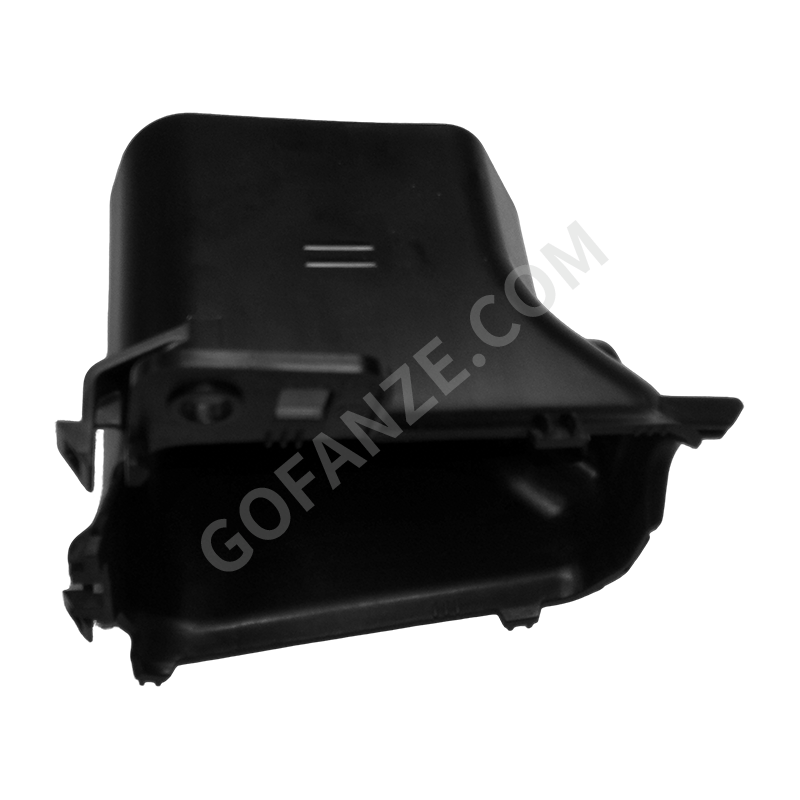

- Automotive interior plastic parts injection mold
- Automobile wire harness
- EV Charging pile plastic injection mold
- Motorcycle Fairings & Bodywork plastic injection mold
- High-Gloss Transparent PC injection mold
- Robot shell injection mold
- Home Appliance Injection Parts
- Threaded Plastic injection molded part
- Plastic Multi-way Connectors
- Two-color Plastic component & tool
- Printer Components & Parts

