Fanze T&M (Jiashan) Co., Ltd.

Home · Product · Robot shell injection mold · Robot Foot Shell Injection Mold

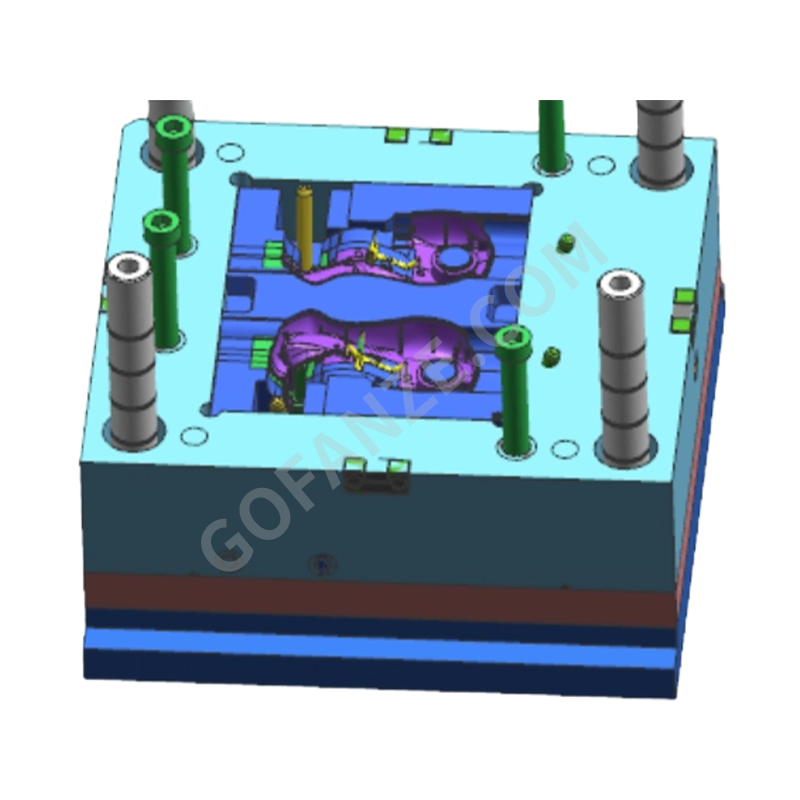
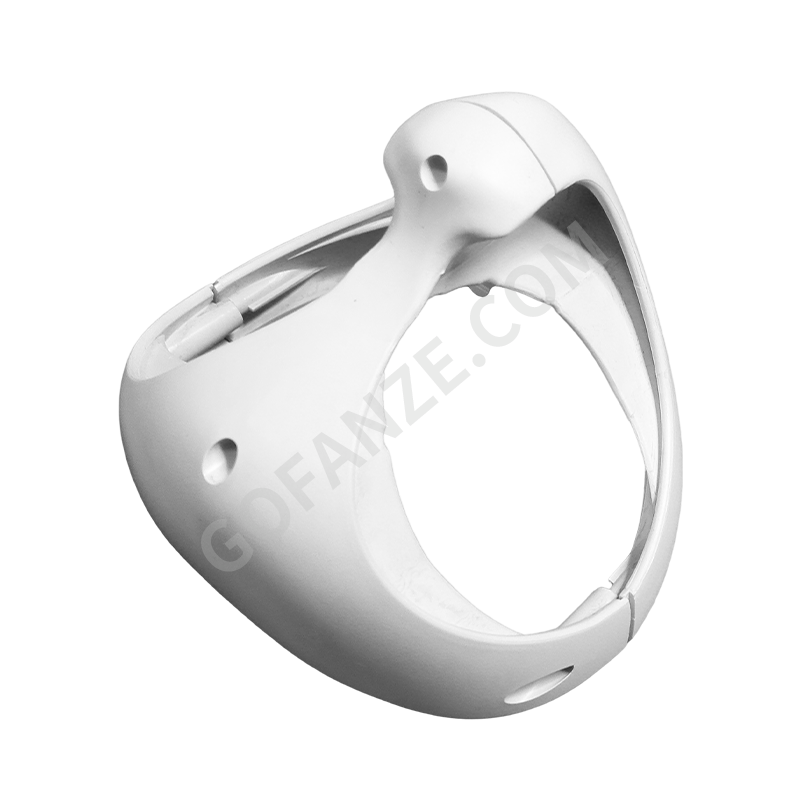
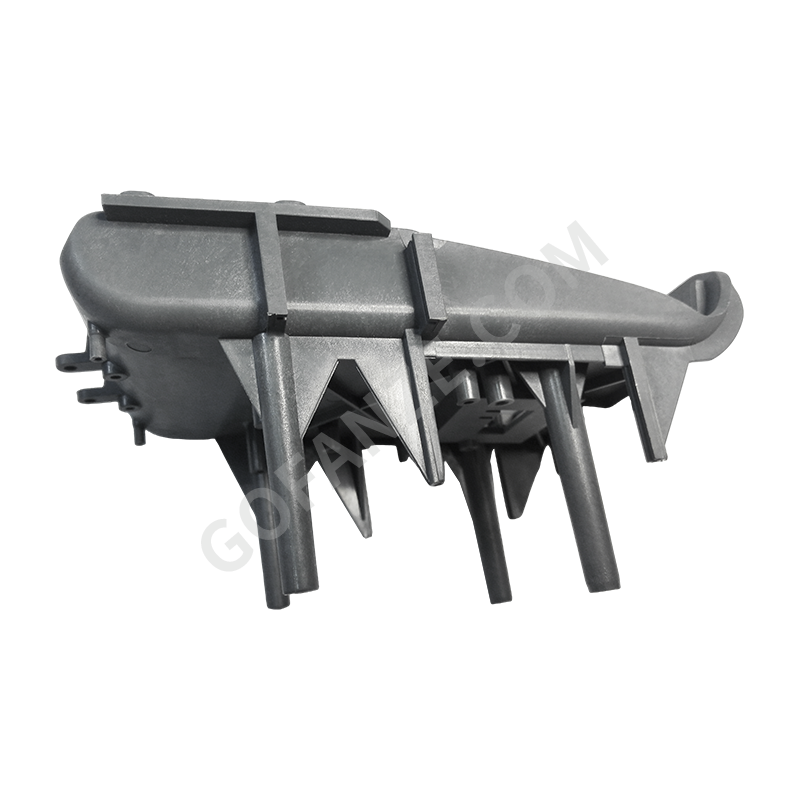
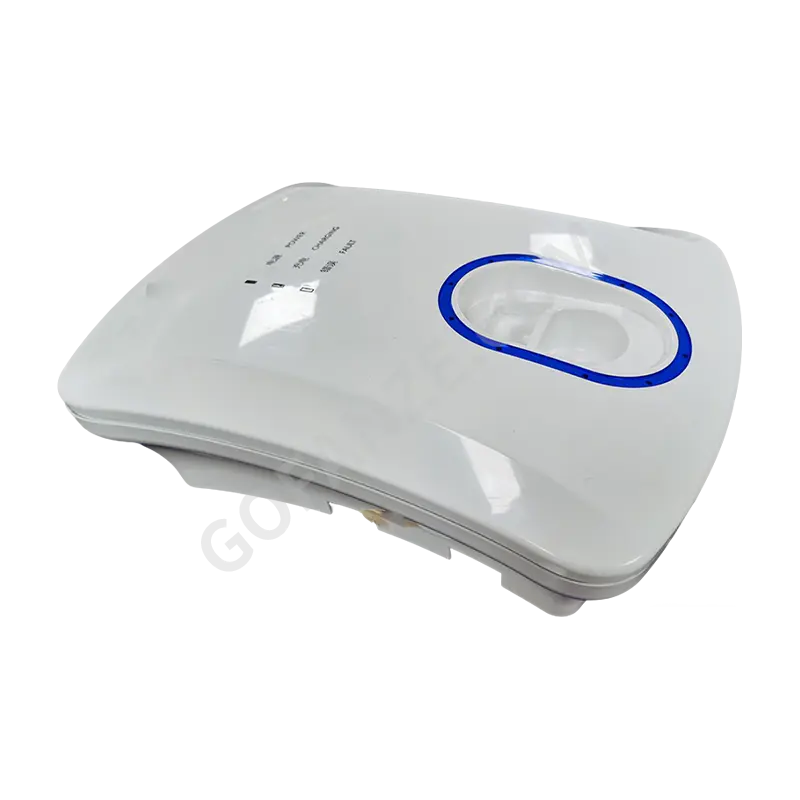
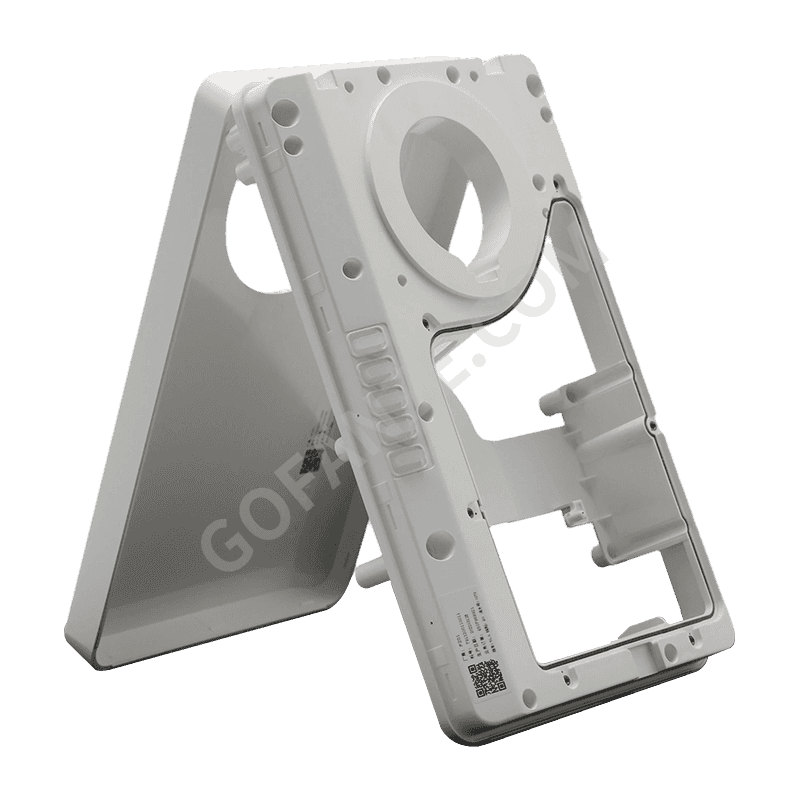
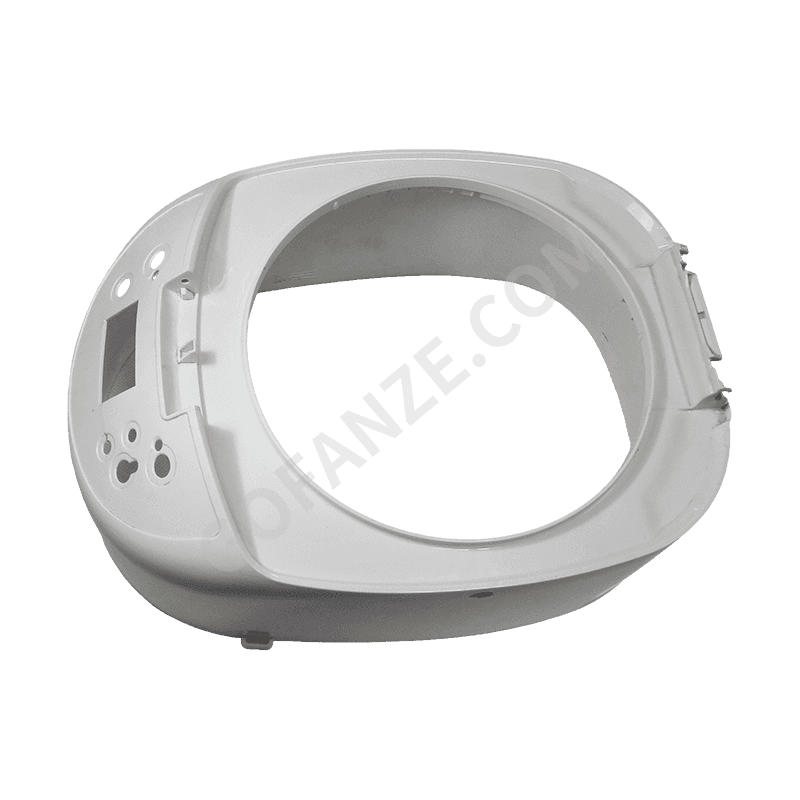
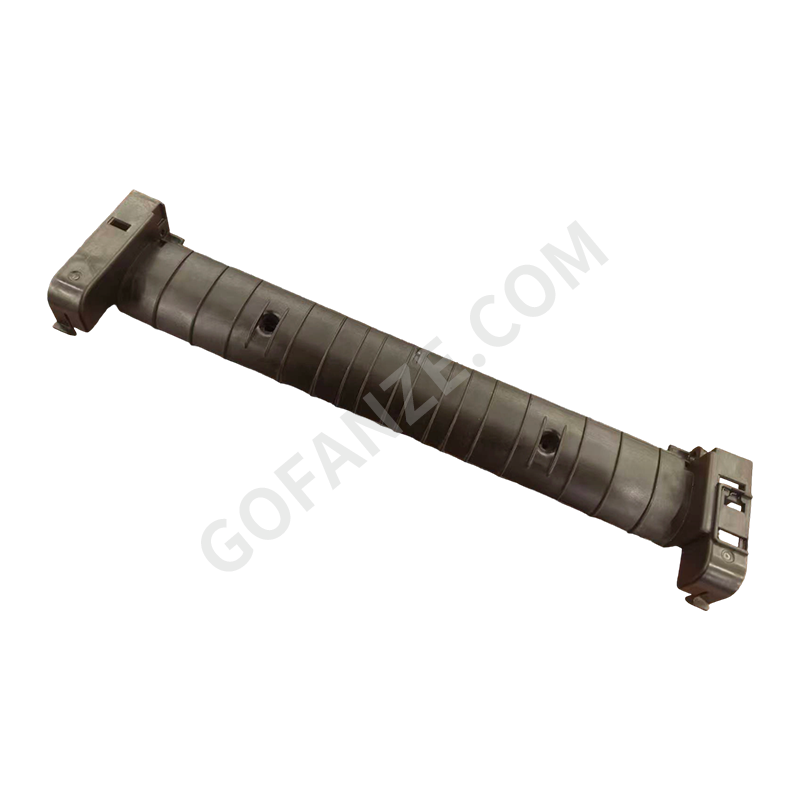
Robot Foot Shell Injection Mold Manufacturer

  • Robot Foot Shell Injection Mold
  • Robot Foot Shell Injection Mold
  • Robot Foot Shell Injection Mold
  • Robot Foot Shell Injection Mold
  • Robot Foot Shell Injection Mold
  • Robot Foot Shell Injection Mold
  • Robot Foot Shell Injection Mold
  • Robot Foot Shell Injection Mold
  • Robot Foot Shell Injection Mold
  • Robot Foot Shell Injection Mold
  • Product Details

Core Advantages

  • 15+ Years Export Experience — Established supply to robotics and precision equipment customers in European and Asian markets; familiar with regional technical standards and delivery expectations
  • Drawing & Model-Based Quotation — Accepts 2D engineering drawings or 3D CAD data (STEP/IGES) for mold development, accommodating the multivariant, low-volume development cycles typical of robotics programs
  • Complex Mold Structure Capability — Design and machining capability for multislider, lifter, internal corepull mechanisms, and hot runner systems, suited to the geometric complexity of robot housing parts
  • Lightweight Material Processing Experience — Established injection molding process parameters for ABS, PC, and PAGF engineering plastics, supporting the balance between weight reduction and structural performance in robot housings
  • End-to-End Service — Injection molding, plastic welding, and component assembly available as an integrated service, including delivery of multipart assembled subassemblies


Product Specifications
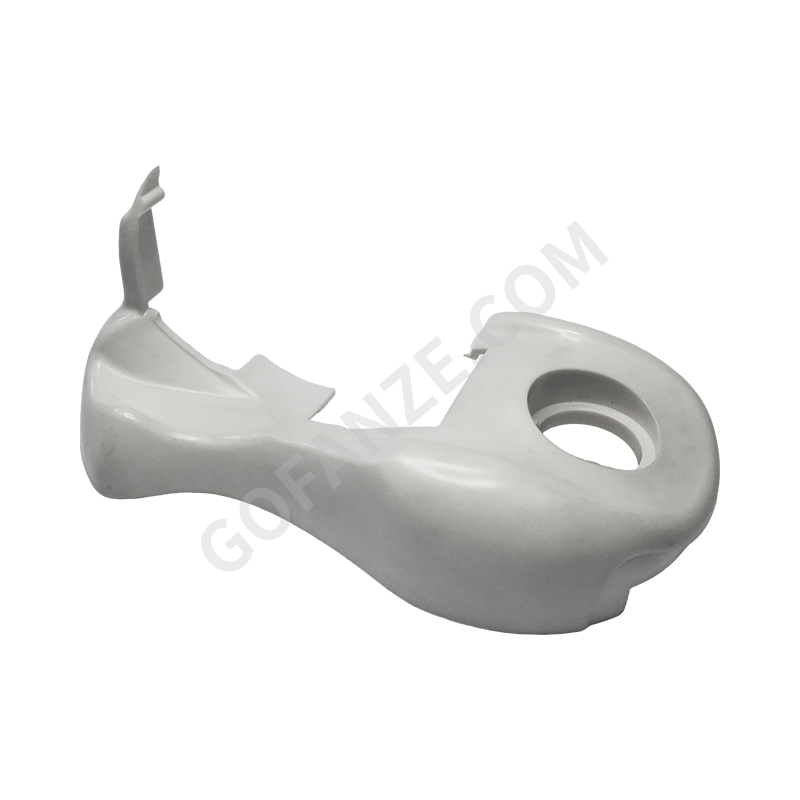
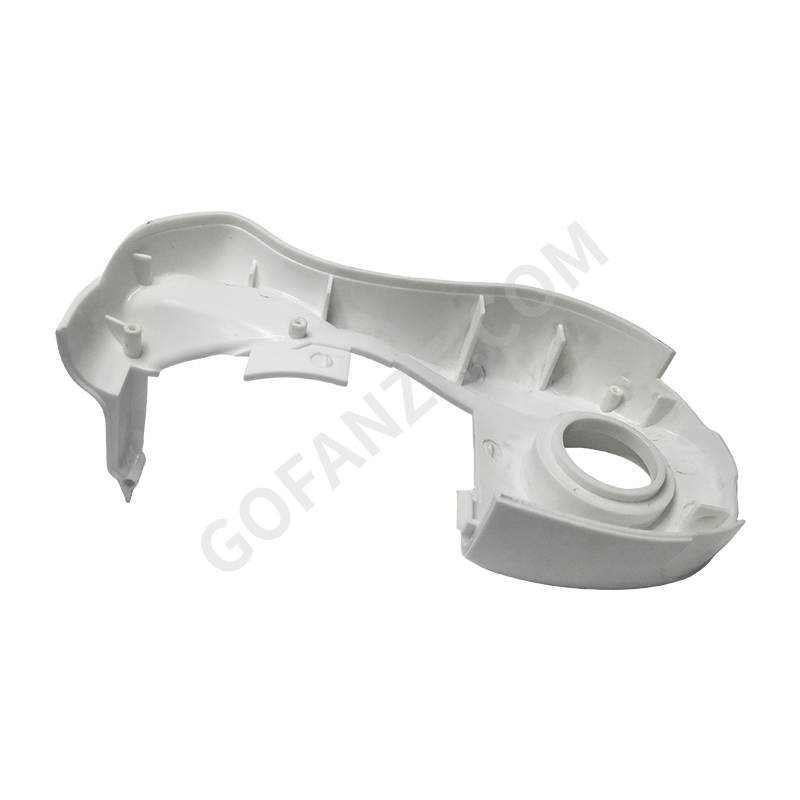
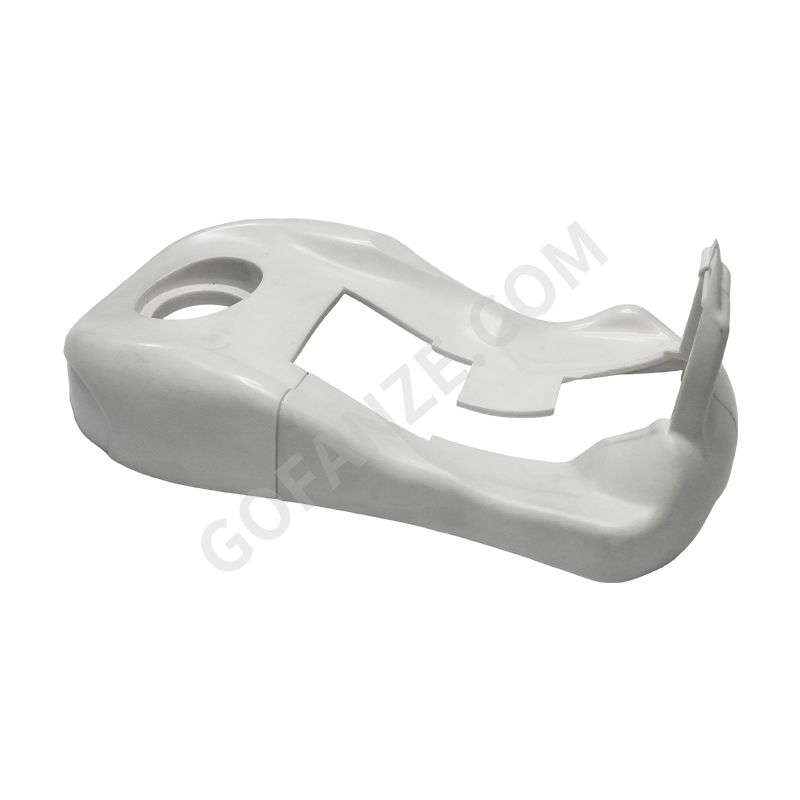
Robot Foot Shell

  • Compatible Materials: PA6GF, PA66GF (glass fiber reinforced nylon), PC/ABS alloy — balancing lightweight construction, wear resistance, and impact resistance
  • Structural Features: Thinwall shell construction with sensor mounting holes, cable routing channels, and metal frame insert mating surfaces
  • Dimensional Accuracy: Critical mating surfaces and mounting hole positions controlled to tolerances within ±0.1mm
  • Surface Finish: Painting, texture treatment, or natural resin finish, applied per product appearance grade requirements
  • Assembly Configuration: Compatible with metal inserts, sensor modules, and rubber sole pad assembly
  • Weight Management: Wall thickness optimization and material selection applied to achieve structural weight reduction in line with overall robot lightweighting targets

Robot Housing Component Molds

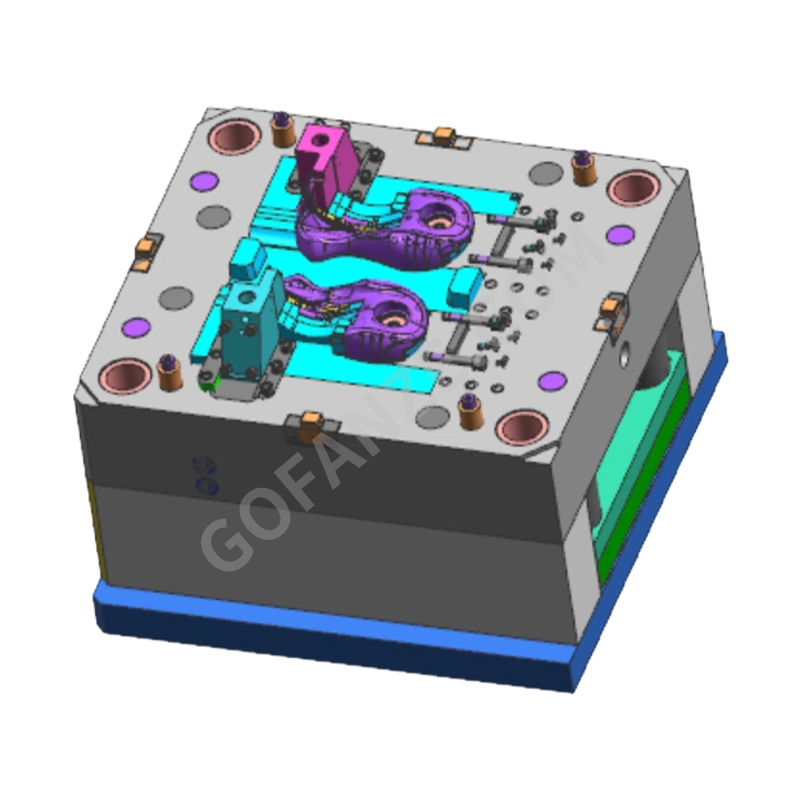
  • Mold Types: Single/multicavity, hot runner/cold runner, with complex ejection mechanisms including sliders, lifters, and internal core pulls
  • Mold Steel Grades: P20, 718H, S136 — selected based on dimensional accuracy requirements and production volume
  • Surface Finish: Mirror polish, VDI/MoldTech texture etching; suitable as a base surface for painting of appearance parts
  • Mold Service Life: Standard tooling 300,000–500,000 shots; hardened steel tooling available for extended service life on higher-volume requirements
  • Dimensional Tolerance: Precision robot part molds controlled to ±0.05mm
  • Standard Compatibility: DME, HASCO, and customer-defined mold standards supported

Application Areas

Robot Foot Shell:

  • Humanoid robot foot end-effector structural components
  • Quadruped bionic robot foot pad shells and sensor mounting housings
  • Service robot chassis mobile module housings
  • Educational and research humanoid robot foot structural components

Robot Housing Component Molds:

  • Humanoid robot head shells, torso panels, and limb joint cover molds
  • Collaborative robot (Cobot) arm housing and cable management lid molds
  • Service robot, guide robot, and delivery robot exterior shell molds
  • Industrial robot control cabinet panels and end-effector housing molds
  • Medical rehabilitation robot housings and wearable exoskeleton structural component molds


FAQ & Technical Considerations
Q1: How is warpage controlled for robot foot shells with nonuniform wall thickness?
Robot foot shells typically combine local reinforcing ribs, mounting bosses, and thin-wall sections in a single part, where uneven shrinkage during injection molding can cause warpage. Countermeasures include: CAE mold flow analysis during mold design to optimize gate placement and cooling circuit layout; selection of low-shrinkage glass fiber reinforced materials such as PA6GF30; and conformal cooling channels within the mold to improve cooling uniformity.
Q2: The foot shell contains metal inserts — how is insert positioning managed during injection molding?
Metal inserts (such as threaded brass inserts or sensor mounting plates) are located using prepositioned insert locating pins within the mold, and integrated with the plastic part through Insert Molding. For inserts with tight positional requirements, insert dimensional tolerances and mold locating mechanism geometry must be matched in the design stage to ensure insert position accuracy meets assembly requirements.
Q3: Robot housing programs often involve many part variants at low volumes — how can tooling costs be managed?
For multivariant, lowvolume robot housing development programs, the following approaches can be considered: multicavity tooling (e.g., 1×2 or 1×4 cavity) to increase output per shot; modular mold base design with interchangeable cavity inserts for geometrically similar parts to reduce repeated mold base investment; or simplified mold structures (cold runner, twoplate) for nonappearance parts to reduce initial tooling cost. Specific recommendations are provided based on part geometry and volume requirements.
Q4: Robot housing appearance surfaces have strict flatness requirements — how is this ensured in tooling?
Appearance surface flatness is influenced by mold cavity machining accuracy, steel hardness, and injection process parameters. We apply high-precision CNC machining and EDM to appearance part molds, achieving cavity surface roughness of Ra 0.4μm or below. During mold trials, process parameters are optimized to address any flatness deviation, with localized cavity polishing performed as needed until the appearance of the surface meets customer standards.
Q5: Is a one-stop service available from mold development through to assembled subassembly?
Yes. Our capabilities include injection molding, plastic welding (ultrasonic and hot plate), and component assembly. For multipart assembled structures such as robot foot shells, we can perform insert pressfitting, ultrasonic welding of subcomponents, and final assembly after injection molding, delivering near-complete assemblies to simplify supply chain management for the customer.

Product Dimensions 91x162x62
Product Material PC+ABS
Product Price US$1.2
Product Delivery Time 30 days
Mold Price US$20,000
Mold Manufacturing Time 45 days
Shipping Terms FOB ShangHai
Payment Terms T/T
Mold Material NAK80
Testing Methods CMM
Mold Lifespan 500k
Warranty Period 12 month
How To Choose A Product Portfolio
Specializing in injection mold development and injection
molding manufacturing, choose FANZE.
Fanze T&M (Jiashan) Co., Ltd. Fanze T&M (Jiashan) Co., Ltd. Get A Quote
About Us
Fanze T&M (Jiashan) Co., Ltd.

Fanze T&M (Jiashan) Co., Ltd. formerly known as Shanghai Fanze Precision Mould Co., Ltd., was founded in 2005 and specializes in the development of injection moulds and the manufacture of injection parts. The company inherits Singapore's precision mold manufacturing technology and adheres to an international business strategy based on domestic and facing the world. It is a precision molding enterprise integrating precision mold development and design, plastic mold manufacturing, and injection molding processing.

The company moved to Guigu Park, Jiashan County, Zhejiang Province in 2016. The plant covers an area of 7,000 square meters, with a usable area of 14,000 square meters. There are about 100 employees. The company has several imported CNC processing equipment and injection molding equipment, such as CNC machine tools, EDM spark machine, slow-moving wire cutting and other well-known foreign brands of precision processing machines, and also have a number of high-performance injection molding production equipment from Japan and Germany. The company has a comprehensive production enterprise integrating product development and review, mold design and manufacturing, injection molding production, product printing, and product assembly simultaneously with customers.

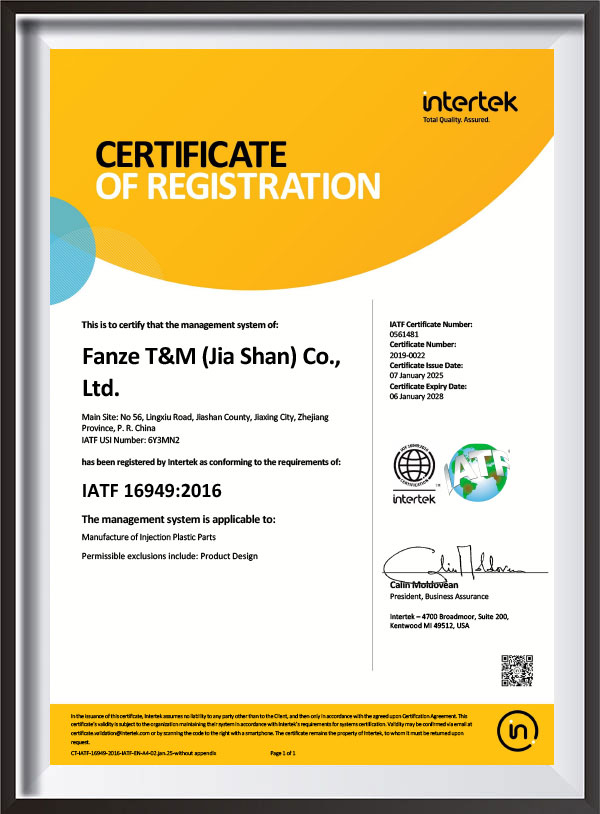
The company has passed the IATF16949 quality system certification, and its products involve automotive interiors, new energy charging piles, household appliances and other fields. We have established good cooperative relations with well-known companies such as British Land Rover Motors, Triumph Motorcycles, domestic SAIC, Changan, ABB charging stations, and Japanese Tiger Electric. Products are exported to Japan, Europe, America and other countries. The company has always been adhering to the quality policy of "precision, high efficiency, casting quality", and has won high praise from customers for its advanced production equipment, leading mold making technology, excellent management team and considerate service!

Certificate Of Honor
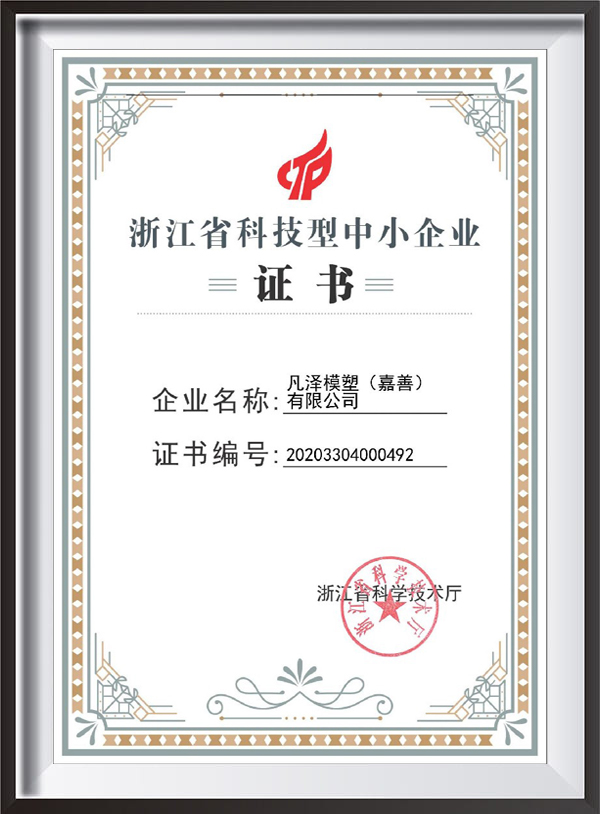
  • Certificate of Zhejiang Sci-Tech SME
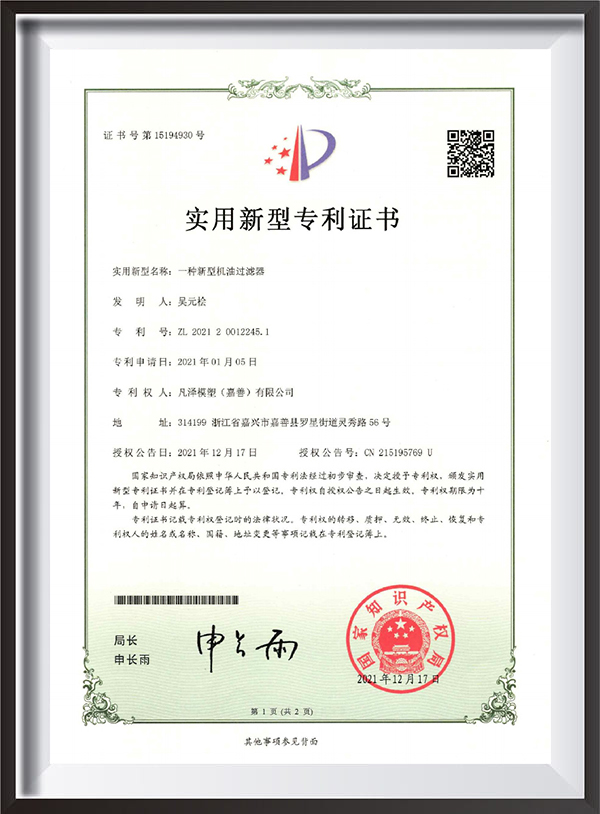
  • Certificate of Utility Model Patent
  • Certificate of High-Tech Enterprise
  • IATF16949
News & Insights
Fanze T&M (Jiashan) Co., Ltd. Fanze T&M (Jiashan) Co., Ltd. View All News