Fanze T&M (Jiashan) Co., Ltd.

Home · Product · Printer Components & Parts · Printer Back Cover Injection Mold Parts

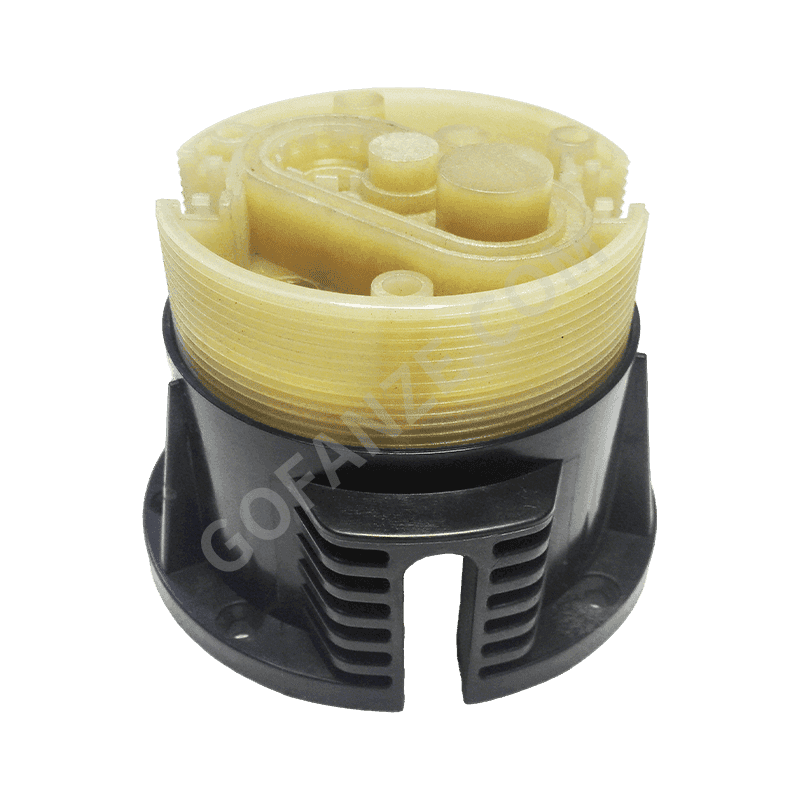
Printer Back Cover Injection Mold Parts Manufacturer

  • Printer Back Cover Injection Mold Parts
  • Printer Back Cover Injection Mold Parts
  • Printer Back Cover Injection Mold Parts
  • Printer Back Cover Injection Mold Parts
  • Printer Back Cover Injection Mold Parts
  • Printer Back Cover Injection Mold Parts
  • Product Details

Product Specifications
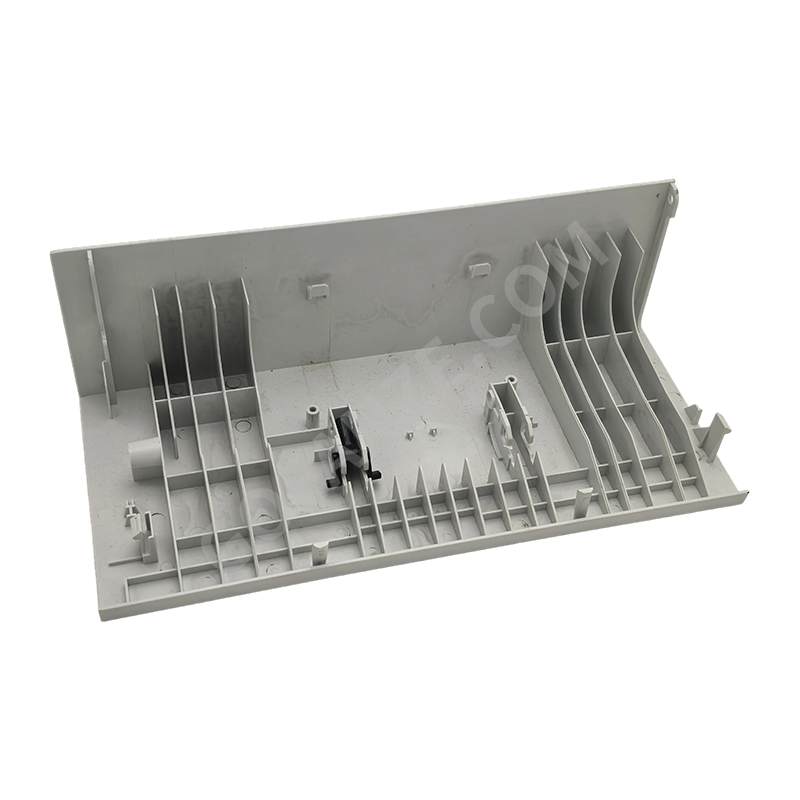
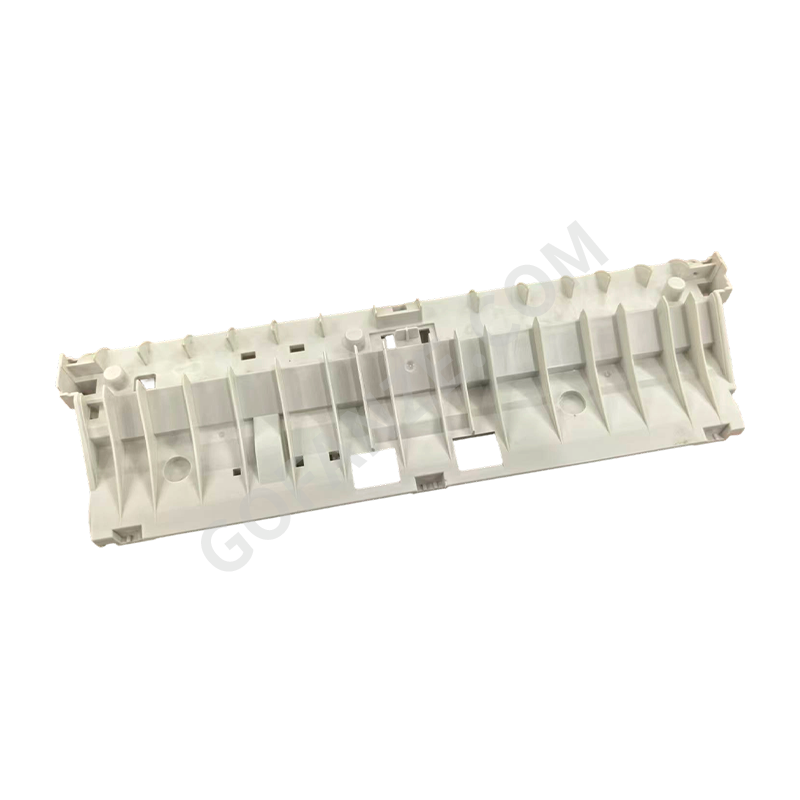
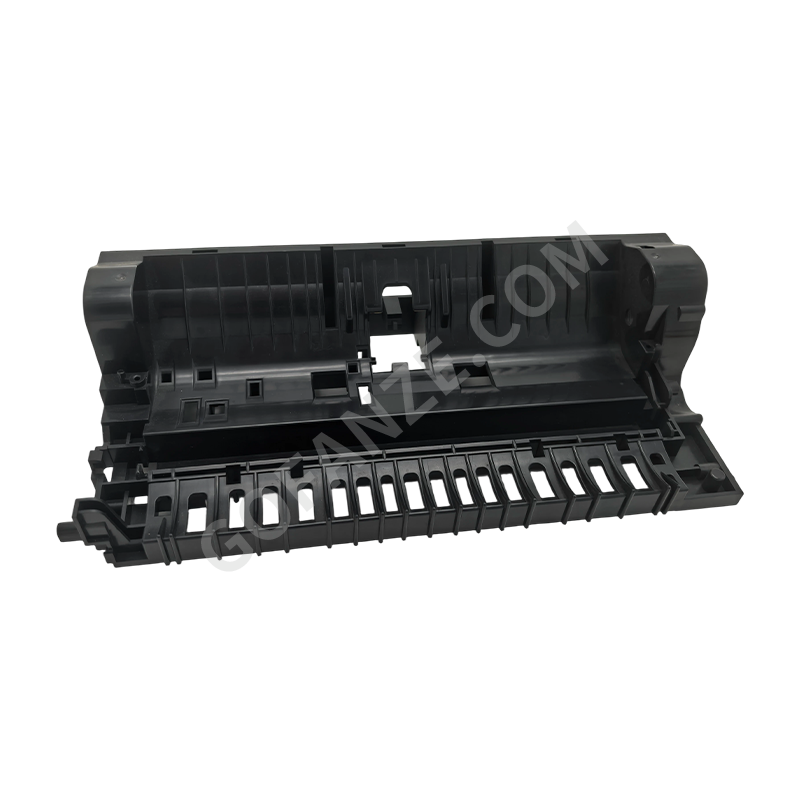
Printer Rear Cover Panel

  • Compatible Materials: Flame retardant ABS (UL94 V0), PC/ABS alloy — combining flame retardancy with impact resistance
  • Structural Features: Thinwall largearea shell with ventilation slot openings, interface cutouts, paper path openings, and snapfit/screw boss mounting structures
  • Dimensional Accuracy: Fit gaps with side panels and bottom shell strictly controlled; parting line positions set per assembly requirements
  • Surface Finish: Texture etching (VDI/MoldTech standards) or paint finish; surface free of visible sink marks, weld lines, and flow marks
  • Assembly Configuration: Combined snapfit and screw boss fixing; quickrelease design requirements supported
  • Color: Injection molded to customerspecified color code; natural resin color or masterbatch blending supported

Printer Plastic Components (General Specifications)

  • Compatible Materials: ABS, PC/ABS, PP, HIPS, flame retardant ABS/PC (UL94 V0/V2)
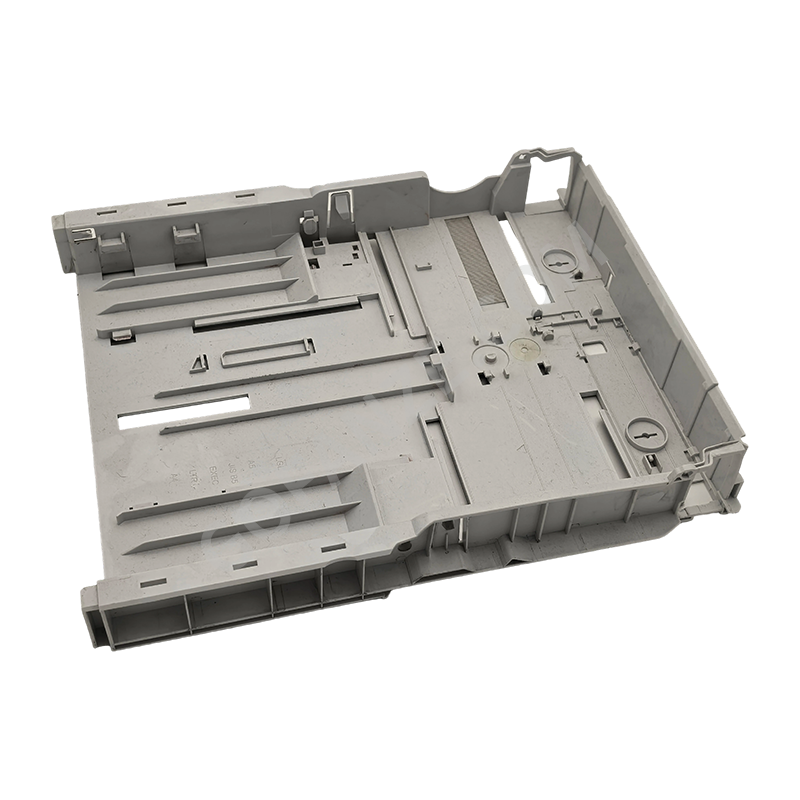
  • Part Types: Exterior shell panels, functional structural parts, paper guides, ink cartridge compartment covers, control panel frames, internal structural supports
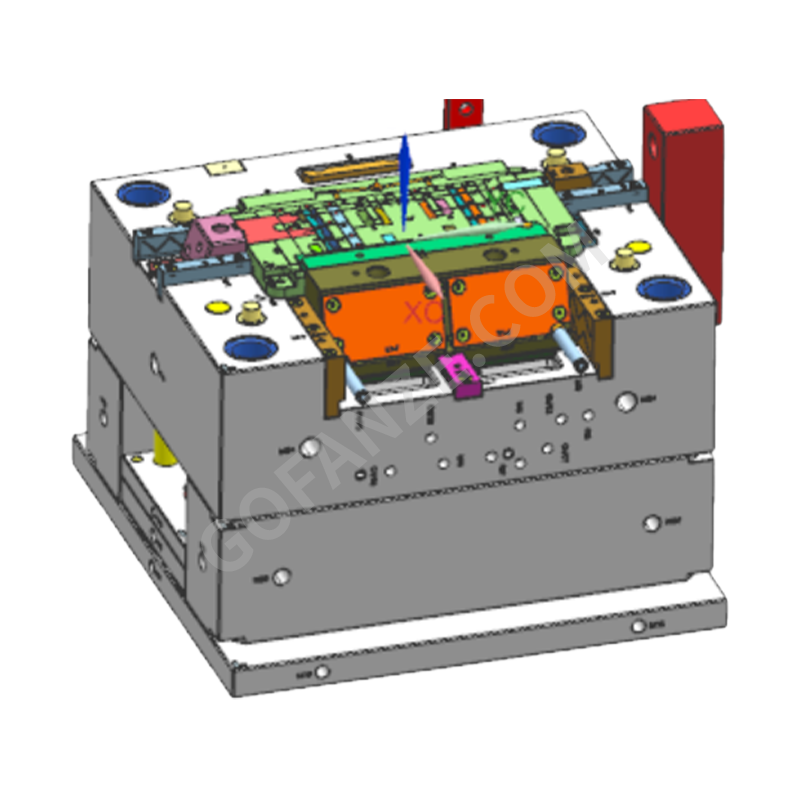
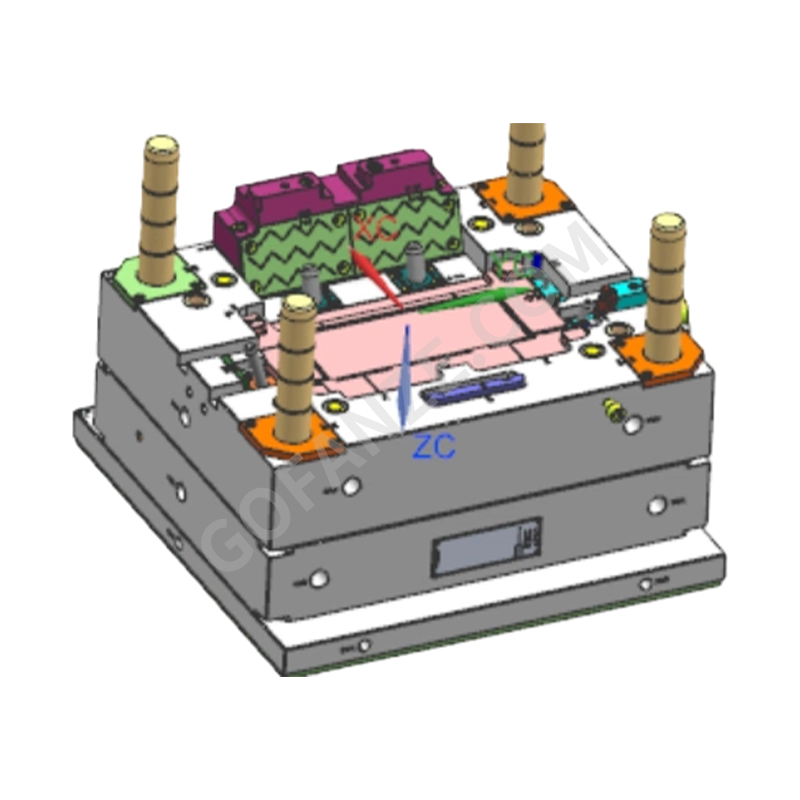
  • Mold Types: Single/multicavity with slider and lifter ejection mechanisms; hot runner systems supported
  • Surface Finish: Texture etching, mirror polish, paint base surface treatment — applied by part appearance grade classification
  • Dimensional Tolerance: Appearance mating surface tolerances per drawing specifications; wall thickness uniformity on thinwall parts strictly controlled
  • Secondary Processes: Ultrasonic welding, snapfit assembly, label application, and multipart finished component assembly
  • Certified Materials: Raw materials with UL, RoHS, and SGS certification available with supporting test documentation

Application Areas
Printer Rear Cover Panels and Plastic Components:

  • Inkjet printer body rear covers, paper tray rear stops, and ink cartridge compartment covers
  • Laser printer rear door covers, paper path access covers, and toner cartridge compartment doors
  • Multifunction printer (MFP) scanner lids, ADF paper feed covers, and side panels
  • Label printer and barcode printer body shells and media compartment covers
  • Wide-format plotter body panel covers and roll media compartment structural parts
  • 3D printer shell panels, filament feed mechanism covers, and electronics enclosure panels


FAQ & Technical Considerations
Q1: Printer rear cover panels have large surface areas and show significant warpage after molding — how is this addressed?
Warpage in large thinwall cover panels is a common challenge in printer housing injection molding, driven by uneven cooling causing differential shrinkage across the part, unbalanced fill flow from suboptimal gate placement, and anisotropic material shrinkage characteristics. Countermeasures include: CAE mold flow analysis during mold design to optimize gate count and placement for balanced fill; conformal cooling channel design to improve cooling uniformity; precompensation geometry incorporated into mold cavity surfaces; and selection of lowshrinkage, isotropic modified ABS grades. Iterative T1 and T2 mold trials are conducted until warpage is within the drawing flatness tolerance.
Q2: Weld lines appear on printer appearance surfaces — how are these improved?
Weld lines form at melt front convergence points and cannot be entirely eliminated in thinwall injection molded parts. Improvement measures include: repositioning gates to direct weld lines to nonappearance areas such as internal surfaces or concealed zones; increasing mold temperature and melt temperature to improve melt fusion quality at convergence points; optimizing local venting at weld line locations to reduce gas entrapment that deepens weld line visibility; and applying texture etching to appearance surfaces to visually mask residual weld line traces through surface pattern diffusion.
Q3: Printer plastic component fit gaps have strict requirements — how is dimensional consistency maintained?
Printer assembly fit gap requirements typically call for tolerances of ±0.3mm or tighter across mating plastic components. Dimensional consistency measures include: highprecision CNC and EDM machining for mold cavity dimensions; complete First Article Inspection (FAI) and inprocess inspection protocols with full or sampling inspection of critical dimensions; Statistical Process Control (SPC) applied to key injection process parameters to monitor process drift; and periodic mold cavity dimensional audits with prompt repair action when wear is detected.
Q4: Printer plastic component programs involve many mold tools — how is concurrent development progress managed?
For complete printer plastic component set development programs, we apply a project management approach, producing a unified mold development schedule for the customer that defines design freeze milestones, steel procurement lead times, machining schedules, and mold trial plans for each tool. For dimensionally interdependent parts such as rear cover panels and side panels, simultaneous mold trials are scheduled to validate assembly fit, preventing verification delays caused by staggered tooling completion. Customers receive regular progress reports tracking the development status of each mold tool.
Q5: Do printer plastic components require specific safety certifications, and how are materials aligned?
Office printers sold in European markets typically require CE certification covering the Low Voltage Directive (LVD) and Electromagnetic Compatibility (EMC) Directive, with plastic component materials subject to RoHS substance restriction requirements and UL94 flame retardancy rating requirements. We source certified raw material grades per customerspecified certification requirements and provide SGS material test reports, UL Yellow Card certification documentation, and RoHS declarations of conformity with shipment to support customer product certification documentation.

Product Dimensions 110x248x77
Product Material ABS
Product Price US$1.5
Product Delivery Time 30 days
Mold Price US$25,000
Mold Manufacturing Time 50 days
Shipping Terms FOB ShangHai
Payment Terms T/T
Mold Material NAK80
Testing Methods CMM
Mold Lifespan 500k
Warranty Period 12 month
How To Choose A Product Portfolio
Specializing in injection mold development and injection
molding manufacturing, choose FANZE.
Fanze T&M (Jiashan) Co., Ltd. Fanze T&M (Jiashan) Co., Ltd. Get A Quote
About Us
Fanze T&M (Jiashan) Co., Ltd.

Fanze T&M (Jiashan) Co., Ltd. formerly known as Shanghai Fanze Precision Mould Co., Ltd., was founded in 2005 and specializes in the development of injection moulds and the manufacture of injection parts. The company inherits Singapore's precision mold manufacturing technology and adheres to an international business strategy based on domestic and facing the world. It is a precision molding enterprise integrating precision mold development and design, plastic mold manufacturing, and injection molding processing.

The company moved to Guigu Park, Jiashan County, Zhejiang Province in 2016. The plant covers an area of 7,000 square meters, with a usable area of 14,000 square meters. There are about 100 employees. The company has several imported CNC processing equipment and injection molding equipment, such as CNC machine tools, EDM spark machine, slow-moving wire cutting and other well-known foreign brands of precision processing machines, and also have a number of high-performance injection molding production equipment from Japan and Germany. The company has a comprehensive production enterprise integrating product development and review, mold design and manufacturing, injection molding production, product printing, and product assembly simultaneously with customers.

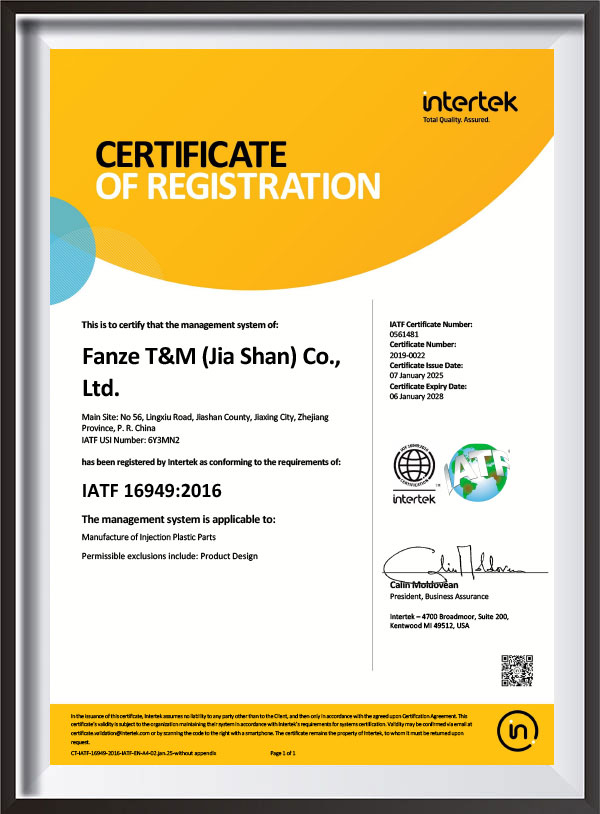
The company has passed the IATF16949 quality system certification, and its products involve automotive interiors, new energy charging piles, household appliances and other fields. We have established good cooperative relations with well-known companies such as British Land Rover Motors, Triumph Motorcycles, domestic SAIC, Changan, ABB charging stations, and Japanese Tiger Electric. Products are exported to Japan, Europe, America and other countries. The company has always been adhering to the quality policy of "precision, high efficiency, casting quality", and has won high praise from customers for its advanced production equipment, leading mold making technology, excellent management team and considerate service!

Certificate Of Honor
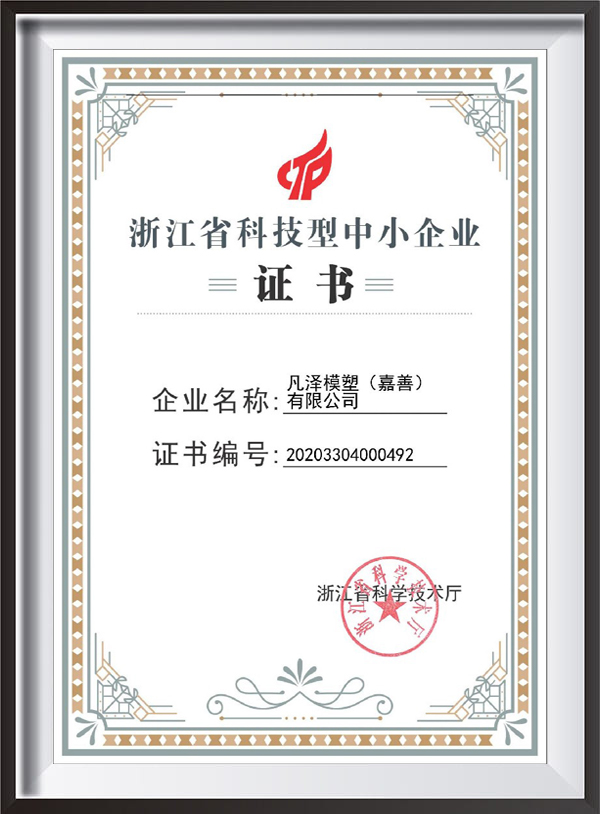
  • Certificate of Zhejiang Sci-Tech SME
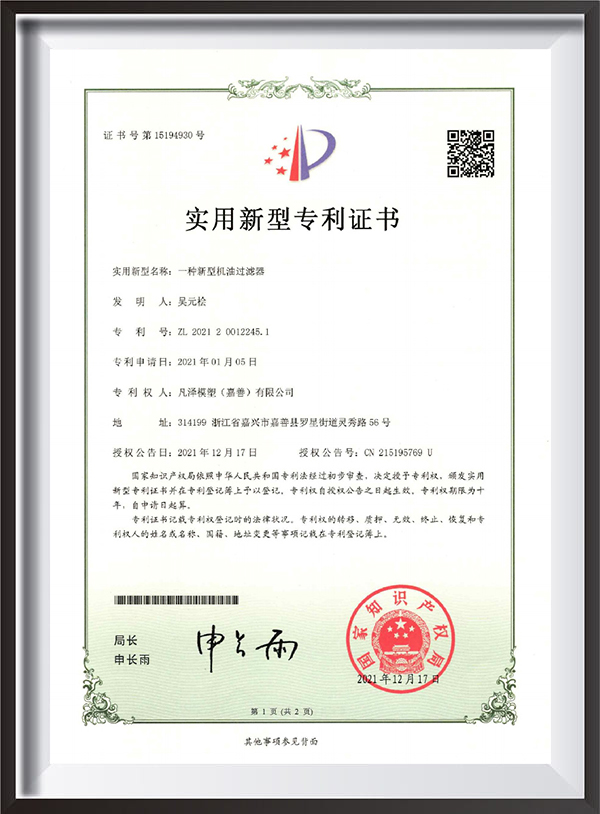
  • Certificate of Utility Model Patent
  • Certificate of High-Tech Enterprise
  • IATF16949
News & Insights
Fanze T&M (Jiashan) Co., Ltd. Fanze T&M (Jiashan) Co., Ltd. View All News