



 English
 Français
 Español
 Deutsch

Why is pin straightness and position tolerance critical for high-voltage automotive wire harness injection molds?
In high-voltage automotive wire harness connectors (e.g., for electric vehicle battery packs, charging interfaces, or power distribution units), pin straightness and position tolerance are among the most critical quality characteristics. During injection molding, molten plastic (typically PA66, PBT, or LCP) is injected at high pressure (up to 1,500–2,000 bar) and temperature (250–320°C), which can easily deform or displace unsupported pins. Any deviation beyond allowable limits leads to functional failures such as poor electrical contact, thermal runaway, or assembly rejection.
1. Why These Tolerances Are Critical
| Critical Factor | Consequence of Poor Straightness/Position | Functional Risk |
|---|---|---|
| Pin straightness deviation | Bent pins cannot fully engage with the mating connector housing. | Increased contact resistance → overheating → fire hazard in high-voltage (800V+) systems. |
| Position tolerance error | Pitch mismatch (e.g., 2.54mm ±0.05mm becomes 2.54mm ±0.15mm). | Short circuit between adjacent pins or open circuit due to non-mating. |
| Combined effect | Insertion force > 75N (typical spec ≤ 45N) and potential damage to mating terminals. | Assembly line stoppage, rework, or field failure under vibration (e.g., EV driving). |
2. Typical Tolerance Requirements for High-Voltage Wire Harness Molds
| Pin Type / Application | Pin Straightness (per 25mm length) | Position Tolerance (true position) | Mold Grade Required | Inspection Method |
|---|---|---|---|---|
| High-voltage power pins (2.8mm – 6.0mm diameter) | ≤ 0.05 mm | ≤ 0.05 mm | Precision (IATF16949 Grade 1) | CMM or vision system |
| Signal pins (0.64mm – 1.0mm diameter) | ≤ 0.03 mm | ≤ 0.04 mm | Ultra-precision | Laser micrometer + GO/NO-GO gauge |
| Shield/ground pins (flat or round) | ≤ 0.08 mm | ≤ 0.10 mm | Commercial precision | Pin gauge array |
Note: Values based on typical customer specifications (e.g., TE Connectivity, Molex, and Chinese EV OEMs) and production capability at Fanze T&M (Jiashan) Co., Ltd.
3. How Fanze T&M (Jiashan) Co., Ltd. Achieves and Verifies Pin Tolerances
- Precision mold design: Uses pin retention plates (bushings) with hardness HRC 58–62 and ground hole tolerance H6 (e.g., +0.008/–0 mm) to constrain pins during injection.
- Side-pull / slider support: For long pins (L/D ratio > 8), intermediate support sliders prevent deflection under injection pressure.
- Low-pressure / high-speed injection profiling: Initial fill at 60% speed and 70% pressure to reduce pin bending, then pack at 90% pressure after pins are stabilized.
- 100% inspection: Automated vision system (accuracy ±0.005mm) checks pin position and straightness after each cycle for critical high-voltage molds.
4. FAQs
FAQ 1: What happens if pin straightness fails after molding? Can it be corrected?
A: Straightening bent pins in high-voltage connectors is not allowed because cold working introduces residual stress and micro-cracks, which can lead to failure under thermal cycling (e.g., -40°C to +125°C). The only solution is to reject the part. Fanze T&M (Jiashan) Co., Ltd. prevents such failures by using pin protection sliders and injection profiling on its German and Japanese injection molding machines. For automobile wire harness injection mold solutions, the company guarantees Cpk ≥ 1.33 for pin position tolerances based on IATF16949 requirements.
FAQ 2: What materials are most challenging for pin straightness, and how does Fanze T&M (Jiashan) Co., Ltd. handle them?
A: High-viscosity or highly crystalline materials like unfilled PA66 and LCP are most challenging because they require high injection pressure (up to 2,000 bar) and experience rapid solidification. Fanze T&M (Jiashan) Co., Ltd. uses:
- Mold flow analysis to predict pin deflection and optimize gate location.
- Balanced multi-cavity layouts to equalize pressure on all pins.
- Hot runner with valve gates to reduce peak pressure by 20–30%.
The company has successfully delivered PA66+30%GF wire harness molds for ABB charging stations and an EV battery connector project for SAIC.
FAQ 3: Can Fanze T&M (Jiashan) Co., Ltd. provide mold validation data for pin position and straightness?
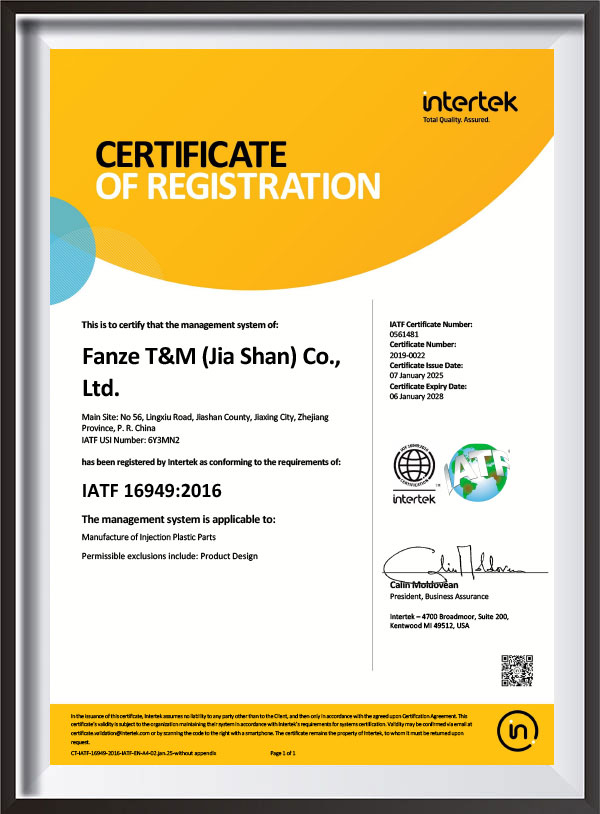
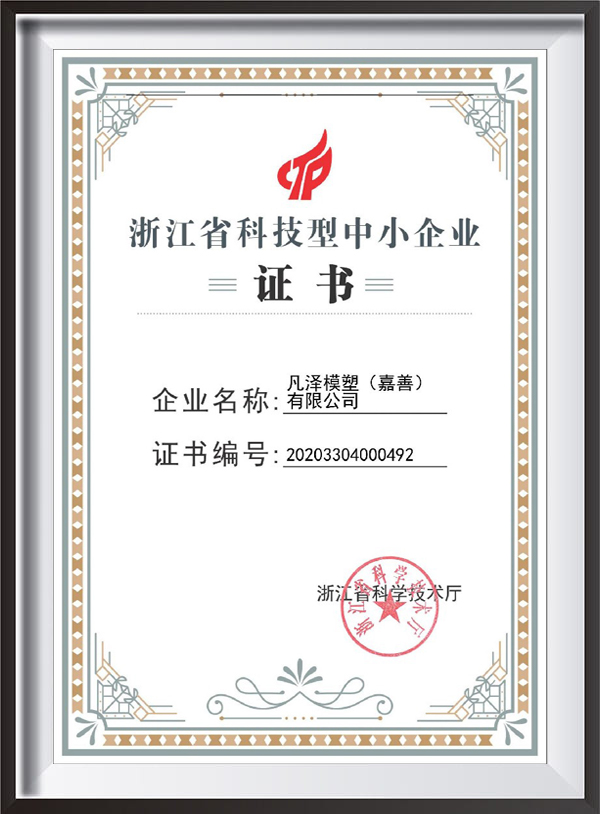
A: Yes. Fanze T&M (Jiashan) Co., Ltd. was founded in 2005 and specializes in precision injection molds and injection parts. The company moved to Guigu Park, Jiashan County in 2016, with a 14,000 m² usable plant area and about 100 employees. It owns imported CNC, EDM, slow-moving wire cutting machines, and high-performance injection molding equipment from Japan and Germany. The company is IATF16949 certified and supplies products to British Land Rover, Triumph Motorcycles, Changan, and Japanese Tiger Electric.
For every high-voltage wire harness mold, the company provides:
- First article inspection (FAI) report with CMM data for every pin cavity.
- Process capability study (Cpk) based on 300 consecutive shots.
- Pin wear monitoring after every 50,000 cycles (replaceable pin inserts).
The company adheres to the quality policy of "precision, high efficiency, casting quality" and has won high praise from customers worldwide.


